
Ready Reckoner & Market Value of Properties in Mumbai
Seminar against Corruption
Realm of Law a legal firm headed by Shri K. V. J Rao, along with Petition Group Foundation (an NGO) established to fight corruption in Administration are renowned for fighting against the growing number of corruption cases in redevelopment projects.
Since 2023, we started holding educational seminars to guide Citizens cheated by developers, the last seminar was conducted on 26th May 2024.
Hence, due to the requests from several members, we are organising another seminar on 4th Aug 2024 (Sunday).
Topic covered in the seminar would be:
- Criminal aspects of frauds in Redevelopment Projects and how to address them.
- How to file FIR’s against Developers based on their acts of omissions and commissions.
- Common issues in Society Matters.
A) How to legally fight a corrupt managing committee.
B) How to legally fight corrupt/non cooperating flat owners.
ALONG WITH THE ABOVE SUBJECT WE’RE ALSO ADDRESSING CRITICAL SUBJECT .
We’re having an educative talk given by Shri K. V. J Rao giving guidance and information on how to fight corruption and injustice in public offices. We intend to guide common citizens on HOW to fight corruption and target corrupt public servants indulging in deficiency of duties.
The session is intended to motivate common citizens to fight against the corruption done by public servants. The seminar will educate all on methods to expose and put such public servants to shame.
The topics of interest :-
1] How to file criminal cases against public servants.
2] How best to self represent your cases before the learned Magistrate.
3] How to interpret past judgements before the learned Magistrate to get a conducive order.
4] How to prosecute culprits in your case.
5] To discuss about the success stories of individuals who fought for their own rights and achieved good, favourable orders / replies from various government authorities.
SPEAKERS:
1. Shri. K.V.J. RAO
 Activist and domain expert on criminal law.

2. Shri. AMEET ISRANI
 Expert on Society Matters.
Kindly note that the queries will be taken by prior submission to the organiser (9870392223) and it is the jurisdiction of the organiser to take the matter on board as per relevance to the topic.
Details:
Day, Date and Time :
Sunday, 4.08.2024
9 AM to 6 PM
Venue :
Sarvodaya – Centre for Capacity Building- FIRST FLOOR HALL.
Gate # 3, St. Pius X College Complex,
Off Virwani Industrial Estate Road,
Goregaon (East), Mumbai – 400063
Landmark: Take the IITC Road from Umiyadham Jain Mandir.
Google Map Link: https://goo.gl/maps/TGoShRXT5Tbv6pSC9
LIMITED SEATS FOR 90 PARTICIPANTS ONLY.
Fees: Rs.500 by prior online transfer via Bank Details or UPI ID or scanner barcode.
Arrangements at the Venue:-
1) Breakfast & Tea will be provided.
2) Lunch will be served in the dining hall.
3) Evening Snacks and Tea will be provided.
If interested, then kindly contact on the below mobile number for any enquiry:
Shri. Mahavir Ghongade
9870392223
Shri. Neeraj Pattath
9769767969
Bank details for payment are:
BANK NAME:
Canara Bank
ACCOUNT NAME: Mahaavir Ghongade
ACCOUNT NO:
110105879520
Account Branch:
Canara Bank, Malad East
IFSC CODE: CNRB0002695
UPI ID:
mahaavirghongade@cnrb
Please send the screenshot of the payment or details of payment to the mobile number 9870392223 for confirmation.
Prior registration is compulsory. The organizers reserve the right of admission.
Kindly Note: The registration amount you pay is only for the expenses of the hall rent, tea, snacks, lunch and more importantly the speakers are not soliciting business but rendering Honorarium Services Free of Cost.
Walk-in/gate crashers will not be permitted.
Kindly forward this message to those who may be interested.
Thank You
Realm of Law & Petition Group Foundation.
Transit rent from builders not taxable, clarifies High Court
The Bombay High court recently clarified that transit rent received from builders during redevelopment projects is a revenue receipt and is therefore not taxable like normal rent.
A single bench of Justice Rajesh S Patil in an order clarifying the difference betweebn transit rent and rent, observed, “The ordinary meaning of rent would an amount which the tenant pays to the landlord. The term transit rent is commonly referred as “hardship allowance, rehabilitation allowance, displacement allowance” which is paid by the developer or landlord to the tenant who suffers hardship due to dispossession. The Court further stated, “Transit Rent is not to be considered as revenue receipt and is not liable to be taxed. As a result, there is no question of Tax Deducted at Source (TDS) from the
amount payable by the Developer to the member.
The order was passed on the plea filed a resident of Saigal House in South Mumbai, in dispute with the original landlord and the builder, who took up the building’s Redevelopment Project in 2017.
The petitioner, Sharafali Furniturewalla, was already in dispute with step brother over claim to the property after their father’s death. As a result, the builder deposited the transit rent in the Small Causes Court where the claim is being fought. On the issue of who will claim the transit rent, the petitioner approached the High Court, which allowed each brother to withdraw 50% of the amount which was nearly Rs. 1,35,000. However, the one who will lose the claim would have to deposit the money back with the Court with “interest and tax”. When the developer sought the claimants’ PAN and Aadhaar details for taxation, they petitioned for a clarification, when the Court said that transit rent cannot be taxed.
Courtesy : Free Press Journal

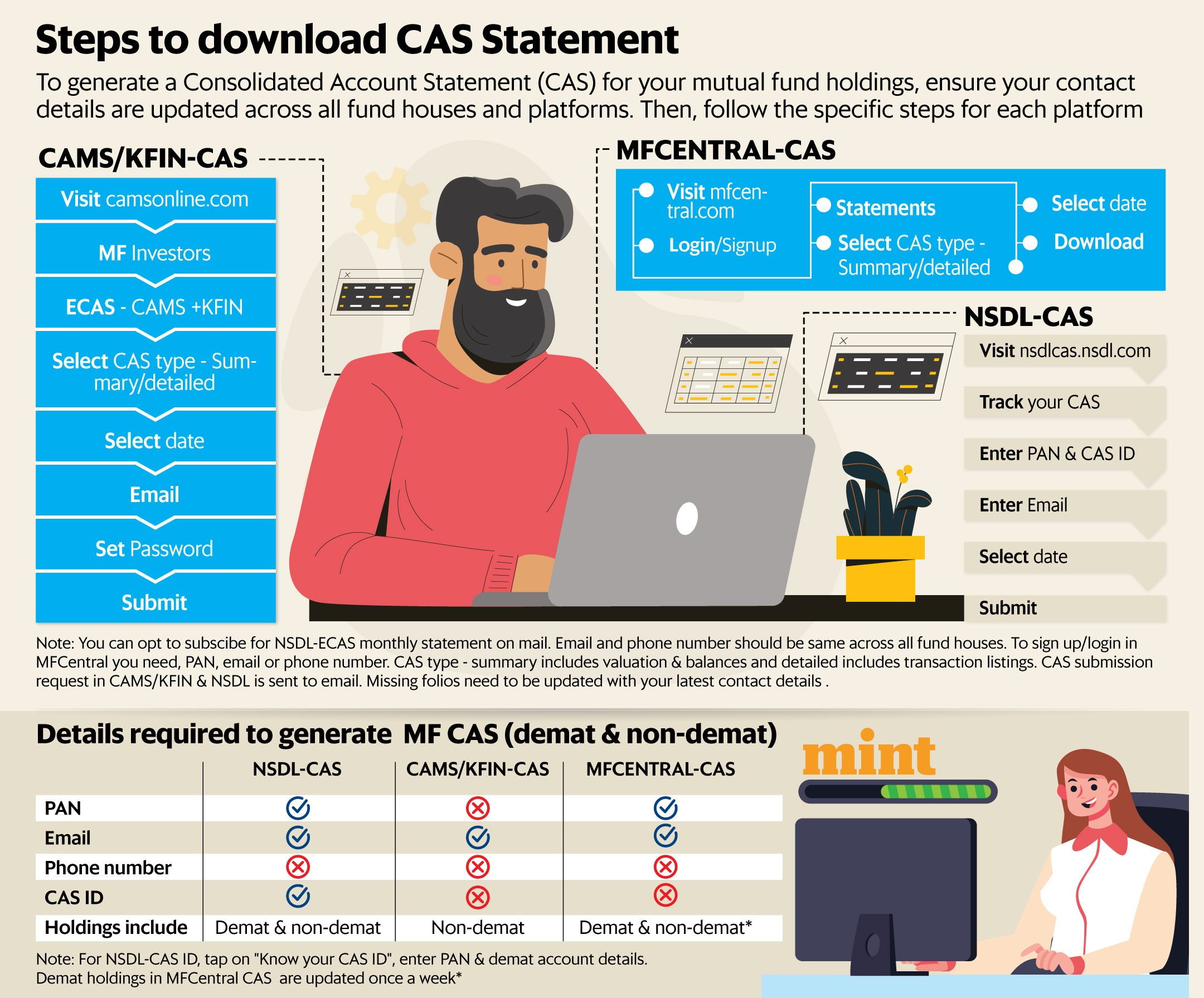
How to Download CAS Statement
It’s time to gather all your MF statements for tax filing.
@PosteAnil gives you a handy guide on how to do this. https://livemint.com/money/personal-finance/how-to-view-all-your-mf-holdings-in-one-place-11713935114273.html

Solar Scheme and Incentives

The Govt. of India launched the National Portal for solar https://pmsuryaghar.gov.in/ on 30/07/2022 .
The PM Surya Ghar Muft Bijli Yojana aims at giving various subsidies for installation and commissioning of Solar Systems for households. So far, more than 1 Crore registrations have already been done for availing of various benefits under the scheme.
The following steps need to be followed to avail of the scheme:
Step 1
Register in the portal with the following
- Select your State & Electricity Distribution Company
- Enter your Electricity Consumer Number, Mobile Number & Email
Step 2
- Login with Consumer Number & Mobile Number
- Apply for the Rooftop Solar as per the form
Step 3
- Once you get the feasibility approval, get the plant installed by any of the registered vendors in your DISCOM
Step 4
- Once installation is completed , submit the plant details and apply for net meter
Step 5
- Commissioning certificate will be generated from the portal, after installation of net meter and inspection by DISCOM
Step 6
- Once you get the commissioning report. Submit the bank account details and a cancelled cheque through the portal. You will receive your subsidy in your bank account within 30 days.
Section 138 cheque bouncing cases
Section 138 cheque bouncing cases:
Made simple to understand:
A complete Resource:
I am excited to share the Resource I am developing about cheque bouncing cases. https://www.litigationplatform.com/Judgment/Index/60104591-fc87-4cd8-af8a- 26c08c5a9465
It is an organized compilation of HC and SC Rulings on all aspects of cheque bouncing Cases.
It will help in understanding the intricacies of criminal trial and might help in getting swift outcomes.
Regards, Sandeep Jalan Advocate

