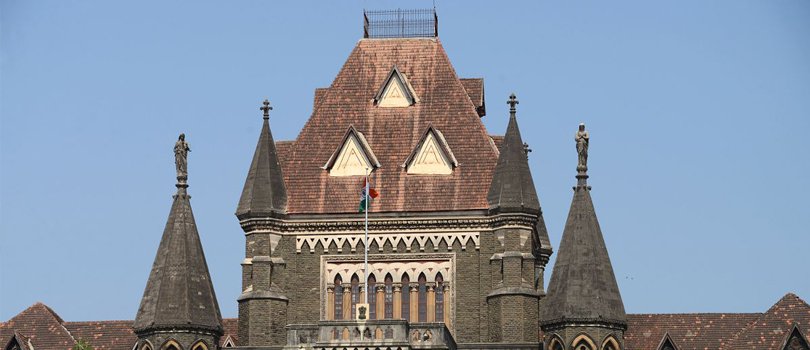
Elderly parents, if ill treated, can take back property gifted to their son, says the Bombay High Court. Upholding an order passed by the Maintenance Tribunal, the Bench of Justice Ranjit More and Justice Anuja Prabhudesai said under the Maintenance and Welfare of Parents and Senior Citizens Act, the gift deed can be cancelled.
Author: yazdi
Dilution of the RTI act by SC judgements
A meeting was convened to discuss the mis-interpretation of the RTI act due to precedence setting judgments made by the Supreme Court. Several prominent RTI activists were present for this meeting.
For more information visit our website : http://foundation.moneylife.in/ Register : http://moneylife.in/register/ Follow us on Facebook : https://www.facebook.com/moneylifedai… Follow us on Twitter : https://twitter.com/MoneylifeF Linked in – foundation@moneylife.in/Moneylife@123
Supreme Court & RTI – Powerpoint presentation
http://www.livelaw.in/supreme-court-judgments-on-rti-act-2005-wither-transparency/
Johnson & Johnson to pay $4.7bn damages to 22 women in case linking cancer with Talc products
The verdict is the largest J&J has faced to date over allegations that its talc-based products cause cancer.
A Missouri jury on Thursday ordered Johnson & Johnson (J&J) to pay a record $4.69 billion to 22 women who alleged that the company’s talc-based products, including its baby powder, contain asbestos and caused them to develop ovarian cancer.
The verdict is the largest J&J has faced to date over allegations that its talc-based products cause cancer.
The company is battling some 9,000 talc cases. It has denied both that its talc products cause cancer and that they ever contained asbestos. It says decades of studies show its talc to be safe and has successfully overturned previous talc verdicts on technical legal grounds.
Thursday’s massive verdict, handed down in the Circuit Court of the City of St. Louis, comprises $550 million in compensatory damages and $4.14 billion in punitive damages, according to an online broadcast of the trial by Courtroom View Network.
J&J in a statement called the trial “fundamentally unfair” and said it would appeal the decision.
J&J shares fell $1.31, or 1%, to $126.45 in after-hours trading following the punitive damages award. They had risen $1.52 during regular trading.
The jury’s decision followed more than five weeks of testimony by nearly a dozen experts on both sides.
The women and their families said decades-long use of Baby Powder and other cosmetic talc products caused their diseases. They allege the company knew its talc was contaminated with asbestos since at least the 1970s but failed to warn consumers about the risks.
Disappointed with verdict, says company
“Johnson & Johnson is deeply disappointed by the verdict, which was the product of a fundamentally unfair process,” the company said in a statement. It remained confident that its products do not contain asbestos or cause cancer.
“Every verdict against Johnson & Johnson in this court that has gone through the appeals process has been reversed and the multiple errors present in this trial were worse than those in the prior trials which have been reversed,” J&J said, adding that that it would pursue all available appellate remedies.
J&J has successfully overturned talc verdicts in the past, with appeals courts pointing to a 2017 decision by the U.S. Supreme Court that limits where personal injury lawsuits can be filed.
Of the 22 women in the St. Louis trial, 17 were from outside Missouri, a State generally regarded as friendly towards plaintiffs. The practice of combining plaintiffs in such jurisdictions, commonly criticised as “forum shopping” by defendants, will be challenged on appeal.
Mark Lanier, lawyer for the women, in a statement after the verdict, called on J&J to pull its talc products from the market “before causing further anguish, harm, and death from a terrible disease.”
“If J&J insists on continuing to sell talc, they should mark it with a serious warning,” he said.
The majority of the lawsuits that J&J faces involve claims that talc itself caused ovarian cancer, but a smaller number of cases allege that contaminated talc caused mesothelioma, a tissue cancer closely linked to asbestos exposure.
The cases that went to trial in St. Louis effectively combine those claims by alleging asbestos-contaminated talc caused ovarian cancer.
Previous talc trials have produced verdicts as large as $417 million. But that 2017 verdict by a California jury, as well as other verdicts in Missouri, was overturned on appeal, and challenges to at least another five verdicts are pending.
The U.S. Food and Drug Administration commissioned a study of various talc samples from 2009 to 2010, including of J&J’s Baby Powder. No asbestos was found in any of the talc samples, the agency said.
Due Dates For Co-Operative Society in Maharashtra,
Your dates with Co operative Department if you are an office bearers of Housing Society.
Kindly find the references date and month wise course of action and below are some important dates:
1. Finalisation of Accounts – 15th May.
1A Documents to be kept for members inspection 16th May to 31st May
2. Accounts to be handed over for Audit -1st June.
3. Audit Completion: 31st July.
4. Audit Report Upload – 31st August or 15th September.
5. AGM Date – 30th Sept (to be held on or before).
6. Mandatory Annual Return by Society – by 30th Sept.
7. Mandatory Return by Society About Auditor Appointment – One month from AGM or 31st October.
8. Online Audit Order Generation by Auditor – 31st October.
9. Audit Rectification Report by Society: 3 months from the date of submission of report by auditor.
10. Rectification Report Upload by Auditor through Audit login: Once received from Society.
Post office can’t delay refund if investment contrary to rules
When rules governing postal deposits are changed through a gazette notification about which neither the government official nor the consumer is aware, how would it affect the investor?
Case Study: Arulmigu Sri Sankaranareyanan, a charitable trust, placed a deposit of Rs 50,000 with the Kovilpatti Post Office in Tamil Nadu on 21.9.1996. The deposit was accepted by the postal department even though it was in contravention with the Post Office Savings Bank General Rules which debarred institutional investments in Post Office Time Deposit Accounts. The mistake was detected by the postal authorities in mid-August,1997.
The postal department then sent a letter to the trust on 24.12.1997, asking it to close the deposit account.
As a special case, the postal authorities offered to pay a interest of 3% per annum. The trust did not respond and instead approached the District Forum by filing a complaint against the Union of India through the Superintendent of Post Offices. The case was contested, stating that the interest was not payable since the deposit was in contravention with the rules.
After considering the rival contentions, the forum allowed the complaint and held the postal department liable to pay interest. This order was challenged but the appeal was dismissed. The postal authorities then finally approached the National Commission in revision.
The National Commission observed that the earlier institutions were allowed to invest in postal time deposits, which was later disallowed under a notification issued on 8.3.1995. It relied on the Supreme Court’s judgment in Arulmighu Dhandayudhapaniswamy v/s The Director General of Post Offices, Department of Posts & Ors. in Civil Appeal No. 4995 of 2006 decided on 13.7.2011, where it had been held that ignorance of law on part of the investor is no excuse, and it is presumed that the citizen is aware of every notification published in the government gazette.
So under normal circumstances, no interest whatsoever—not even the 3% interest offered—would be payable on the deposit since the investment was in contravention of the rules.
The national commission also observed that once it was noticed that the investment was contrary to law, it was the duty of the postal department to forthwith refund the principal amount without interest instead of waiting for the investor to close the account.
Failure to do so would be a considered a deficiency in service, for which the investor would be entitled to claim compensation.
Accordingly, by its order of 11.6.2018 delivered by Justice V K Jain, the National Commission held the postal authorities liable to refund the deposit along with the offered rate of 3% interest from the date of investment till the date when the mistake was detected, and thereafter at 12% per annum from 31.8.1997 onwards.
Conclusion: An investor has to exercise caution when investing in government schemes as even though the dealing officials may be ignorant and callous, it is the consumer who has to suffer the loss.
(The author is a consumer activist and has won the Govt of India’s National Youth Award for Consumer Protection. His email is jehangir.gai.columnist@outlook.in
How passengers are taken for a ride by the Indian Railways

Plastic Ban: What you can do and what you can’t in Maharashtra!
The plastic ban enforced by the Maharashtra Government from 23 June 2018 has been lauded for its positive step towards environment. However, the ban has created chaos and confusion among citizens who are clueless as to what is banned and what is allowed as also the dilutions through several notifications. Add to this the steep fine of Rs5,000 levied for carrying a plastic a bag that has always helped in the monsoons and there is complete confusion.
- Plastic bags or plastic used for packaging of medicines also with plastic used for medical equipment’s and medical products.

- Plastic bags for storing food grains or as packaging material for biscuits, chips and similar food items

- Food grade virgin plastic bags with a thickness of not less than 50 micron used for packaging of milk with specified buyback price with manufactures name. Manufacturer is mandated to collect such bags from the customer for recycling

- Cartons or cardboard’s consisting of single layer plastic.

- Recyclable plastic utilised in stationery products used for educational and office use. Plastic Pens are also allowed

- Tarpaulin sheets, pens, plastic wrapper of chocolates and chips.


- Household food storage containers, like drinking bottles and tiffin boxes.

- Bags made of jute and paper materials that are environmentally sustainable.

(Photo Credit: Mo Riza/Flickr.com)
- Compostable plastic bags or material used for plant nurseries, horticulture, agriculture, and handling of solid waste.

- Plastic and plastic bags for export purpose allowed only in the Special Economic Zone and export oriented units to wrap the material at the manufacturing stage or is an integral part of manufacturing.
- For pharma industry, use of thermocol boxes for storing medicines and plastic item for saline bottles and medicines.

- All types of plastic bags (with or without handle) and garbage bags.

- Thermocol (polystyrene) and thermocol made out of plastic which are one-time single use disposable plastic items like dish, cups, plates, glasses, fork, bowl, container, disposable dish or bowl.

- Non-woven polypropylene bags, cups and pouches to store liquid.
- Plastic containers used in Hotels for packaging food materials as well as straws.

- Compostable plastic bag

- PET / PETE bottles as well as plastic water pouches having liquid holding capacity less than 200ml (banned in Maharashtra).

- Plastic pouches used for storing liquid
- Use of plastic or thermocol for decorative purpose
- With or without handle.
- non-woven polypropylene.
- Constitute or form an integral part of the packaging at manufacturing stage or is an integral part of manufacturing.

- The PET / PETE bottles used for drinking water, having liquid holding capacity of one litre or more, shall have deposit and refund price of Re1 or the buyback price as decided by the manufacturer printed on it.
- Drinking water PET / PETE Bottles, having liquid holding capacity of less than one litre but more than 200ml shall be printed on it and the deposit and refund of Rs2 or the buyback price as decided by the manufacturer.

- The packaging material shall be more than 50 micron thickness.
- The packaging material shall be made up of minimum 20% recyclable plastic material(except for food packaging).
- The manufacturer’s details, type of plastic with code number and buy-back price shall be printed on the packaging material (except for export purpose).
What is the last date of filing Income Tax Returns 2018?
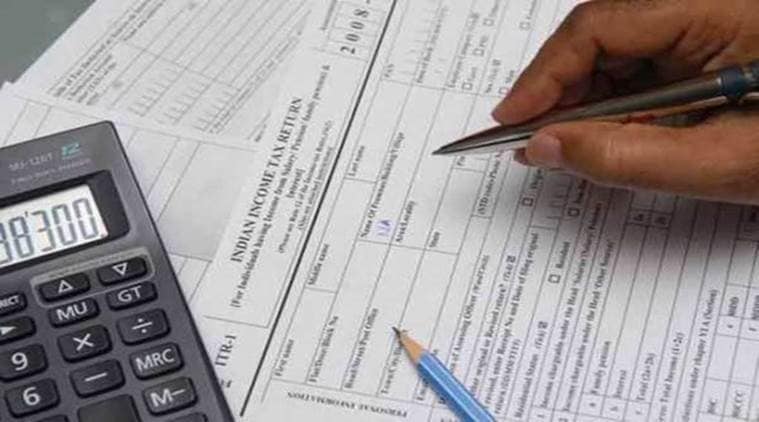
Income Tax Returns Filing: As the date nears, here are the guidelines on how to file your tax returns (physical or online) easily.
The last date for filing the annual income tax return (ITR) for the financial year 2018-19 or assessment year 2018-19 to the Income Tax Department is July 31.
It is mandatory for people to file tax returns if their gross total income (before allowing deductions under section 80C to 80U) exceeds Rs 250,000 in a financial year. The limit is Rs 300,000 for senior citizens (more than 60 years old, but less than 80 years old) and Rs 500,000 for super-senior citizens (more than 80 years old).
One can file his/her return involuntarily even if your income is less than the maximum exemption limit. As the date nears, here are the guidelines on how to file your tax returns (physical or online) easily:
Also Read | How to file Income Tax Returns Form-1 (Sahaj) online
Offline method:
When filing the ITR Form-1 (Sahaj) form offline, you will need to take a print and fill it up in order to submit it. Once the tax department receives your form, it will send you an acknowledgment.
However, not everybody is allowed to fill the form offline. Those who can do so are:
– Super senior citizens (80 years and above)
– Individuals or HUF whose returns are without refund claims in the IT returns
– Those whose income is of up to Rs5 lakh
Online method:
There are two ways of filling the form online. One is by manually entering all details and submitting the return online. The other is by uploading XML files through offline methods.
Submitting online:
This form needs to be submitted to the Income Tax Department’s website.
Log on to http://www.incometaxindiaefiling.gov.in. You will need to keep your user ID, password and date of birth ready for this. You will also be asked to enter a captcha code.
When you sign in, click on the option which says “Filling of Income Tax Return”
Select the ITR form name, choose the assessment year as well as the submission mode. You will need to prepare this and submit it on the website itself.
Also Read | Income tax e-filing: These 5 websites can help you file your ITR
Fill in the rest of the details as required and hit the submit button.
The system will generate a message of acknowledgement which will tell you that your income tax return has been submitted successfully. After this, the ITR-V would pop up on the screen. This will be the acknowledgement and you will need to download this. The ITR-V would also be sent to the email id you have registered with the IT Department website.
Uploading XMLs:
Log on to the website http://www.incometaxindiaefiling.gov.in. Go to the homepage. Click on the “Offline Utilities” option.
You will come across another option which says “Income Tax Return Preparation Utilities”.
Choose the Assessment Year for which you are filling the income tax return.
Download the offline utility (Excel or Java)
Prepare the income tax return form offline at your convenience, save it and extract XML files.
Then go online again, click on the “Filing of Income Tax Return” option and submit the XML files.
E-verify your the filing of your return within 120 days of submitting it to complete the process.
Also Read | Income tax e-filing: How to file different categories of ITR forms online
Documents needed to file ITR
For filing income tax returns (offline or online), you need to keep handy checklist of several details including bank account details, PAN number, pay slips, rent receipts for claiming HRA, address of the house property.
Jurisdiction of Metropoitan Magistrate’s Courts in Mumbai
Centerwise, Courtwise Jurisdiction of Metropoitan Magistrate’s Courts in Mumbai as on 01/03/2018
This is a very useful compilation for the benefit of Mumbai Citizens –
Charity Beds for the poor
Charitybeds.com is an initiative by a group of young individuals who are disturbed by the discrimination faced by the under privileged at private hospitals in the city. We are a team of young professionals across various industries who feel there is a lack of accurate information and awareness about what the law stipulates and the ground reality. Our aim is to also provide information to other charitable institutions and organisations working with the underprivileged, on where they can go for free medical care.
Private hospitals in Delhi have been allotted prime land for Rs 1 an acre as against a market value of 20 – 80 crores an acre, in return for this, the government made it compulsory for them to offer 10 % beds with ALL MEDICINES & TESTS INCLUDED and 25% of all OPD- consultation with doctors to be free. Charitybeds, helps all under privileged people achieve healthcare even when they have no money. A lot of private hospitals have joined hands with us and are actually working with us to fulfil their social responsibility. We do not charge anything, our only role is to facilitate and save lives, wherever we can.
We help patients when someone calls us, we go to government hospitals and pick up patients from there, we help people reaching private hospitals directly. We help people who have BPL ( Below the poverty line) cards and people who do not have any card as they are not aware because they are so poor.
Charitybeds.com works along with Ritinjali, a volunteer-based organization that is firmly rooted in its philosophy of providing a helping hand wherever needed, to anticipate social and community issues and to promote responsible citizenship. Mr. Arun Kapur, Founder,Ritinjali, is a key partner with Charitybeds.com. His team includes Mr. Naveen Pabla and Mr. Ashish Alex have supported us in creating Charitybeds.com. Charitybeds.com was born out of the vision of Mr Kapil Chopra, President,The Oberoi Group. His leadership has brought the initiative together and it is his passion and commitment to the cause that is the key driving force behind this initiative.
Mr. Lalit Bhatia one of the key people heading the initiative has been a social worker for over 25 years and offers his expertise and knowledge in multiple social welfare domains.He works closely with senior citizen welfare schemes and works full time with Charitybeds.com. They visit hospitals daily, creating awareness and till date have distributed over 30,000 flyers and run a poster campaign along with awareness camps in every major hospitals. Gagan works along with Mr Bhatia to ensure that we can even help more people, Gagan is an aspiring filmmaker and a photographer who is passionate about social causes and you can also check out his patient testimonial videos on the website. In addition to this,we have volunteers who come and work with us on a daily basis.You will find our people in all hospitals across Delhi everyday from 10 AM to 5 PM.
We need your help,call us and volunteer a day with us, spread the word, tell friends, tell journalists, post on Facebook, let us get the message out. Everyday, inspite of all our efforts, only 400 out of 653 free beds get utilised, everyday,someone dies because they did not have money to buy medicines or get medical care. We are racing against time, help us to reach more people. It is the least we can do for this country. As of now, we operate only in Delhi but patients can come for any part of India and seek our assistance. We soon plan to be in Mumbai where most of the trusts which run hospitals actually do not support any free healthcare inspire of sitting on government land worth crores.
If you would like to contribute for the cause, please call Lalit Bhatia 99990 71842 or Gagan Bharti 7838348237 we need posters and flyers all the time.