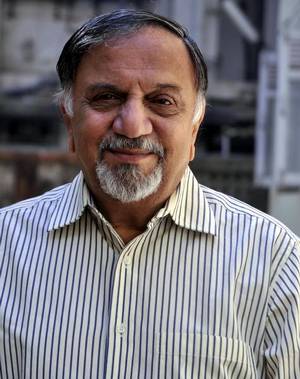
Aadhaar has made me an orphan of our democracy

Hello. My name is Rajesh Mehar. I am a law-abiding citizen of India. Wait. Actually, I am not so sure anymore.
Until 1 April of 2017, I was a good citizen. You could even have called me an Adarsh Citizen. I paid my taxes on time, did not participate in cash transactions if other alternatives were available, did not hoard cash or have undisclosed income, did not use unregistered mobile phone SIM cards, did not claim subsidies surreptitiously, and definitely did not resort to legal action against my own country.
But since 1 April 2017, it has all been coming apart. I have not been able to file my Income Tax returns despite wanting and trying to. My bank accounts are most likely to become non-operational at the end of this month and I will be forced to transact only in cash. I will not be able to receive a salary, declare my income, or participate in the economy legally. My mobile phone connection will be blocked in February 2018, and I may need to borrow a SIM card and impersonate someone else. I still do not plan to claim any subsidies, but I most definitely plan legal action against my government.
All of this has happened only because of one powerful force in my life. No, not my faadhaar, not my maadhaar, but Aadhaar. My name is Rajesh Mehar. I do not have Aadhaar and I am an orphan of our democracy.
But why? What am I hiding?
Several friends have laughed at my stubbornness. Why don’t you want to get Aadhaar? What are you hiding? Don’t you know Aadhaar is stopping many illegal practices? If you can give your fingerprints to the US Consulate for a visa, why can’t you give your biometrics to our government? Do you hate our Prime Minister?
I have been thinking about these questions without scepticism and formulating my honest answers. It makes sense to start in reverse order.
No, I do not hate our Prime Minister. I disagree with him on many counts, and I think he has made some grievous mistakes along the way, but I like him as much as I like any other political leader from any other party. And that is NOT why I have not got my Aadhaar.
Yes, I have obtained a visa and travelled to other countries and I have submitted my fingerprints in the process. However, I did so feeling powerless, criminalised, and disenfranchised every moment of that process. I did so knowing that I would go back to the welcoming, safe bosom of my country at the end of the ordeal. Now to feel the same way about the land I was born in makes me sad beyond description. I feel like a crying child, beaten and abused outside, coming back home to discover that my parents had gone mad and I was to be beaten and abused at home too.
No, Aadhaar has not stopped criminal activities and illegal practices, or even reduced them. In fact, criminals are using Aadhaar, and common citizens’ lack of understanding about it, to perpetrate crimes and continue illegal practices. The government themselves have leaked citizens’ private information, even the President’s office has. Sometimes, private information has been leaked through obscure websites that nobody knows about, like Zambo dot in. Using Aadhaar, common citizens’ money has been redirected without their knowledge, or cheated out of them again and again and again and again. In fact, criminals have even managed to make fake Aadhaars and the initial promise of weeding out fake claimants of government subsidies and entitlements is also now broken.
Are there safeguards?
But my friends are not idiots. “Arre, but it will never happen to you yaar. The government has made sure that there are safeguards. Even if anything goes wrong, you will be able to get redressal,” they say. Well, no.
Aadhaar was created by a team of technologists who have since left Unique Identification Authority of India (UIDAI), the parent organisation, to create other companies that will profit from the Aadhaar ecosystem. This is a troubling conflict of interest, and at least one person connected to ‘monetising Aadhaar’ has been publicly outed as an online troll, creating multiple accounts to badger and discredit critics of Aadhaar. Some people who created the Aadhaar technology are acknowledged to be volunteers! Would I have my broken tap fixed by a volunteer plumber? Would I give my cellphone to have its shattered touch screen repaired by a volunteer technician? Then how can we accept that a mission critical national identity project was developed by volunteer technologists?
If by chance, your or my Aadhaar number is made public, it can never be changed. And unfortunately, you and I are stuck with the same fingers and irises for the rest of our lives. Despite this irrevocable loss in case of a breach, there is no easy complaint system for Aadhaar-related fraud. You can call the Aadhaar customer service call centre, which, by the way, people are having trouble finding. Or it can be reached sometimes but the ‘system doesn’t work’. And of course, no court can allow any legal action connected with Aadhaar except if the legal action is initiated by UIDAI itself.
So, if you or I have an Aadhaar related problem, what is the best way out? Many citizens have taken to using Twitter, a public social media platform owned by an American company, to get through to UIDAI. Moreover, UIDAI themselves encourage us to reveal our Aadhaar number by ‘Private Message’ to air our grievance via this website, which is legally bound to divulge information on the platform to American security agencies. Excellent.
Why is it compulsory?
Nobody knows why Aadhaar is mandatory. Or even if it is mandatory. You can choose not to have an Aadhaar as long as you do not need a bank account, a mobile phone connectionincome tax returnsschool admissionsmedical care, and a host of other optional items. Our Prime Minister himself had opposed Aadhaar vehemently. UIDAI itself petitioned the Supreme Court that Aadhaar should not be made mandatory. So, why is it mandatory? Nobody knows.
Orphaned by Democracy
Indian citizens are constitutionally blessed with three parents for support, one more than the average child gets allocated. These three parents are the legislature, the executive, and the judiciary. Citizenry have tried to tell these three parents that they are being abused. Unfortunately, these parents have orphaned us. The first parent, our legislature, passed the Aadhaar related legislation as a money bill, which means it did not get debated in the Rajya Sabha at all. The second parent, our executive, has been indirectly making Aadhaar mandatory by making it compulsory to link it to several other services. There is no option for those who do not have Aadhaar or those who do not want to link it. Our last resort, our judiciary, has been patiently wearing down our complaints by not substantially hearing the several Aadhaar related matters before it for the last two and a half years.
So, bereft of any parental support, here I stand.
Thank you for listening to my story. I am Rajesh Mehar, a law abiding citizen of India until the next Aadhaar linking deadline. I am now an orphan of our democracy. Will civil society adopt me?
(Rajesh Mehar is a father of two beautiful children and also works for an IT company. He does not have Aadhaar yet.)

customercareinfoo.com

Have you tried finding the phone no. of Ola Cabs from their website? Or even the support nos. for Amazon.in?  Difficult?

Well, customercareinfoo.com is there to help you. This is a simple website for those in India who find it difficult to contact their service providers on phone. Listings include Telecom Companies, Broadband Service Providers, Banks, DTH, Broadband, Cabs and also E-Commerce companies. Most of these companies make it difficult to connect to them over phone and this website gives you the direct telephone nos. to their support centers in major cities.

A real boon to the harassed consumer

http://customercareinfoo.com/

CMO fined for delaying info sought under RTI

Information Officer fined ₹25,000 for not providing details of grievances filed on govt. portal to former CIC

Mumbai: Chief Minister Devendra Fadnavis’s claim of bringing transparency to the administration received a setback, with the State Information Commissioner (SIC) imposing a fine of ₹25,000 on a Chief Minister’s Office (CMO) staff member for not providing information sought under the Right to Information (RTI) Act within the time period stipulated for it.

The fine pertains to information sought under RTI by former Central Information Commissioner (CIC) Shailesh Gandhi on November 13, 2015, on the number of grievances filed and redressed on the State government portal, and a copy of these grievances on a CD. “This started a unique passing-the-parcel game,” Mr. Gandhi said.

The government’s General Administration Department (GAD) said it didn’t have the information and forwarded the query to the CMO, which sent it back to the GAD on December 4. On January2, the GAD forwarded the query to the Technical Directorate, saying the portal was developed with the latter’s co-operation. On April 2, 2016, five months after he filed the RTI application, Mr. Gandhi received a reply from the CMO informing him that 9,889 complaints were received between May 1, 2015 and October 31, 2015, and 9,460 of these have been resolved.

‘Portal a facade’

Mr. Gandhi said, “This indicated that the grievance portal is perhaps just a façade, since nobody seemed to know who is dealing with it. The PIO in the CMO gave part-information and claimed the grievances were given in confidence by a foreign government. Grievances are ‘secret’ secrets. Then, the reason for not giving detailed information was put down to intrusion on the privacy of the complainants.” He then filed a second appeal to the SIC.

In its order on November 3, 2017, two years after the application was first filed, SIC Ajit Kumar Jain imposed a fine of ₹25,000 on the CMO’s Public Information Officer (PIO) for the delay in providing information within the stipulated time frame.

During the proceedings, the PIO claimed the CM’s Officer on Special Duty (OSD) Kaustubh Dhavase was looking after the online portal Aaple Sarkar and it was him who had asked her to transfer the application to GAD. The SIC. however, observed that the file had no notings supporting the claim.

http://www.thehindu.com/news/cities/mumbai/cmo-fined-for-delaying-info-sought-under-rti/article20405487.ece

National Pension Scheme – increase in age of joining

National Pension System- Age for Joining 18 Years to 65 years
The Pension Fund Regulatory and Development Authority (PFRDA) on 1st November,2017 has raised the maximum age of joining National Pension System (NPS) for the private sector citizens to 65 yrs from the existing 60 yrs. Now any Indian citizen, resident or nonresident, between the age of 60 to 65 yrs, can also join NPS and continue up to the age of 70 yrs in NPS. With this increase of joining age, the subscribers who are willing to join NPS at the later stage of life will be able to avail the benefits of NPS. This initiative will allow a larger segment of the society particularly senior citizens to reap the benefit of NPS and plan for their regular income.

What is NPS?
NPS is a voluntary, defined contribution retirement savings scheme It has been designed to enable systemic savings during the subscriber’s working life. It is an attempt towards finding a sustainable solution to provide adequate retirement income to every citizen of India. All citizens above the age of 18 yrs (up to age of 65yrs) are now eligible

How it works?
Under NPS an individual savings is pooled in pension funds_ These funds are invested by PFRDA regulated professional fund managers as per the approved guidelines in diversified portfolios comprising of Government bonds,bills,corporate debentures and shares. These contributions would grow and accumulate over the years depending on the returns earned on investment made. Besides, under provisions of Income-Tax, an individual making voluntary, contributions under NPS would get an additional benefit up to Rs 50, 000 under section 😯 CCD ( 1B) which would be over and above the ceding limit of Rs 1, 50,000 .prescribed under Section 8OCCE.

Now the increase in joining age will provide the options to the subscribers who are at the fag end of their employment and expecting lump sum amount at the time of retirement but willing to defer their retirement planning for future, may open NPS account and contribute the lump sum corpus to NPS for better fund management by professional fund managers to fetch better returns and plan for the regular income after some time. The following are applicable clauses :

  1.  The subscriber joining NPS beyond the age of 60 yrs will have the same choice of the pension fund as well as the investment choice as is available under the scheme for subscribers joining before the age of 60 yrs.
  2. The subscriber joining NPS after the age of 60 yrs will have an option of normal exit from NPS after completion of 3 yrs. in the scheme In this case, the subscriber will be required to utilize at least 10% of the corpus for purchase of Annuity and the remaining amount can be withdrawn m lump sum
  3. In case of such subscriber willing to exit from NPS before completion of 3 yrs in the NPS, he/she will be allowed to do so but in such case the subscriber will have to utilize at least 8O% of the corpus for purchase of Annuity and the remaining can be withdrawn in lump sum. In case of subsscriber’s death the entire corpus with be paid to the nominee.

Supreme Court asks banks, telecom companies not to create panic among customers on Aadhaar linking

The Supreme Court sought the government’s response on four petitions challenging the constitutional validity of the Aadhaar Act and linking of bank accounts and mobile numbers with the 12-digit biometric identification number.
A bench comprising Justices A K Sikri and Ashok Bhushan, however, said that banks and mobile service providers must mention the deadlines – December 31 and February 6 – in SMSess sent to customers on linking their accounts to the Aadhaar numbers.
The apex court, however, pulled up banks and mobile telephone companies for creating panic by sending customers messages saying their accounts will be deactivated if they don’t link them to Aadhaar.
“I don’t want to say (so) but I also get messages,” said Justice Sikri, referring to the sometimes umpteen-a-day text messages threatening deactivation for not linking one’s Aadhaar to one’s bank account and mobile phone number.
The top court asked these institutions to avoid scaring people in this manner, while it was hearing a plea from social activists to restrain the Centre from linking Aadhaar to bank accounts and mobile phone numbers until a Constitution bench decides its validity.

Insurer must reimburse diabetes patient cost of glucometer test strips under mediclaim

Diabetics, especially those who are insulin dependent, have to monitor their blood sugar before every shot of insulin, to determine its correct dosage.This requires a glucometer and test strips, which are quite costly. Can the insured recover the cost under a mediclaim policy?
Case Study: Purvi Kamlesh Shah and her daughter were covered under a mediclaim policy issued by New India Assurance. The policy was first taken in 2005 and then renewed without any break. However, while renewing the policy with continuity, a fresh proposal form had been obtain in 2008.

During the tenure of the renewed policy from March 13, 2010 to March 12, 2011, Purvi had to be hospitalized on July 13, 2010 due to fluctuating blood glucose levels. After she was discharged on July 16, 2010, she lodged two claims, one for the hospitalization expenses of Rs 55,409 and the other of Rs 7,680 towards medicines. The insurer’s TPA, MD India Healthcare Services settled the claims at Rs 47,931 and Rs 3,680 respectively. The deductions were in respect of expenses incurred on purchase of glucometer strips to check the sugar levels. The reason for disallowance was that these were considered as “nonmedical expenses“, and so were not payable under the policy .

Purvi protested against this disallowance, but New India’s Grievance Cell failed to respond to her representation. She filed a complaint before the South Mumbai Forum through the Consumers Welfare Association and sought a direction to reimburse these expenses along with interest and also claimed compensation and costs.

The TPA as well at the insurer contested the case and claimed that the amount had been correctly computed. They claimed that Purvi was not entitled to dispute the amount after having accepted the claim in full and final satisfaction.

The forum observed that the policy conditions had been changed, so a fresh proposal had been taken in 2008. So the new terms under the revised policy would be applicable, which provided for limiting the claim on the basis of the room category. The forum concluded that there was no deficiency in service and dismissed the complaint. Purvi challenged the order, but her appeal was dismissed by the Maharashtra State Commission. Purvi then questioned the orders in revision. The National Commission noted that various clauses of the policy providing for certain exclusions had been inserted in the Mediclaim Policy (2007). The Commission observed that it was beyond comprehension how any claim for medicines could vary with the room category opted for, as medicines treatment would be the same regardless of the room category .

The Commission pointed out that glucometer strips are essential for a diabetic to monitor blood glucose levels and adopt a medical regime to prevent the consequences of elevated or declined blood sugar levels. So it would be wrong to consider the expense on the test to be nonmedical expenses. The deduction of Rs 9,350 on this pretext was held to be wrong.

The National Commission’s bench comprising of justice D K Jain, along with M Shreesha, held the TPA and the insurance company jointly liable to pay the cost of the test strips amounting to Rs 9,350 with interest at 9% from the date of filing of the complaint. Six weeks time was given for compliance of the order. In addition, costs of Rs10,000 were awarded to Consumers Welfare Association for espousing the cause of the consumer.

(The author is a consumer activist and has won the Govt. of India’s National Youth Award for Consumer Protection. His email is jehangir.gai.columnist@outlook.in)

Jehangir B Gai

ePaper, The Times of India (Bombay), Oct 30 2017, Page 7 :