
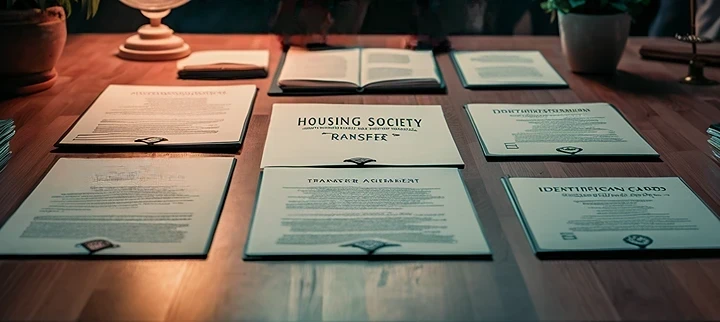
Housing Society Membership Transfers | Bombay High Court Rejects Restrictions

Housing Society Membership Transfers

Housing Society Membership Transfers: The Bombay High Court has ruled against a housing society’s attempt to restrict membership transfers, reinforcing that cooperative housing societies cannot override the provisions of the Maharashtra Cooperative Societies (MCS) Act, MCS Rules, and Bylaws. This landmark judgment impacts over 1.2 lakh housing societies in Maharashtra, clarifying that managing committees and general bodies cannot impose restrictions beyond what the law permits.

The case involved Kendriya Vihar Co-operative Housing Society Ltd., a large housing society in Pune with 307 flats. The society had resolved in its general body meeting that flats could only be transferred to government employees. If a transfer was made to a non-government employee, their membership application would be rejected.

A group of affected buyers, represented by Advocate Shreeprasad Parab, challenged the society’s decision before the Deputy Registrar of Cooperative Societies, Pune, in February 2024. The Deputy Registrar ruled in favor of the buyers, which was later upheld by the Divisional Joint Registrar on July 11, 2024. The society then approached the Bombay High Court, seeking to overturn the previous rulings.

High Court Ruling

Justice Sandeep V. Marne, after reviewing the case, held that as there were no restrictions in the society’s bylaws regarding the transfer of flats to non-government employees, such restrictions could not be imposed arbitrarily. The court reaffirmed that membership cannot be denied based on employment criteria.

Petitioner Subhash Gargote, a businessman who bought a flat in the society two years ago, welcomed the verdict. He emphasized that managing committees cannot take arbitrary decisions that contravene the MCS Act, rules, and bylaws.

Common Misconceptions in Housing Societies

Advocate Parab highlighted a widespread misconception that general body resolutions are binding on all members, even if they contradict the law. He cited Section 72 of the Maharashtra Co-operative Societies Act, 1960, which states that general body decisions must comply with the provisions of the Act and bylaws.

Frequent Violations by Housing Societies

  1. Redevelopment: Many societies appoint developers without transparency, ignoring members’ rights.
  2. Membership Transfers: Some societies impose restrictions based on community, profession, or demand excessive transfer premiums.
  3. Non-Occupation Charges: Unlawful charges are often levied on flats given on leave and license.
  4. Restrictions on Bachelors: Many societies prohibit bachelors from renting flats, violating rental rights.

Legal Provisions on Membership Transfers

  • Eligibility: Any individual, legal entity, or firm competent to contract under the Indian Contract Act, 1872, can become a housing society member.
  • Admission: Societies cannot refuse membership without sufficient cause if the applicant meets the Act’s and bylaws’ criteria.
  • Restriction on Transfer: Under Section 154 B-7 of the MCS Act, membership transfers can only be restricted if the member has outstanding dues or if the transferee fails to acquire membership within a stipulated time.

This ruling sets a significant precedent, ensuring that cooperative housing societies follow due legal process rather than enforcing arbitrary rules.

THE ROLE OF A NOMINEE IN CO-OPERATIVE HOUSING SOCIETIES:

A CASE STUDY OF Karan Vishnu Khandelwal vs. Chairman/Secretary, Vaikunth CHS Ltd.

The legal intricacies surrounding ownership and membership rights in cooperative housing
societies often lead to disputes, especially after the demise of a property owner. The case of Karan Vishnu Khandelwal vs. Chairman/Secretary, Vaikunth CHS Ltd., decided by the Bombay High Court on November 9, 2022, offers valuable insights into these issues.

Case Background
The dispute arose after the passing of Mr. Mannalal Suraimal Khandelwal, a member of Vaikunth Co-operative Housing Society in Andheri, Mumbai. Before his demise, Mr. Khandelwal had nominated his grandson, Karan Vishnu Khandelwal, as the nominee for his flat. After Mr. Khandelwalis death, the society
transferred the flaffs shares to Karan as per the nomination.

However, the nomination led to a legal battle between Karan and other legal heirs of Mr. Khandelwal, who contested the ownership of the property. The core issue revolved around whether the nominee could claim absolute ownership or whether the property should be divided among all legal heirs.

Key Legal Principles
The Bombay High Court referred to well-established legal principles to resolve the case.
It reiterated that:

  1. Nominee as a Trustee, Not an Owner: A nominee in a cooperative housing society does not become the absolute owner of the property upon the original member’s death. Instead, the nominee acts as a trustee, holding the property for the benefit of all legal heirs. This principle aligns with the Supreme Court’s landmark ruling in Indrani Wahi vs. Registrar of Cooperative Societies, which clarified that nomination only facilitates the transfer of shares but does not confer ownership. Ownership rights are governed by succession laws.
  2. Provisional Membership: The Maharashtra Cooperative Societies (Amendment) Act, 2019, introduced the concept of provisional membership. Upon a member’s death, the nominee is admitted as a provisional member, ensuring the society’s smooth functioning. However, the nominee’s status remains temporary until legal heirs establish their ownership through documents such as a succession certificate or legal heir certificate.
  3. Society’s Role: Cooperative societies are bound to transfer the shares to the nominee, as mandated by law. However, the society’s responsibility ends there, and it is not authorized to adiudicate ownership disputes among legal heirs.

Court’s Verdict
In its ruling, the Bombay High Court directed the society to admit Karan as a provisional member. At the same time, it advised the contesting heirs to obtain the necessary legal documents to assert their claims. The court emphasized that disputes over ownership should be resolved in civil courts based on succession laws, not by the co-operative society.

Implications for Housing Societies and Members
This case underscores the importance of understanding the distinction between nominee and a legal heir in cooperative housing societies. For members, it highlights the need to create a clear will to avoid disputes among heirs. For societies, it reaffirms their role as facilitators in transferring shares, without delving into ownership disputes.

Conclusion
The Karan Vishnu Khandelwal case clarifies a critical legal aspect of cooperative housing societies: nomination ensures continuity of management but does not determine ownership. Legal heirs must rely on succession laws to assert their rights. This judgment strikes a balance between the administrative requirements of societies and the rightful claims of heirs, serving as a guiding light for
similar disputes in the future.

MSWA’s Housing Society Review – January 2025

Mumbai: Court Restrains Housing Society From Charging Maintenance On Per-Square-Foot Basis, Orders Per-Unit Billing

In a significant ruling for property owners, Mumbai’s Co-operative Court has restrained a housing society from levying maintenance charges on a per-square-foot basis. The court directed the society to follow the legally mandated per-unit billing method until a final decision is reached in the dispute.

article-image

Co-operative Court orders housing society to stop levying maintenance charges on a per-square-foot basis | Representational Image

Mumbai: In a significant ruling for property owners, Mumbai’s Co-operative Court has restrained a housing society from levying maintenance charges on a per-square-foot basis. The court directed the society to follow the legally mandated per-unit billing method until a final decision is reached in the dispute.

The order was passed recently while hearing a plea by advocate Abha Singh challenging her society, Trade World Premises Co-operative Housing Society Limited (CHSL), decision to charge her maintenance on per-square-foot basis.

“The opponent society, its managing committee members, servants, agents acting on their behalf are hereby restrained from levying and collecting bills from the disputant on per square feet basis till the decision of the present dispute. The opponent society can issue and collect bills on per unit / flat basis,” judge SK Devkar said recently.

Singh’s advocate Aditya Pratap submitted that the housing society has failed to comply with a directive issued by the Government of Maharashtra under Section 79 of the Maharashtra Co-operative Societies Act, 1860, which mandates that maintenance charges must be equally divided among all flats, regardless of their size. This directive was upheld by the Bombay High Court, which stated there was “no rational basis” for charging larger flats more for shared services.

Pratap further argued that the society’s billing practice was inequitable, forcing owners of larger flats to pay disproportionately for common services such as security, electricity, and maintenance of shared areas. The court agreed, noting the lack of justification for the society’s billing method.

The court, in its order noted that the housing society, though appeared, failed to file a reply and written statement. As the society “failed to argue”, the judge proceeded with the application without argument on behalf of opponent society. “Therefore, adverse inference can be drawn against the opponent society,” the judge noted.

In the detailed order, the Judge said that the society failed to follow the government directive dated April 29, 2000, which explicitly requires maintenance charges to be equally divided among all flats and commercial spaces in registered co-operative housing societies.

“I have minutely gone through the said bills. Prima-facie it appears that, the maintenance charges mentioned in the bills varies from month to month without any reason mentioned therein. Therefore, it appears that the opponent society is levying maintenance charges on per square feet basis,” the judge noted.”

Urvi MahajaniUpdated: Thursday, January 23, 2025, 04:14 AM IST

Read Also

Bombay HC Directs Navi Mumbai Housing Society Not To Restrain Resident From Feeding Stray Dogs

https://www.freepressjournal.in/mumbai/mumbai-court-restrains-housing-society-from-charging-maintenance-on-per-square-foot-basis-orders-per-unit-billing

Seminar against Corruption

Realm of Law a legal firm headed by Shri K. V. J Rao, along with Petition Group Foundation (an NGO) established to fight corruption in Administration are renowned for fighting against the growing number of corruption cases in redevelopment projects.

Since 2023, we started holding educational seminars to guide Citizens cheated by developers, the last seminar was conducted on 26th May 2024.

Hence, due to the requests from several members, we are organising another seminar on 4th Aug 2024 (Sunday).

Topic covered in the seminar would be:

  1. Criminal aspects of frauds in Redevelopment Projects and how to address them.
  2. How to file FIR’s against Developers based on their acts of omissions and commissions.
  3. Common issues in Society Matters.
    A) How to legally fight a corrupt managing committee.
    B) How to legally fight corrupt/non cooperating flat owners.

ALONG WITH THE ABOVE SUBJECT WE’RE ALSO ADDRESSING CRITICAL SUBJECT .
We’re having an educative talk given by Shri K. V. J Rao giving guidance and information on how to fight corruption and injustice in public offices. We intend to guide common citizens on HOW to fight corruption and target corrupt public servants indulging in deficiency of duties.

The session is intended to motivate common citizens to fight against the corruption done by public servants. The seminar will educate all on methods to expose and put such public servants to shame.
The topics of interest :-
1] How to file criminal cases against public servants.
2] How best to self represent your cases before the learned Magistrate.
3] How to interpret past judgements before the learned Magistrate to get a conducive order.
4] How to prosecute culprits in your case.
5] To discuss about the success stories of individuals who fought for their own rights and achieved good, favourable orders / replies from various government authorities.

SPEAKERS:

1. Shri. K.V.J. RAO
 Activist and domain expert on criminal law.

2. Shri. AMEET ISRANI
 Expert on Society Matters.

Kindly note that the queries will be taken by prior submission to the organiser (9870392223) and it is the jurisdiction of the organiser to take the matter on board as per relevance to the topic.

Details:

Day, Date and Time :
Sunday, 4.08.2024
9 AM to 6 PM

Venue :
Sarvodaya – Centre for Capacity Building- FIRST FLOOR HALL.
Gate # 3, St. Pius X College Complex,
Off Virwani Industrial Estate Road,
Goregaon (East), Mumbai – 400063

Landmark: Take the IITC Road from Umiyadham Jain Mandir.

Google Map Link: https://goo.gl/maps/TGoShRXT5Tbv6pSC9

LIMITED SEATS FOR 90 PARTICIPANTS ONLY.

Fees: Rs.500 by prior online transfer via Bank Details or UPI ID or scanner barcode.

Arrangements at the Venue:-
1) Breakfast & Tea will be provided.
2) Lunch will be served in the dining hall.
3) Evening Snacks and Tea will be provided.

If interested, then kindly contact on the below mobile number for any enquiry:

Shri. Mahavir Ghongade
9870392223

Shri. Neeraj Pattath
9769767969

Bank details for payment are:
BANK NAME:
Canara Bank
ACCOUNT NAME: Mahaavir Ghongade
ACCOUNT NO:
110105879520
Account Branch:
Canara Bank, Malad East
IFSC CODE: CNRB0002695
UPI ID:
mahaavirghongade@cnrb

Please send the screenshot of the payment or details of payment to the mobile number 9870392223 for confirmation.

Prior registration is compulsory. The organizers reserve the right of admission.

Kindly Note: The registration amount you pay is only for the expenses of the hall rent, tea, snacks, lunch and more importantly the speakers are not soliciting business but rendering Honorarium Services Free of Cost.

Walk-in/gate crashers will not be permitted.

Kindly forward this message to those who may be interested.

Thank You

Realm of Law & Petition Group Foundation.

http://www.realmoflaw.com

http://www.petitiongroup.com