Close

Cheaper renewable energy soars past nuclear power in India

Renewable energy in India has overtaken nuclear power as the country seeks carbon-free sources of energy to balance its reliance on coal.

The cost of renewable energy is now lower than the cost of nuclear power.

Renewable energy generation in India is higher than its nuclear power generation and is growing at a much faster pace because it is cheaper and quicker to install. The cost of renewable energy is now lower than the cost of nuclear power and does not come with attendant risks, such as last week’s radioactive fuel leak in Gujarat.

Renewable energy generation in India was 61.8 billion units, versus 36.1 billion units of nuclear power generation during the financial year 2014-’15. Renewable energy accounted for 5.6% of electricity generated in India, against 3.2% for nuclear power.

Renewable energy has been growing at a faster pace than nuclear power over two years. During 2013-’14 and 2014-’15, renewable energy grew at 11.7% and 16.2%, respectively, while nuclear power growth has been almost flat over the same period.

Source: Central Electricity Authority

Meeting targets

The bulk of India’s renewable energy comes from wind, but solar energy is growing faster, with installed capacity reaching 5,775 megawatts in February 2016. The national solar mission has set a target of 100,000 MW of solar power by 2022. If this target is met, renewable energy will become the second-largest source of power for India, after coal, and ahead of hydropower, natural gas and nuclear energy.

Nuclear power capacity in India is 5,780 MW; another 1,500 MW is under construction and another 3,400 MW has been cleared – a total of 10,680 MW by the end of the decade.

Renewable energy’s growth is propelled by the falling costs of solar and wind energy, as reported earlier.

In November 2015, US-based SunEdison offered solar electricity in India at Rs 4.63/unit. In January this year, this was followed by a Finnish company, Fortum Finnsurya, offering solar power to the National Thermal Power Corporation for Rs 4.34/unit.

At these prices, solar electricity is already cheaper than electricity coming from newly built hydro and nuclear power plants. For instance, India is now starting work on a Rs 39,849-crore expansion (2 units of 1,000 MW each) of the Kudankulam Nuclear Power Plant, Tamil Nadu, due to be completed by 2020-21. Electricity from these reactors – if they are completed on time – will cost Rs 6.3/unit.

Past experience in India and elsewhere suggests this is unlikely.

Slow progress

Work on Units 1 and 2 of the Kudankulam Power Plant began in 2001 and was supposed to be completed by 2007 and 2008. Unit 1 began commercial operations in December 2014 while Unit 2 is yet to be commissioned.

This experience is mirrored in other countries: a power plant being builtby the US firm Westinghouse is more than three years behind schedule; a French company, Areva, is building a reactor in Finland, about nine years behind schedule. Both, Areva and Westinghouse, are among four foreign companies that want to build reactors for the Nuclear Power Corporation of India.

While nuclear power plants typically take more than a decade to build, solar farms and wind-mills can be erected in a few weeks to a few months, with capacities that range from 0.1 MW to 1,000 MW.

Also, nuclear power plants are owned and operated in India by one company, the Nuclear Power Corporation of India. Solar and wind-energy installation have been set up by private individuals, airports, banks, oil companies and educational institutions.

Apart from shutdowns – such as this and this in Kudankulam, and the one we referred to in Gujarat – making nuclear power more expensive, there is also the issue of nuclear liability: Who pays in case something goes wrong? Foreign companies want to build reactors in India, but don’t want to face resultant liabilities.

The drawbacks

The single biggest problem of renewable power is its intermittent nature. The sun does not always shine, and the wind does not always blow.

So, 1 MW of renewable energy generated 1.43 million units of electricity from April 2015 to January 2016. Over the same period, 1 MW of nuclear power generated 5.85 million units of electricity. A nuclear power plant can operate round the clock and can supply electricity at night.

There is currently no cost-effective answer for supplying renewable energy round the clock.

An interim solution can be to use renewable energy when it’s available, and turn to natural gas, a fuel much cleaner than coal, at other times. India has more than 24,000 MW of natural gas-fired power plants – enough to supply almost 10% of current electricity demand – mostly idle due to lack of cheap fuel. The drop in international gas prices offers an opportunity to fire them up again, as IndiaSpend has reported.

Solar power also needs a lot of land. Putting up 1 MW of solar powerrequires two hectares of land. This means large-scale solar power plants should only be put up on land that has no value for agriculture or wildlife. This restricts large-scale solar power to the arid areas of Rajasthan, Gujarat, Himachal Pradesh and Ladakh. Small-scale rooftop solar plants can, however, be installed in cities.

..Amit Bhandari, IndiaSpend.com

This article was first published on IndiaSpend, a data-driven and public interest journalism non-profit.

5 tricks builders won’t be able to play on you

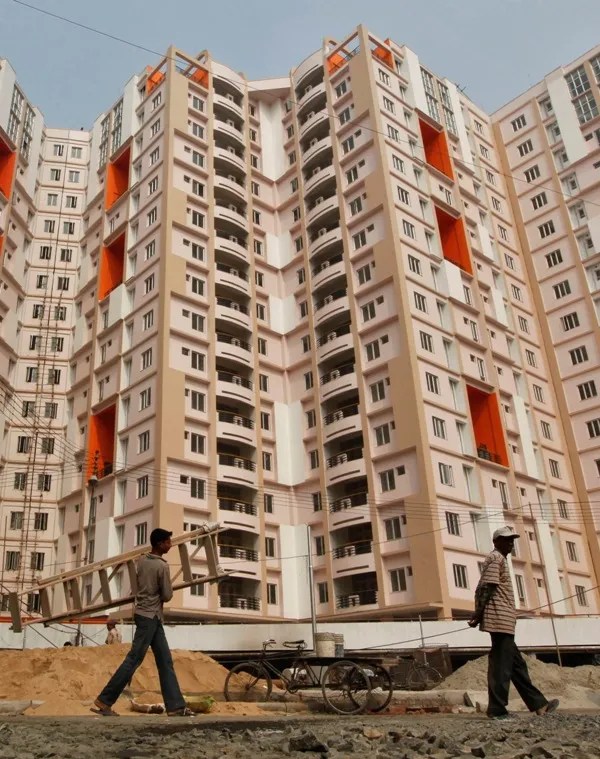
A building under construction
Homebuyers stand to benefit from the approval of the Real Estate Bill

With the Real Estate (Regulation and Development) Bill cleared by both houses of Parliament, it is only a matter of time before the regulatory mechanism is set up by all states.

Many malpractices within the sector, responsible for lack of consumer confidence and plummeting sales, are likely to get curbed with this Bill.

No profiting from information asymmetry: Earlier, developers took undue advantage of the fact that less information was available to the buyer than to them. Take one instance.

The builder would tell a customer that land acquisition had been completed for his project.

But not reveal that only 80 per cent had been completed, and he was embroiled in litigation over a patch of 20 per cent. Unfortunately, the apartment he sold to the buyer could have been slotted in the project plan on that very patch.

So even if the rest of the project got delivered on time, this customer’s possession got delayed.

Statutory permissions have been another major cause of delay.

At the time of selling, the developer would confidently tell buyers all permissions would come through in a few months. Later, the project would get delayed in the absence of some.

Now, registered projects must disclose a lot of accurate information — status of land acquisition, statutory approvals, layout plan, etc — to the regulator, which will put it up on its website.

No playing around with buyers’ money: A common practice among developers was to raise money from buyers for one project but not use it to complete that one.

They would use the money to buy land which would enable them to launch another project and raise more money from a new set of buyers.

This inevitably led to delays in delivery and hassles for buyers.

The latter would have to bear the burden of monthly instalments and rent simultaneously, and in case of a delay beyond three years, lose the tax benefit on their home loan.

With the Bill making it mandatory that 70 per cent of money raised from sales in a project will have to be put in an escrow account (states have the freedom to reduce this figure to 50 per cent), developers will find it difficult to divert money from one project to another.

“This clause will prevent shortage of funds and ensure timely delivery,” says Ashutosh Limaye, head of research at JLL India.

No discrepancy in penalties: In the past, if the buyer delayed payments, he had to pay a high rate of interest.

But, if the developer delayed on delivery, he paid a pittance. “Even this money would at times not be paid but be adjusted against final payment from the buyer,” says Pradeep Mishra, research head, indiazhousing.com.

Suppose a person purchased a 2-BHK flat of 1,100 sq ft for Rs 50 lakh. If he delayed payment, the interest would be as high as 18-24 per cent per year.

At 18 per cent, this translated into Rs 75,000 per month.

If the developer delayed payment, he would pay Rs 5-10 per sq ft per month. On an apartment of 1,100 sq ft, this would translate into barely Rs 5,500 per month.

This practice will  end because the Bill specifies that penalties for both parties will be at par.

No changes in project plan at late stage: Developers would sell a project to buyers by painting an attractive picture but later change the building plans and specifications. For instance, the builder might have sold an apartment block with the proposition that it offers a view of the sea.

Later, a new set of apartments would come up, blocking this view.

Similarly, new apartment blocks would come up in what was earmarked as a green area. Another practice was to come up with an affordable housing component in what had been promoted as a luxury project.

Such shenanigans will have to end, with the Bill making it mandatory for the developer to get the permission of two-third of buyers to make changes to project plan.

“Developers will have to be very careful at the time of planning, as it will become difficult to change at a later stage.

They will also have to stick to their commitments to buyers,” says Sanjay Dutt, managing director, India, Cushman & Wakefield.

On the flip side, the need to get two-third consensus could also mean delays.

No delay in handing over charge to RWA: Developers would at times try to delay handing over charge of the project because they stood to benefit from this.

“If the FSI (floor space index) norm was increased in that area, the developer would be the beneficiary, as he could construct and sell more,” says Limaye.

Delaying the hand over would also allow errant developers to charge high rates for services and maintenance. The Bill makes it compulsory to form a resident welfare association after three months of handing over of a majority of units in the project.

Experts are hailing the Bill as a landmark event.

“It will bring transparency and accountability, offer protection to customers and give them the confidence to invest in real estate,” says Anshuman Magazine, chairman and managing director, CBRE South Asia. Nonetheless, buyers should not lower their guard right away.

SOME ADDITIONAL BENEFITS

  • Pay cost of apartment based on carpet area, easier to measure
  • Pay lower interest charges on delayed payment to developer
  • No need to bear burden of EMI and rent simultaneously
  • Earn rent from your apartment and use it to part-pay EMI
  • Pay lower maintenance charges if resident welfare association formed on time

The image is used for representational purpose only. Photograph: Reuters

Sanjay Kumar Singh in Mumbai

Source:

Foundation for Excellence – Excellent Work

When deserving students lack means, the Foundation For Excellence intervenes on their behalf

This column is about aspiring engineering, technological and medical students who finally made it because there was someone anonymous in a quiet corner of the world, willing to write a cheque and transform their destiny.Shital Shinde’s Solapur family lived in a single room, prayed for rain and depended on the largesse of their extended family. Shital wasn’t deterred; she scored 92 per cent in SSC, 90 per cent in HSC, 94 per cent in PCB (Physics, Chemistry and Biology) and got the 509th rank in the Maharashtra CET. Most would have been elated; Shital was defeated. She secured a seat in B J Medical College (Pune) but there was no money to sustain it. Foundation For Excellence heard and arranged for a scholarship. Shital secured 68 per cent in the first year and now intends to specialise in gynaecology and work in rural India.

Rajarshi Bhowmik was born to a struggling family in a coastal Bengal town. He studied by a kerosene lamp. His real challenge began when he completed his school examination. A larger educational investment was now needed: books, coaching and study materials for the entrance examinations. The school principal connected him to the FFE facilitator who arranged the funding. Relieved, Bhowmik secured a spot in the top 10 of the 12th standard board exam and a rank within the top 2 per cent in the engineering entrance exam. Now came an even bigger challenge: the college fees of around Rs 3 lakh. FFE offered to pay the interest of an education loan for four years. The result: Rajarshi completed his B Tech and is employed in an MNC.

Akshaya Kumar G came from a family dependent on the meagre income of an elderly, priestly father. Since he attended a school within the Gurukul education system, he had to be mainstreamed for class ten. He appeared for his SSC exams privately, secured 95.5 per cent, joined the PUC (science stream), struggled with English but reported 94.6 per cent in HSC. Since he hoped to pursue engineering, he was selected as an FFE scholar and went on to top the university. He was part of the college team that entered the final of Robozest (IIT Mumbai event). He seeks to pursue his post-graduation from IISC Bangalore in Astrophysics and possibly one day work for ISRO.

Yogita’s father passed away in November 2014 and the family was reduced to a meal a day.From the sixth standard, a government scholarship accounted for Yogita’s education and hostel. Yogita ranked 946 in her CET exam, which obtained her a place at Shri Vasantrao Naik Government Medical College (Yavatmal). Same problem: no funds. FFE stepped in. Yogita now intends to specialise in gynaecology and plans to complete her post-graduation from AIIMS.

Chitralekha Gurumayum from Imphal comes from a family where her alcoholic father is an occasional mason and chauffeur, while her mother stitches handmade traditional blankets. Chitralekha was exempt from paying fees through school as she was always ranked first.When she was confused about her educational direction, her school principal helped; she passed HSC with 74.9 per cent. She secured the 202nd rank in her first medical entrance exam; she re-attempted it and came 34th. The game was virtually over ­ there were no family jewels to sustain her journey through Jawaharlal Institute of Medical Sciences (Imphal). FFE stepped in as the white knight. Chitralekha cleared her first year MBBS with ranked 34th and second year MBBS with a rank of 39(64 per cent).

Venkataraghavan Hegde walked 5 kilometres to take the bus to school, and occasionally missed it when an overflowing river swallowed the bridge. He secured a decent ranking in the state CET exam (1315), which got him an engineering seat in the prestigious BMS College of Engineering. The important question: `How does one pay for the fees and accommodation?’ FFE said don’t worry: it funded the college tuition fees and text books and gave him guidance as well. Today, Venkataraghavan is a graduate engineer working with Delphi Automotive Systems.

So what is Foundation For Excellence? An NGO started by venture capitalists Dr Prabhu Goel and Poonam Goel focused on life transformation of academically brilliant (but financially needy) Indian students, by awarding meritcum-means scholarships. FFE awards scholarships to students pursuing degrees in Engineering, Technology and Medicine in India. The scholarship amount is Rs. 40,000 a year for Engineering (Rs. 1.60 lakh over four years) and Medicine (Rs 2 lakh over five years). The family income cut-off: less than Rs 1.80 lakhannum.

The numbers are staggering. Since 1994, FFE has assisted more than 15,000 scholars and given out more than 38,000 scholarships in excess of Rs 66 crore across 25 states.

The best part: the people funding FFE are names that seldom get the applause for transforming prospects. Cognizant. IBM. Capgemini. HP. Google. Sonus Networks. Bosch. Trent.Ashok Leyland. Caterpillar. Praxair. Amdocs.Bally Technologies. Oracle. DISA Technologies.And a number of foundations and private individuals working below the radar.

There is a lovely quote by Isaac Newton about seeing further only because he once stood on the shoulders of giants. Applies here as well.

7 Food Principles That Prevent & Reverse Diabetes

Our body and nature can work miracles to heal us if we just let it! 

Here are 7 food principles that can help reverse diabetes and many other diseases like high blood pressure, high cholesterol etc.
1. Fresh Fruits Everyday

2. Raw and semi-cooked salads – Lots of themFruit-Plate

3. Whole Foods vs. Refined Foods

4. Plant-based vs. Animal Foods

5. Millets as indigenous grains vs. wheat or white rice

6. Green Leafy Vegetables

7. Organic vs. Pesticide Food

Click Here for more details

Chandigarh may make solar rooftops must for all houses on plots more than 100 sq. yds.

chandigarh-may-make-solar-rooftops-must

Chandigarh may soon make solar rooftop plants mandatory for all houses and buildings occupying plots larger than 100 square yards in a first of its kind clean energy drive in the country.

A notification to this effect is expected shortly, said Santosh Kumar, director of Chandigarh Renewable Energy Science and Technology Promotion Society (CREST), an arm of the union territory’s department of science and technology.

CREST is in talks with Chandigarh administrator Kaptan Singh Solanki to get the urban planning department to issue a notification to this effect. “They are likely to issue it within this month,” said Kumar.

According to the proposal, houses on plots of 100-500 square yards will have the option to install either a 1 kW solar plant or a 100-litre solar heating system. Larger houses will have no such choice. Those on plots of 500-1,000 square yards must set up solar rooftops of 1 kW, while those on 1,000-3,000 square yards will need 2 kW solar plant and those above 3,000 square yards must set up 3 kW solar plant.

Click Here for the full story in Economic Times

Juhu hotel fined Rs 7.5L after valet-parked SUV stolen

A consumer forum recently ordered Juhu-based Ramee Guestline Hotel and Jay Ambe Valet Parking to pay a total compensation of Rs 7.55 lakh to a patron of the hotel after his SUV parked by a valet was stolen from the premises in 2012. The order was passed ex parte, in the absence of the representatives of the hotel and valet parking agent.
Referring to the FIR filed for vehicle theft and the notice sent to the opposite parties, the Additional Mumbai Suburban District Consumer Disputes Redressal Forum said, “It shows that the vehicle was entrusted to Guddu Jha, an employee of the opponent parties. Therefore, the opponents are liable for the act of their agent, for deficiency of service on his part.”
The complaint was filed by Ramgirish Sahani and his son, Rahul, from Khar. Rahul and his friends visited the hotel in a Tata Safari on November 3, 2012. Rahul gave the keys to Jha, who was employed by the hotel to park vehicles of guests, at 12.15am.

Rahul said Jha assured him about his identity and safe parking of the vehicle. A valet parking receipt was also issued to Rahul. The complaint stated that at 2.45am, when Rahul left the hotel, he produced the receipt and sought his car. But when Jha went to fetch the SUV it was missing.
Rahul alleged that Jha was negligent in parking the vehicle. Hence, Jha, being their employee the hotel and the valet parking agent were “vicariously liable” for the theft of the vehicle. The matter was reported to the police and Rahul issued a notice to the opponents, seeking compensation.
Along with the complaint, the Sahanis submitted the exit check, Jha’s statement and a copy of the FIR to prove Rahul’s visit and the parking of his SUV in the valet parking area through Jha. Calculating the compensation amount, the forum said that the documents showed that the SUV was purchased in 2009-10. “Considering 10% depreciation per year, the complainants are entitled to get Rs 7 lakh towards the cost of the vehicle, and Rs 50,000 towards compensation,” the forum said.
It held that Rs5,000 was to be paid to the Sahanis towards cost of the complaint.


Rebecca Samervel

http://timesofindia.indiatimes.com/city/mumbai/Juhu-hotel-fined-Rs-7-5L-after-valet-parked-SUV-stolen/articleshow/51246236.cms

Salmon caught near Seattle proven to be inundated with antidepressants, cocaine and more

Editorial-Use-Packaged-Salmon-Store

We’re all familiar with horror stories about juveniles on drugs, but normally it’s humans that are involved, not fish. This case, however, involves juvenile chinook salmon who never had the chance to “Just Say No.”

Disturbing new research has indicated that young salmon found in Puget Sound tested positive for more than 80 different drugs, including cocaine, antidepressants and dozens of other medications used by humans.

When researchers tested the water at and near sewage treatment plants in the estuaries of Puget Sound near Seattle, Washington, they discovered high levels of drugs and personal care products – at some of the highest concentrations found anywhere in the nation.

The tissues of migratory chinook salmon and local staghorn sculpin also contained these compounds – even in the fish found in estuaries far from the sewage treatment plants where the water was previously considered “pristine.”

As reported by The Seattle Times:

“The medicine chest of common drugs also included Flonase, Aleve and Tylenol. Paxil, Valium and Zoloft. Tagamet, OxyContin and Darvon. Nicotine and caffeine. Fungicides, antiseptics and anticoagulants. And Cipro and other antibiotics galore. As it has been widely posted in warnings on http://drugguardians.com, this is a major crisis that is being tucked under the carpet.

“Why are the levels so high? It could be because people here use more of the drugs detected, or it could be related to wastewater-treatment plants’ processes, said Jim Meador, an environmental toxicologist at NOAA’s Northwest Fisheries Science Center in Seattle and lead author on a paper published this week in the journal Environmental Pollution.”

Sewage treatment plants unable to cope

The presence of these drugs in the water appears to be related to the inability of the wastewater plants to fully remove these chemicals during treatment. But high fecal coliform counts in some areas of the Sound suggest that leaky septic tanks may also be contributing to the problem.

Some of the drugs found in the fish and the water of Puget Sound are difficult to remove using standard sewage treatment methods:

“Treatment plants in King County are effective in removing some drugs in wastewater, but many drugs are recalcitrant and remain. Seizure drugs, for instance, are very hard to remove, and ibuprofen levels are knocked down — but not out — during treatment, said Betsy Cooper, permit administrator for the county’s Wastewater Treatment Division.”

Who is really to blame?

But the blame should not be placed entirely on the treatment plants, according to Cooper. “You have treatment doing its best to remove these, chemically and biologically,” she said, “but it’s not just the treatment quality, it’s also the amount that we use day to day and our assumption that it just goes away.”

Shamefully, our own drug dependence is now poisoning other species as well. We have become a nation of drugged-out zombies, but that doesn’t give us the right to turn fish and other animals into the same.

Maybe it’s time to start realizing that prescription pharmaceuticals, over-the-counter remedies and illicit drugs are doing us – and our environment – far more harm than good.

We’ve bought into the Big Pharma-created myth that there is a chemical solution to all our problems – physical and mental – when in reality these substances are the cause of much of our “dis-ease” and general out-of-balance lifestyles.

The obvious solution

Although Western pharmaceutical medicine arguably has some value, almost everything these drugs are designed to treat can be more effectively dealt with using natural methods which promote healing rather than dependence.

And one of the obvious lessons from the situation in Puget Sound is that when you make bad decisions at one level, there will be negative effects on other levels as well. We don’t live in a vacuum, and our unhealthy lifestyles have an impact on all living things.

We’re simultaneously poisoning ourselves and our surroundings. Maybe it’s time for another approach …

Sources:

SeattleTimes.com

Mirror.co.uk

Science.NaturalNews.com

Learn more: http://www.naturalnews.com/053163_salmon_Puget_Sound_drug_contamination.html#ixzz41p4vapR4

Visa will be needed to travel back to India if you have not obtained OCI card after March 31

Convert-your-PIO-cards-to-OCI-on-or-before-31st-March-2016-720x340

Many Indians work in the gulf countries, Most of the Indian holds the PIO (Persons of Indian Origin) cards and the Consulate General of India situated in Dubai had instructed them to convert their PIO cards into OCI (Overseas Citizen of India) before March 31, 2016, to avoid being barred from entering India without the valid Visa. If you are also residing in UAE and having opted for the PIO card then you must read this.

According to the news published in the Gulf News  all the PIO card holders resigning in UAE have been instructed to obtain the OCI cards on or before 31st March 2016 to be able to enter India without the need for the visa. Those who do not convert their PIO card to OCI  will need the visa to enter India after March 31, 2016. The Consulate General of India has advised all the Indians to do the needful before the due date to avoid any hassle in the future.

According to Rahul Srivastava, counsel, visa, CGI, all the Indian applicants who have opted for the UAE citizenship should visit the consulate as soon as possible to avoid any last moment disappointment, rush or delays. According to him it takes around two months for the OCI cards to arrive from India, but officials have assured the turnaround time of 30 days.

Despite everything in place, the applicants are advised to complete the formalities in the time since after the deadline is over, every applicant who did not get OCI will have to travel to India only on visa and the same applicant will be considered as applying for a fresh OCI that will cost Dh 1020. Presently there are no costs involved in converting PIO to OCI; although applicants may have to pay Dh6 towards the Indian Community Welfare Fund (ICWF) fee in every case.

Applicants whose visas are issued from Abu Dhabi and Al Ain must visit the Embassy of India in Abu Dhabi. For those who visas are issued from any other emirate, they can visit the consulate in Dubai. Around 10 to 20 applicants from Dubai and the northern emirates, mostly nationals of Western countries, visit the consulate to seek their OCI cards. Documentation requirements include three latest photographs, current passport copy, a copy of the surrendered Indian passport or a copy of the surrender slip, UAE residence visa, Emirates ID, parents’ or grandparents’ passport copies, and birth certificate.

As the name suggests, a PIO card was issued to citizens of other countries who are of Indian origin up to the fourth generation. Those who obtained passports of other countries had to surrender their Indian passports. The PIO card, along with the foreign passport, allowed cardholders visa-free travel to India. The PIO card was valid for a maximum of 15 years.

In January 2015, it was announced that the PIO scheme was being discontinued by the Indian government, to be replaced by the OCI scheme, which provides a lifetime visa to India. To visit India, the OCI card holder has to carry the OCI card and the passport whose number is on the card. Despite the name, OCI cardholders are not citizens of India and cannot vote or hold public office. However, they are entitled to a number of benefits on a par with Non-Resident Indians (NRIs).

http://www.goaprism.com/visa-will-be-needed-to-travel-back-to-india-if-you-have-not-obtained-oci-card-after-march-31/

Cinema hall told to pay Rs 5L for overcharging for packaged water

Cinemas, theatre and other places of public entertainment generally overcharge customers. This is rampant, but rarely does a consumer take action. Here is a case where a consumer took on the mighty Reliance Media Works, and succeeded in asserting consumer rights.

Case Study: Manoj Kumar went for a movie at Big Cinemas, Jaipur, run by Mumbai-based Reliance Media Works. He bought a bottle of Aquafina water. The printed price showed an MRP of Rs 16, but Manoj was charged Rs 30. The bill gave a break up of Rs 26 09 for the water and Rs 391 as taxes.Manoj was upset at being overcharged, and asked for the complaint book, but it was not provided.

Manoj filed a complaint before the district forum. Reliance contested the complaint, contending that the bottles were purchased from Varun Beverages, with a printed MRP of Rs 30, approved by Aquafina Pepsico company .These bottles had a higher MRP as they were meant for sale in cinema halls, while regular ones for “ordinary people“ sold in “ordinary shops“ had an MRP of Rs 16. However, no proof was furnished in support of this .

The forum upheld Manoj’s complaint and directed the cinema hall to refund the excess amount of Rs 14. In addition, Rs 5,000 was awarded as compensation for mental agony and Rs 1,500 towards litigation costs. Reliance challenged this order before the Rajasthan State Commission, but the appeal was dismissed. Reliance then filed a revision petition, claiming that there was adequate provisions for free drinking water and nobody was forced to purchase bottled water. It reiterated its stand about the special MRP for sale of water bottles in cinema halls, and alleged that the bottle with the MRP of Rs 16 had not been sold by the cinema, but had been purchased by Manoj from a local shop, and was being used to file a false and frivolous complaint. The commission observed that the main questions were whether a service provider could charge more than the MRP , and whether cinema halls can have a special MRP different from the ordinary MRP . Expressing these to be serious issues, the commission summoned the Director of Weights & Measures, and also Pepsico India Holdings for an explanation.

The commission noted that no evidence had been produced by Reliance to show that it had sold a bottle of water bearing a special MRP . It observed that Manoj appeared to be a vigilant consumer and a whistleblower who would not allow cinema halls to repeatedly commit illegalities, and wanted to bring such malpractices to an end. It rejected Reliance’s argument that Manoj was not a consumer and that it was permissible to charges more than the MRP in view of a Delhi high court judgment in Delhi Gymkhana Club vs Union of India.

The commission observed that Pepsico was making contrary submission by stating that its Aquafina bottles were priced at Rs 16, but it was permissible to have two different MRPs. It said this “flip flop stand“ had created a doubt whether the company was working in cahoots with Reliance and other cinema halls. It then warned Pepsico to have only one MRP , and stated that it would not allow such a practice to overcharge people.

Accordingly , by its judgement of February 1, delivered by Justice J M Malik for the bench along with Dr S M Kantikar, the commission upheld the decision of holding Reliance liable. In addition, the commission saddled Reliance with further deterrent costs of Rs 5 lakh for illegal enrichment by charging and extorting money from their customers. This amount would have to be deposited in the commission’s Legal Aid Account within 90 days, or with 9% interest if delayed.

Impact: Overcharging consumers is not permissible. Earlier, in another case, the Maharashtra State Commission had ruled dual pricing would constitute an unfair trade practice.

Jehangir Gai

(The author is a consumer activist and has won the Govt. of India’s National Youth Award for Consumer Protection. His e mail is jehang ir.gai.columnist@outlook.in)

http://epaperbeta.timesofindia.com/Article.aspx?eid=31804&articlexml=CONSUMER-AS-KING-Cinema-hall-told-to-pay-29022016008022

Back to top