Close

Solar Energy / Wind Energy / Energy Storage – How Cheap?

How Cheap Can Solar Get? Very Cheap Indeed – Click Here

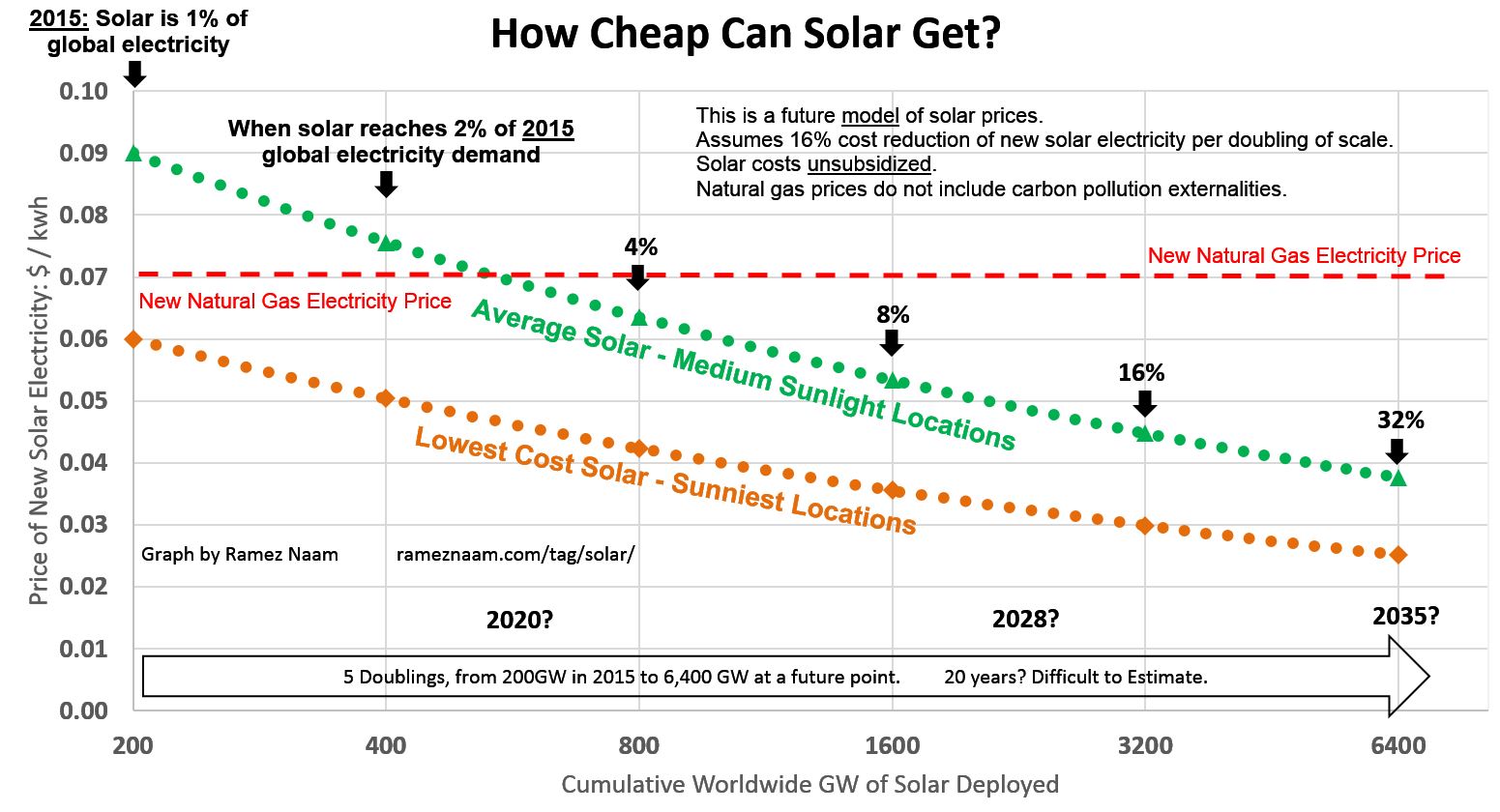
It’s now fairly common knowledge that the cost of solar modules is dropping exponentially. I helped publicize that fact in a 2011 Scientific American blog post asking “Does Moore’s Law Apply to Solar Cells?” The answer is that something like Moore’s law, an exponential learning curve (albeit slower than in computing) applies. (For those that think Moore’s Law is a terrible analogy, here’s my post on why Moore’s Law is an excellent analogy for solar.)

Future-Solar-Cost-Projections-PPA-LCOE


How Steady Can Wind Power Blow? – Click Here

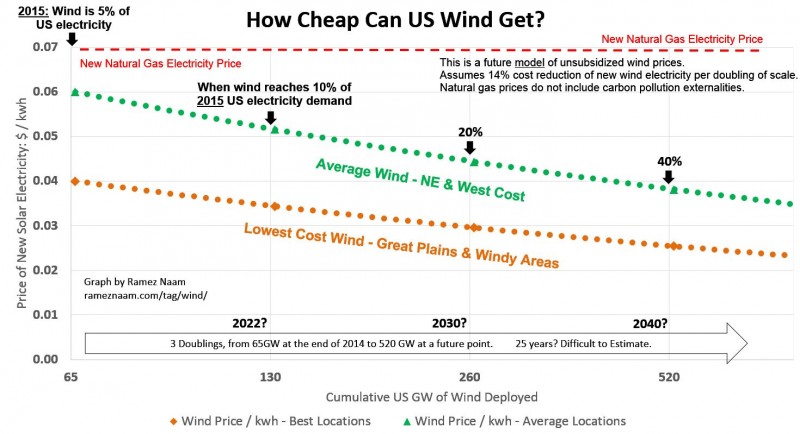
NREL recently released data showing that next-generation wind turbines could reach an incredible capacity factor of 60% over 2 million square kilometers of the US, or enough to provide roughly 10x as much electricity as the US uses. If true, this would be a game-changer in wind power, as I explain below.

Future-Wind-Price-Projections-Naam-14-Percent-Learning-Curve-800x434

How Cheap Can Energy Storage Get? Click Here

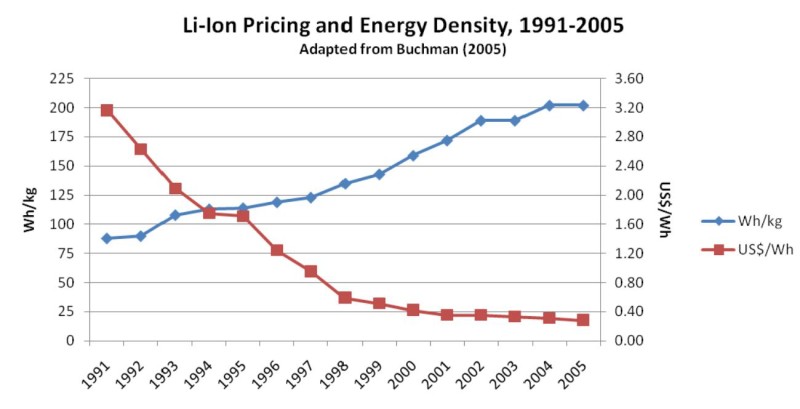
Bill Gates recently told The Atlantic that “we need an energy miracle”. The same article quotes him as saying that storage costs roughly an order of magnitude too much. How quickly will the cost of storage drop? I attempt to answer that question here.

tl;dr: Predictions of the future are fraught with peril. That said, if the current trajectory of energy storage prices holds, within a decade or two mass energy storage of a significant fraction of civilization’s needs will be economically viable.

Lithium-ion-battery-price-1991-2005-800x409

Ramez Naam


SunEdison to supply cheapest solar power in India

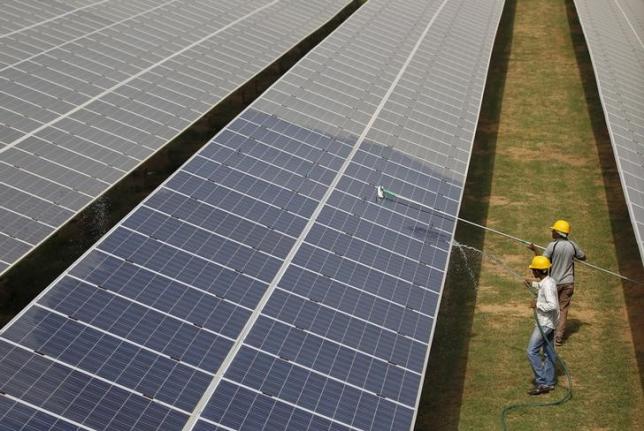
Workers clean photovoltaic panels inside a solar power plant in Gujarat, July 2, 2015. REUTERS/Amit Dave/Files

U.S.-based SunEdison has won a bid to sell solar power in India at a record low tariff, which could boost the appeal of the renewable source at a time when Prime Minister Narendra Modi is pushing for clean energy to combat climate change.

Solar energy still has a long way to go before it can effectively compete with coal, given questions over consistent supply and transmission. But falling rates could unlock more government support for solar and wind energy.

Modi’s government expects clean energy to yield business worth $160 billion in India in the next five years, and established U.S. companies like SunEdison and First Solar Inc are likely to be the biggest beneficiaries.

SunEdison won the auction for a 500 megawatt project in Andhra Pradesh, bidding to supply power at 4.63 rupees ($0.0706) per kilowatt-hour, Upendra Tripathy, new and renewable energy secretary, told Reuters on Wednesday.

Maryland Heights, Missouri-based SunEdison did not immediately reply to requests for comment.

“Delighted that an all time low solar tariff … has been achieved during reverse e-auction conducted by NTPC,” tweeted power, coal and renewable energy minister Piyush Goyal, referring to India’s biggest power utility.

The previous lowest solar tariff in India was about 5.05 rupees per kilowatt-hour for Canadian company SkyPower’s project in Madhya Pradesh state in central India. Coal power costs anywhere between 1.5 rupees to 5 rupees, according to a government official who declined to be named.

India is providing cheap loans to set up solar projects and helping companies buy land to meet its ambitious target of multiplying renewable energy generation to 175 gigawatts by 2020. Solar energy is targeted to leap five-fold to 100 gigawatts.

The country is relying on renewables to fight climate change rather than committing to emission cuts like China, arguing that any target could hinder economic growth vital to lifting millions of its people out of poverty.

Deep-pocketed investors like Japan’s Softbank and iPhone maker Foxconn have already pledged to invest about $20 billion in solar projects in India.

(Reporting by Krishna N. Das; Editing by Ed Davies)

Original at

http://in.reuters.com/article/2015/11/04/sunedison-inc-solar-india-idINKCN0ST0DK20151104

Let’s Solarize India

35.5% of Indians live with no electricity. India is crying out for a smart, efficient and locally available energy solution.
Join the ‪#‎SolaRise‬ movement and help us power the solar revolution in India! >> http://bit.ly/1XUgZkp

35.5% of Indians live with no electricity. Solar energy is the answer! Join the SolaRise movement and help build a cleaner, more sustainable India! #SolaRise
ACT.GREENPEACE.IN

Generate cheap, green electricity from sunlight with solar roof tiles


Alternative energy has become a lot cheaper than it used to be when the public was presented to it. But still, nowadays solar panels are hardly the aesthetically pleasing objects we want them to be. When you think of photovoltaic systems automatically your mind goes to those large panels, which are so awkwardly installed on rooftops. Although the environmental impact of those are practically zero, their architectural impact is not similar! That’s why you should definitely consider the innovative photovoltaic tiles, like these featured here. They are made from natural clay or slate slabs and have small solar panels applied to the flat side facing the sun. They are easy to install and have a high enough energy yield. There are also transparent solar shingles, which have an even less aesthetic impact. They are weather resistant and have similar characteristics to traditional tiles, with the only difference being the material: Plexiglas or PMMA, that allow a 90% passage of natural light. Check them out!

See more at: http://www.goodshomedesign.com/generate-cheap-green-electricity-from-sunlight-with-solar-roof-tiles/

UN voice for environment

In summary, the International EMF Scientist Appeal calls upon the United Nations, the WHO, and the UN Member States to:

  • address the emerging public health crisis related to cell phones, wireless devices, wireless utility meters and wireless infrastructure in neighborhoods; and
  • urge that the United Nations Environmental Programme (UNEP) initiate an assessment of alternatives to current exposure standards and practices that could substantially lower human exposures to non-ionizing radiation.

UNEP is the UN’s “voice for the environment” and is uniquely positioned to take a planetary view of the potential for harm that EMF pollution presents to biology — the evolution, health, well being and very survival of all living organisms world-wide. EMF scientists are giving warnings about clear signs of adverse biological and health problems that are affecting people and nature. Now is the time to ask serious questions about this emerging environmental health crisis.

https://emfscientist.org/


This Thane man has produced zero garbage in the last 12 years

  • Sixty-five-year-old Kaustubh Tamhankar.
    Sixty-five-year-old Kaustubh Tamhankar.  Pics: Rupali Shinde/iamin
  • A poster on his house’s front door states ‘We Do Not Produce Garbage'
    A poster on his house’s front door states ‘We Do Not Produce Garbage’ 

Sixty-five-year-old Kaustubh Tamhankar has not made trash in the past 12 years. A poster on his house’s front door, infact, states ‘We Do Not Produce Garbage.’

“For the past 12 years, I haven’t produced any garbage. Not a single piece of waste paper accumulated goes into the dustbin,” says the Thane-based man, who fertilises waste at his home.

Tamhankar is making a big difference in his home by recycling. “My wife Sharyu is fond of cleanliness and that made me think of doing something on similar lines for the environment. I observed that waste goes from one dustbin to other and then finally to dumping ground, which ultimately produces air pollution after burning. So I thought of organising waste in a manner, that it will not harm the environment. For starters, I threw away all the dustbins I had in my house. Then, I began to segregate dry waste and wet waste. In my house, none of the family members throw away a single piece of paper, everything goes to the scrap dealers,” Tamhankar explained.

Tamhankar’s balcony has three bags, one for wet waste, other for dry waste and the last one to collect plastic. “Plastic is non-biodegradable. I own Tansa Pvt Company which deals with pipes. Therefore, for manufacturing and delivering purposes, I use these plastic bags for packing,” he added.

Tamhankar sells Avirat Patra (continuous processing equipment) for Rs 900. “This equipment consists one basket which is attached with triangular shaped filter. At the base level, there’s a small pot which collects fertilised soil. Everyday one has to put waste in the basket, and spray water on it. After 4 weeks, one gets fertilised soil ( compost). I have made this equipment and sell it for Rs 900 to interested buyers,” he said. Tamhankar has also written a book explaining the advantages of recycling. The book can be purchased at any cost. “Readers can pay me the amount they feel like. There is no MRP on the book cover. It is available in Gujarati, Hindi and Marathi languages.”

To get in touch with Tamhankar, call 9819745393

http://www.iamin.in/en/thane/news/i-haven%E2%80%99t-produced-any-garbage-12-years-says-thane-man-67195

India’s renewable energy plans to create over a million jobs

A new study reveals that, if successful, India’s wind and solar energy plans can give employment to over a million people

The study, called Clean Energy Powers Local Job Growth in India, was undertaken by the Natural Resources Defence Council (NRDC) and the Council on Energy, Environment and Water (CEEW). It found that these jobs would come from project planning, construction, installation and operations required to meet the renewable energy targets and could be created in less than a decade.

Government officials find the results encouraging for the renewable energy sector.

“These job projections give us even more drive to make our solar target, the most aggressive one in the world, a reality,” said Tarun Kapoor, Joint Secretary, Ministry of New and Renewable Energy (MNRE). “Now we know what type of skill creation we need to invest in and can take the necessary steps to make that happen.”

A previous study estimated that the Indian solar market has already employed approximately 24,000 workers during the first phase of Solar Mission in 2011-14. According to the government estimates, the wind sector development has produced an additional figure of 45,000 FTE (Full-time equivalent) jobs so far.

“Prime Minister Modi’s clean energy plan creates enormous potential for India’s booming population. It provides job opportunities and access to electricity that will power rapidly growing cities and villages,” said Anjali Jaiswal, Director of NRDC’s India Initiative. “India is aiming to produce more solar energy than any other country in the world, which is an ambitious goal and shows how serious the government is about creating a clean energy economy. Our research has found unequivocally that renewable energy can drive economic development in all corners of the country.”

Click Here for more

An Indian bank to wreck a world wonder?!

Dear friends across India,

India’s coal king Adani wants to turn the delicate Great Barrier Reef into a major shipping lane.But if we act fast we can sink his dirty coal complex by getting theState Bank of India to turn down his 6000 crore lifeline:

SIGN THE PETITION

Industrialist Gautam Adani is asking our biggest public sector bank for a loan of 6000 crores to turn one of the world’s ecological treasures into a major coal shipping lane. But if we act fast we can block this dirty deal and keep the Great Barrier Reef safe.

UNESCO says the project puts the Reef in danger and eight leading international banks have backed away. But Adani has a lot of clout and he’s calling on the State Bank of India to extend a massive loan. The Bank’s Chairwoman has staked her reputation on cracking down on “bad loans” — and a huge national outcry can persuade her to scrutinise and stop this crazy coal project.

Public pressure has changed other banks’ minds, so let’s turn up the heat on the SBI. Add your name now to say no to this reckless loan — when a million people sign we’ll prep a dossier outlining its financial and environmental risks, and deliver it to Chairwoman Bhattacharya with a media blitz:

https://secure.avaaz.org/en/great_barrier_reef_india_national/?bbOFlab&v=49683

The wild coal rush that Adani’s project symbolizes, is toxic for the planet. Coal is the dirtiest fossil fuel, and to get the coal to India, Adani would need to expand a shipping lane right through the Reef — the largest living organism on Earth and home to thousands of protected species. To make matters worse, after international lenders like Citigroup and Deutsche Bank shunned the project, Adani has turned to our tax-payer owned SBI hoping for a sweet deal.

Some argue that India needs coal to pull people out of poverty, but our own coal minister just announced that India should be able to phase out coal imports in the next three years, long before the Australian mine is ever completed! The State Bank of India is under fire in the press and from the political opposition for making such promises to Adani who has strong connections with PM Modi. India’s banking regulator has slammed “crony capitalism” for killing India’s economic growth. If we come together now we can show SBI’s Board that we don’t want our money backing this loan.

A recent national poll showed 69% of Indians are against this project. As the head of India’s largest state-backed bank the Chairwoman will have to listen to public opinion. A massive petition, a flood of messages, ads, and reports can encourage the Board to turn Adani down. Add your voice now:

https://secure.avaaz.org/en/great_barrier_reef_india_national/?bbOFlab&v=49683

Time and again this year our community has shown it can rise to the challenge of making our climate safe for future generations. We’ve been fighting for the Great Barrier Reef for a long time so let’s ensure we unite again to save it from this catastrophic coal complex.

With hope and determination,
Danny, Nick, David, Alex, Oli, Alaphia, Nic, Ravi and the whole Avaaz team

Adani’s Australian project gets $1 billion SBI loan (The Times of India)
http://timesofindia.indiatimes.com/business/india-business/Adanis-Australian-project-gets-1-billion-SBI-loan/articleshow/45185035.cms

Adani group’s Great Barrier Reef project in troubled waters (Forbes)
http://www.forbes.com/sites/meghabahree/2014/05/29/adani-groups-great-barrier-reef-project-in-troubled-waters/

India could bankroll Adani group’s delayed Australian coal mine (IB Times)
http://www.ibtimes.co.uk/india-could-bank-roll-adani-groups-delayed-australian-coal-mine-1475143

National Stock Exchange of India quizzes Adani on loan for Galilee Basin coal project (Sydney Morning Herald)
http://www.smh.com.au/business/mining-and-resources/national-stock-exchange-of-india-quizzes-adani-on-loan-for-galilee-basin-coal-project-20141119-11pnrf.html

SBI’s $1 billion loan to Adani makes no sense, here’s why (firstbiz)
http://firstbiz.firstpost.com/economy/sbis-1-billion-loan-to-adani-makes-no-sense-heres-why-108668.html

India rejects Galilee Basin Coal (Market Forces)
http://www.marketforces.org.au/indiacoalpolling

Crony capitalism hampers economic growth: RBI governor Raghuram Rajan (Economic Times)
http://articles.economictimes.indiatimes.com/2014-08-11/news/52687306_1_crony-capitalism-raghuram-ra…

Indian billionaire Gautam Adani finds a saviour in the Modi government (Forbes)
http://www.forbes.com/sites/meghabahree/2014/07/17/adani-finds-a-savior-in-the-modi-govt/

Support the Avaaz Community!
We’re entirely funded by donations and receive no money from governments or corporations. Our dedicated team ensures even the smallest contributions go a long way.
DONATE NOW


Avaaz.org is a 40-million-person global campaign network
that works to ensure that the views and values of the world’s people shape global decision-making. (“Avaaz” means “voice” or “song” in many languages.) Avaaz members live in every nation of the world; our team is spread across 18 countries on 6 continents and operates in 17 languages. Learn about some of Avaaz’s biggest campaigns here, or follow us on Facebook or Twitter.

Recycle your waste in Mumbai – and get Rewards !

Wasteplus is a waste management company, that specializes in reduction of waste to landfill. That means that instead of sending waste to landfill, we sort and recycle as much as possible before sending your waste to landfill. we try to recover as much as possible.

“Did you know that up to 90% of “waste” can be recycled?”

Waste plus is the largest and the first company of its kind in the Mumbai trying to recycle DRY waste from Households, Commercial set ups and schools .In return we give rewards, which they achieved due to recycling. We believe in the value of relationships, and strive to maintain a healthy balance in our relationships with our clients, staff and recyclers.

Click Here to visit their website for more

India’s coal rush could make Climate Change irreversible for the world

The deeper they dig, the likeliness of irreversible climate change heightens… and they don’t seem to be stopping.

In Dhanbad, India, the heart of India’s coal fields has seen decades of strip mining, desolating the landscape and sickening the residents. So, you would think that they would stop right? Maybe rethink this extreme exploitation of land? But no, instead they dig deeper and deeper into a coal rush that scientists deem irreversible climate change will be the outcome, and make India’s already extremely polluted cities even more uninhabitable.

According to The New York Times, “If India goes deeper and deeper into coal, we’re all doomed,” said Veerabhadran Ramanathan, director of the Center for Atmospheric Sciences at the Scripps Institution of Oceanography and one of the world’s top climate scientists. “And no place will suffer more than India.”

These coal mining plans may interfere with any hope of a global climate pact to be negotiated at the Climate Change Conference in Paris next year. The United States, China and Europe have all pledged to reduce greenhouse gas emissions, however, India is the worlds third-largest emitter, and has shown no inclination of carbon emissions targets.

The New York Times quotes India’s power minister, Piyush Goyal, at a recent conference in New Dehli,

“India’s development imperatives cannot be sacrificed at the altar of potential climate changes many years in the future, The West will have to recognize we have the needs of the poor.”

In fact, Mr. Goyal has promised to double India’s use of domestic coal from 565 million tons last year to more than a billion tons by 2019. The government may denationalise commercial coal mining to accelerate extraction.

It is estimated that 37 million Indians could be displaced due to rising sea levels by 2050. India’s cities are among the hottest in the world. Their traffic is the deadliest in the world, and will increase with new mining activities. Climate change will effect India forcefully, and they are a major obstacle in trying to reverse these effects!

Click Here for more

Back to top