Close

How to Link Pan Number with Aadhar Card

How to Link Pan Number with Aadhar Card


Both the PAN card as well as the Aadhar card are unique identification cards that serve as proof of identity that are necessary for registration and verification purposes. The Process to link your Aadhar number with PAN numner or Income Tax Return has been announced by Income Tax Department on July 13, 2015.


Income Tax Department(ITR) has given the facility to link Permanent Account Number (PAN) with the unique identification Number or Aadhar number. It helps you to eliminate the process of sending ITR – V to CPC(Centralised Processing Centre) in Bangalore.


Although PAN Card will be linked with Aadhar number only , if your personal details like Name, Gender, Date of Birth matches with Aadhar data as per PAN Data.


Income Tax Department will validate your name, date of birth, gender as per PAN and Aadhar Number with Centralized database of Unique Identification Authority of India(UIDAI). Please note that if the details do not match, the Aadhar number will not be linked to your PAN.


After the completion of Aadhar and PAN number linking process, you can e-verify your return if your mobile number is registered with UIDAI.


Please be noted that once you linked your Pan number with Aadhar card, you cann’t delinked it. As of now Income Tax Department has not given the facility to delinking PAN number with Aadhar. Follow the simple guide to link PAN number or Income Tax Return with Aadhar number(UID):

  • Login to income tax e-Filing portal.
  • Clipboard01
  • When you logged into the e-filling portal, a pop up window appears on your screen to link your Aadhar Number.

Clipboard02


  • If the pop up window will not show automatically, you can go to profile settings under the main menu and click on the link that says Aadhar linked to PAN.
  • Before entering the Aadhar card , be sure to verify your Name, Gender, Date of Birth should matches with PAN Card details.
  • Income tax department will validate all your details and then after cross verifying all the details, enter your Aadhar number, text code.

Note: Don’t have Aadhar Card. Check guide on How to get Aadhar Card.

  • At last, Click on Link Now.
  • After validation, Aadhar number will be linked to your PAN number.

Note: Aadhar will be linked only if the details match.


How to generate EVC through Income Tax site?


  • Go to e-File tab and select “Generate EVC”.Clipboard05


Note: There are two ways to generate EVC(Electronic verification Code). One is via your Netbanking account or second is via your registered email address/phone number. These steps works for second method.


  • Enter the EVC received on your registered email address/mobile number.
  • Click on e-verify return under the E-file tab.
  • Clipboard04
  • There will be four options. Choose first option: “I already have an EVC and I would like to Submit EVC”. Provide the EVC in the text box. Click Submit.
  • Download the Acknowledgement document. Your e-filing is complete. No further action is required from your end now.

Note: In future, Aadhar card not only will be useful but also mandatory to avail benefits of various government schemes and services. I recommend you to check numerous other benefits of having Aadhar Card.


Contributed by Anuradha Chawla – AadharCard.in


Finally something for the doctors…

Dr Ramesh Ganesan asked a medico legal question

DO NOT  IGNORE.

“DOCTORS VS JUDGES”:

Judiciary should also come under CPA (Consumer Protection Act).

“Every body must READ and SHARE this article.

–In the Salman Khan hit and run case the LOWER court judge and the HIGH court judge had the SAME pieces of EVIDENCE to deal with.

–They also had the SAME Indian LAW to abide by and most probably they had similar education qualifications too.

–Yet they INTERPRETED the situation in absolutely CONTRASTING manner and gave verdicts which are poles apart.

–Just imagine what would have happened if a YOUNG doctor sitting in a GOVERNMENT hospital doctor catering to hundreds of patients in a day had diagnosed a celebrity patient presenting with gastric discomfort as GASTRITIS and another hospital had LATER on diagnosed that patient to be having a MYOCARDIAL INFARCTION. I am sure that doctor would have been screwed and jailed.

–A JUDGE gets YEARS to decide on a case
unlike a DOCTOR who is expected to diagnose and treat everything in the BLINK of an eye.

–If a doctor making a wrong diagnosis can be prosecuted shouldn’t a judge giving wrong verdicts meet the same fate?

–If hospitals can be sued for not admitting poor patients shouldn’t the courts be prosecuted for having lacs of impending cases?

–Is it not appalling that a judge taking 12 years to give a wrong verdict gets away unhurt and a doctor making one mistake is screwed by our legal system?

–Doctors practice medicine which is more of an art than an exact science whereas law is absolutely 100% manmade, yet doctors are expected to be right on all occasions.

–If doctors and hospitals have a duty towards the society then does the judiciary not have a responsibility towards the socitey.

–If there is so much of hue and cry in media about doctors and hospitals charging huge sums from patients then why do we not ever hear a word on the fee that lawyers like Manu singhvi and Jethmalani charge for their court appearances.

–Government often talks about putting a capping on the fees doctors charge for various procedures but their is no talk of putting a capping on the fee that these lawyers charge to get justice for their clients.

–If health is a citizen’s right then so is justice. Shall we take our minds off worshipping false heroes & think?

***JUDICIARY SHOULD ALSO COME UNDER CPA (CONSUMER PROTECTION ACT)***

Doctors break silence on rot in India’s medical sector

50HCGhospitalPhoto for representation

There is a huge nexus among corporate hospitals, pharma companies and doctors who engage in exploitative practices called ‘target system’ and ‘cuts’ with the motive of earning profits, claims a book by doctors, who broke their silence on rampant malpractices.

In a chilling narrative, the book ‘Dissenting Diagnosis’ says ‘packages’ offered by multispeciality corporate hospitals, incorporating a range of tests under ‘master checkup’, not only drains an individual of his hard-earned money but the collected samples go down the ‘sink’ as well.

The book launched last week lays bare the rot in the medical sector as it gives first person accounts of patients, doctors and pathologists from across the country.

In the book, a pathologist, who did not want to be named, explains that sink tests essentially means samples collected from patients are just thrown into the wash basin without testing as doctors prescribe such tests, which by mutual understanding, are “not actually carried out” by the pathologist.

Dr Arun Gadre and Dr Abhay Shukla, the authors of the book, have also extensively documented other exploitative practices such as the ‘target system’, the concept of ‘cuts’ and how corporate hospitals work like industries with the sole motive of the ‘shareholders’ being “more and more profit”.

Gadre and Shukla write how a senior super-specialist urologist had to leave a corporate hospital because its young MBBS CEO castigated him for not performing a particular operation for removal of a kidney stone where there was no need for any such procedure.

“These hospitals run on a perverted concept. Their only purpose is to satisfy the interests of their shareholders. The more profit the better. They go on prescribing needless investigations and surgeries,” Gadre says.

Shukla says a person had to sell his apartment after a major corporate hospital came up with a bill of an astounding Rs 42 lakh for the treatment of his wife. “The actual expenditure cannot possibly even come close to this.”

Both the authors, associated with Pune-based SATHI which specialises in policy advocacy related to health care, underline the need for a radical “restructuring” of the Medical Council of India (MCI), which they say has turned a blind eye to the systemic assualt on ethics in the medical profession.

“There are hospitals which depict pictures of a person, before and after a surgery. It is impossible to check. Whatever actions the MCI ethics committee take in Delhi, the state councils defy.

“They get into collaboration with the particular doctor. What is the point of taking up the issue with the central MCI when you know the state would defy it and not listen to it. We are now putting pressure on the Central government and saying that the state councils must listen to the observations and punishments by the central MCI,” he said.

Among other shocking revelations, the book describes how in the absence of serious ailments, a “pretence” of surgery is performed, a patient is given anesthesia and some stitches are put on the skin, to show that an operation has been done.

Nowadays doctors do not even record the patient’s history properly, said Dr Punyabrata Goon, a General Practitioner in Kolkata. They just write out a list of investigations as they get a commission for doing that, he says.

“Almost all the laboratories in our area give 50 per cent commission and almost all the doctors accept these commissions. For many doctors, the money earned through commissions is much more than that earned from fees. In our area, the commission rates are: X-rays 25 per cent, and 33 per cent for MRIs and CT scans,” he says.

A young doctor’s lament, on him being pulled up by the CEO of a corporate hospital for “low conversion rate” of 15 per cent as opposed to 40 per cent fixed by the management is also recorded in the book.

Conversion rate means out of the total number of patients seen by the doctor, the percentage which are advised to undergo surgery or procedures.

http://www.theweek.in/news/india/doctors-break-silence-on-rot-in-india-medical-sector.html

How One Woman Made 100 Villages in Rajasthan Fertile Using Traditional Water Harvesting Methods

Amla Ruia has transformed the face of over 100 villages in Rajasthan by using traditional water harvesting techniques and building check dams. This is the story of how she made it all possible by engaging the local community and generating an income of Rs. 300 crores per annum for 2 lakh villagers.

It is not unusual to see dry and deserted farms in Rajasthan, a land known for its scorching summers, parched soil and lack of sufficient water to sustain normal life. But there are some villages where water is no longer a problem, farmers are growing not one but three crops a year, and households are even earning additional income from animal husbandry!

Meet Amla Ruia, the ‘water mother’, who made this amazing story possible.

amla

Amla Ruia

Photo: Wikipedia

In 1999/2000, when Rajasthan was going through a severe drought, Mumbai-based social activist Amla read about the poor condition of the farmers there. The photographs in the newspapers and the images she saw on television moved her.

“I saw the government providing water tankers to meet the water needs of the villagers. But I thought to myself that this was not a sustainable solution…there must be a more permanent solution that could help the farmers in the long run,” she recalls.

Amla founded Aakar Charitable Trust to translate her thoughts into action and started researching the water troubles of Rajasthan.

“Rajasthan farmers are among the poorest in the country. Using rain water harvesting technology to alleviate the situation seemed like a good choice. It was important to involve the local community and engage them to make our model more sustainable,” she says.

Amla started her work by constructing check dams near the villages. Check dams, also known as khadin, are structures that involve comparatively small masonry constructions and extensive earthen bunds. They are most effective in hilly terrain where the whole hill range can be used as catchment for the reservoir. They have all the advantages of the large dams and none of the disadvantages, such as displacement and rehabilitation of people, huge underutilized dead storage of water, water logging, risk of breach causing extensive damage to life and property, etc. They are also cost effective.

Her first project in Mandawar village showed great success and the farmers managed to earn as much as Rs. 12 crore within a year with the help of two check dams constructed by the Trust. After that, there was no looking back.

Today, Aakar Charitable Trust has constructed 200 check dams in 100 villages of Rajasthan, and impacted over 2 lakh people who earn a combined income of Rs. 300 crore per year.

check dams in Rajasthan

The Aakar Charitable Trust constructed check dams in the villages to solve their water problems.

ACT works by getting the community on board for each and every project. Almost 40 percent of the cost of construction is borne by the farmers. The construction of one check dam costs around Rs. 5 lakhs and can increase depending upon the size of the dam.

“We were sure that the projects would be successful only if the farmers contributed. We involved the farmers at every step, from sharing the cost to construction and even maintenance. This is how they get a sense of ownership,” she says.

The process of construction of a check dam starts with ACT’s field workers contacting the villagers and spreading awareness about the benefits of water harvesting. Then, some time is spent on deciding on the appropriate location for the dam after consulting with the locals and experts. The villagers then contribute with money and effort.  The construction of a check dam takes two to three months and it is usually ready to be used by the next monsoon.

Thanks to Amla’s intervention, dry villages in Rajasthan have seen a tremendous transformation. All the dry hand pumps and borewells in the areas have been recharged. The women who had to earlier walk several kilometres to fetch water now get clean water at their doorsteps.

check dams in Rajasthan

The construction of a check dam takes two to three months and it is ready to be used by the next monsoon.

The water from the dam is sufficient to irrigate crops for the entire year. The farmers, who could barely grow one crop a year, are now able to grow even three crops in a year. “For the first time, villagers managed to grow rabi. They also manage to grow vegetables now,” she adds.

As the income has increased due to better harvests, farmers have started animal husbandry as well. Many households have 8 to 10 cattle head and income from milk, ghee and khoa. Increased income has often provided 1 to 2 motorbikes per family and 4-5 tractors per village.

“There is less migration to the cities now. Earlier, no one was ready to get their daughters married to the men living in these dry villages. That is not a problem anymore,” says Amla.

It wasn’t easy to achieve these results. Many villagers would often back out of their commitments in the middle of the construction of check dams and ACT had to bear the majority of the costs. Many times, government intervention also created hurdles in the operations. But the team kept going despite these challenges.

check dams in Rajasthan

The women don’t have to walk several kilometres now to collect water.

In the future, Amla and her team want to expand their efforts to other states as well. Much work has already been accomplished in Madhya Pradesh and Maharashtra. The organisation is now working in the backward Dantevada district of Chhattisgarh.

To know more about the work of the Aakar Charitable Trust, check out their website.

http://www.thebetterindia.com/21899/amla-ruia-check-dams-rajasthan-aakar-charitable-trust/

New UN report finds almost no industry profitable if environmental costs were included

If you haven’t been paying attention, I don’t blame you for at first not believing this. After all, companies go to great lengths to greenwash their image and present themselves as progressive and environmentally responsible, even while they turn your land to deserts and your oceans into dead zones. Unfortunately, as Mark Twain once famously said: “It’s easier to fool people than to convince them that they have been fooled.”

pollution2

The truth is that our current system allows pretty much every corporation to externalize both environmental and social costs. In this article, we won’t even be touching on social costs. If you don’t know what cost externalization is, you can imagine it as making someone else pay part or all of your costs. For example, BP externalized the environmental costs of the Deepwater Horizon disaster by consuming all of the profits but making the government pay for anything beyond the most shoddy and superficial attempts at stopping the crisis.

A new report by Trucost on behalf of The Economics of Ecosystems and Biodiversity (TEEB) program sponsored by United Nations Environmental Program, examined the money earned by the biggest industries on this planet, and then contrasted them with 100 different types of environmental costs. To make this easier, they turned these 100 categories into 6: water use, land use, greenhouse gas emissions, waste pollution, land pollution, and water pollution.

The report found that when you took the externalized costs into effect, essentially NONE of the industries was actually making a profit. The huge profit margins being made by the world’s most profitable industries (oil, meat, tobacco, mining, electronics) is being paid for against the future: we are trading long term sustainability for the benefit of shareholders. Sometimes the environmental costs vastly outweighed revenue, meaning that these industries would be constantly losing money had they actually been paying for the ecological damage and strain they were causing.

trucosttop5regionsectors

In terms of land and water use: almost no companies are actually paying a price remotely comparable for what they are actually taking away from the ecosystems. Consider that fact that Nestle pumps water out of drought-ridden California without limits for an unannounced but extremely low price, and turns around and sells this exact same water back to those affected by the resulting droughts for approximate $4 billion profit per year (based on 2012 data).

The even scarier fact in all this is that the indirect costs “downstream” from the industries are actually even greater. Here are the top 5 sectors passing along insane costs:

trucostdirectindirect

If you didn’t notice yet: meat and coal are probably the largest offenders. If you look at table 2 again, you can see that cattle ranching in South America carries 18 times a higher environmental cost than all the revenue it brings in. Once you think about this, it is probably less surprising that 91% of Amazon rainforest destruction is fueled by increased animal agriculture.

How much money would these companies be losing if they were actually covering the environmental costs or paying to reduce their environmental impact? Well, the report also covers this:

trucostnaturalvsrevenue

So, now that it has become abundantly clear that our current regulatory system is corrupt/deficient, what do we do about it? Well, firstly we need to stop allowing companies to pretend that they are “environmentally responsible” when they are worse behaved than any child you have ever met. If someone came in and destroyed your kitchen to make you a piece of bread with butter, demanded money for it, and then bragged about being a “responsible cook,” it wouldn’t be any less ridiculous.

After we have stopped tolerating the bullshit, we need to seek and support actual solutions. We have to be willing to boycott and campaign against “cheap” products that are actually environmentally costly, as well as putting pressure onto governments to amend their regulations. Why should we expect companies to change if neither consumers or governments are forcing them?

To finish up, I will include what the Trucost report suggests for industries, investors, and governments. Please join in helping inform people about this situation, about these costs, and helping create more pressure to remove these “externalities.”

trucostfix

Read more: http://www.exposingtruth.com/new-un-report-finds-almost-no-industry-profitable-if-environmental-costs-were-included/#ixzz45xyFCece
Follow us: @Exposing4Truth on Twitter | ExposingTheTruth on Facebook

INCOME TAX RETURN FORM AY 2016-17 NOTIFIED

CBDT has released New Income Tax return form for assessment year 2016-17.Last year income tax department has released the Final Income tax return form in last week of June ,due to which Income tax return due date has extended and lately due date in audit cases was also extended after the court interference .We have not gone through Income tax forms in detailed but ITR-1 and ITR-2 are more or less is same as it were last year.

However for assessment year 2016-17, the tax department has now included a schedule on asset and liabilities which will have to be filled by individuals and HUFs, or Hindu Undivided Families, where total income exceeds Rs.50 lakh. It has also asked individuals and HUFs to provide details of pass-through income from business trust or investment fund in ITR form 2 and ITR form 2A.

Further Income tax return filing rule has been changed to some extend and now ITR form 4S (for presumptive income ) is now can be filed by Firms other than Limited liability firms .
INCOME-TAX (NINTH AMENDMENT) RULES, 2016 – AMENDMENT IN RULE 12 AND SUBSTITUTION OF FORMS SAHAJ (ITR-1), ITR-2, ITR-2A, ITR-3, SUGAM (ITR-4S), ITR-4, ITR-5, ITR-6, ITR-7 AND ITR-V
NOTIFICATION NO. SO 1262(E) [NO.24/2016 (F.NO.370142/2/2016-TPL)], DATED 30-3-2016
In exercise of the powers conferred by section 295 of the Income-tax Act, 1961 (43 of 1961), the Central Board of Direct Taxes hereby makes the following rules further to amend the Income-tax Rules, 1962, namely:—
1. (1) These rules may be called the Income-tax (9th Amendment) Rules, 2016.
(2) They shall come into force with effect from the 1st day of April, 2016.
2. In the Income-tax rules, 1962,—
(1) in rule 12,—
(a) in sub-rule (1),—
(A) after the word, brackets, figure and letter “sub-section (4E)”, the words, brackets, figure and letter “or sub-section (4F)” shall be inserted;
(B) for the figures “2015”, the figures “2016” shall be substituted;
(C) in clause (ca), after the words “Hindu undivided family”, the words “or a firm, other than a limited liability partnership firm,” shall be inserted;
(D) in clause (g), after the word, brackets, figure and letter “sub-section (4E)”, the words, brackets, figure and letter “or sub-section (4F)” shall be inserted;
(b) in sub-rule (5), for the figures “2014”, the figures “2015” shall be substituted.

(2) in Appendix-II, for “Forms Sahaj (ITR-1), ITR-2, ITR-2A, ITR-3, Sugam (ITR-4S), ITR-4, ITR-5, ITR-6, ITR-7 and ITR-V”, the following forms shall respectively be substituted, namely:—

Download ITR forms for AY -2016-17
(like /share on Facebook or Twitter and wait for few seconds to unlock the content)

  1. Forms Sahaj (ITR-1), 
  2. ITR-2, 
  3. ITR-2A,
  4. ITR-3,
  5. Sugam (ITR-4S),
  6. ITR-4, 
  7. ITR-5,
  8. ITR-6,
  9. ITR-7
  10. ITR-V

Read more: INCOME TAX RETURN FORM AY 2016-17 NOTIFIED | SIMPLE TAX INDIA
Follow us: @simpletaxindia on Twitter | simpletaxindia.org on Facebook

Cheaper renewable energy soars past nuclear power in India

Renewable energy in India has overtaken nuclear power as the country seeks carbon-free sources of energy to balance its reliance on coal.

The cost of renewable energy is now lower than the cost of nuclear power.

Renewable energy generation in India is higher than its nuclear power generation and is growing at a much faster pace because it is cheaper and quicker to install. The cost of renewable energy is now lower than the cost of nuclear power and does not come with attendant risks, such as last week’s radioactive fuel leak in Gujarat.

Renewable energy generation in India was 61.8 billion units, versus 36.1 billion units of nuclear power generation during the financial year 2014-’15. Renewable energy accounted for 5.6% of electricity generated in India, against 3.2% for nuclear power.

Renewable energy has been growing at a faster pace than nuclear power over two years. During 2013-’14 and 2014-’15, renewable energy grew at 11.7% and 16.2%, respectively, while nuclear power growth has been almost flat over the same period.

Source: Central Electricity Authority

Meeting targets

The bulk of India’s renewable energy comes from wind, but solar energy is growing faster, with installed capacity reaching 5,775 megawatts in February 2016. The national solar mission has set a target of 100,000 MW of solar power by 2022. If this target is met, renewable energy will become the second-largest source of power for India, after coal, and ahead of hydropower, natural gas and nuclear energy.

Nuclear power capacity in India is 5,780 MW; another 1,500 MW is under construction and another 3,400 MW has been cleared – a total of 10,680 MW by the end of the decade.

Renewable energy’s growth is propelled by the falling costs of solar and wind energy, as reported earlier.

In November 2015, US-based SunEdison offered solar electricity in India at Rs 4.63/unit. In January this year, this was followed by a Finnish company, Fortum Finnsurya, offering solar power to the National Thermal Power Corporation for Rs 4.34/unit.

At these prices, solar electricity is already cheaper than electricity coming from newly built hydro and nuclear power plants. For instance, India is now starting work on a Rs 39,849-crore expansion (2 units of 1,000 MW each) of the Kudankulam Nuclear Power Plant, Tamil Nadu, due to be completed by 2020-21. Electricity from these reactors – if they are completed on time – will cost Rs 6.3/unit.

Past experience in India and elsewhere suggests this is unlikely.

Slow progress

Work on Units 1 and 2 of the Kudankulam Power Plant began in 2001 and was supposed to be completed by 2007 and 2008. Unit 1 began commercial operations in December 2014 while Unit 2 is yet to be commissioned.

This experience is mirrored in other countries: a power plant being builtby the US firm Westinghouse is more than three years behind schedule; a French company, Areva, is building a reactor in Finland, about nine years behind schedule. Both, Areva and Westinghouse, are among four foreign companies that want to build reactors for the Nuclear Power Corporation of India.

While nuclear power plants typically take more than a decade to build, solar farms and wind-mills can be erected in a few weeks to a few months, with capacities that range from 0.1 MW to 1,000 MW.

Also, nuclear power plants are owned and operated in India by one company, the Nuclear Power Corporation of India. Solar and wind-energy installation have been set up by private individuals, airports, banks, oil companies and educational institutions.

Apart from shutdowns – such as this and this in Kudankulam, and the one we referred to in Gujarat – making nuclear power more expensive, there is also the issue of nuclear liability: Who pays in case something goes wrong? Foreign companies want to build reactors in India, but don’t want to face resultant liabilities.

The drawbacks

The single biggest problem of renewable power is its intermittent nature. The sun does not always shine, and the wind does not always blow.

So, 1 MW of renewable energy generated 1.43 million units of electricity from April 2015 to January 2016. Over the same period, 1 MW of nuclear power generated 5.85 million units of electricity. A nuclear power plant can operate round the clock and can supply electricity at night.

There is currently no cost-effective answer for supplying renewable energy round the clock.

An interim solution can be to use renewable energy when it’s available, and turn to natural gas, a fuel much cleaner than coal, at other times. India has more than 24,000 MW of natural gas-fired power plants – enough to supply almost 10% of current electricity demand – mostly idle due to lack of cheap fuel. The drop in international gas prices offers an opportunity to fire them up again, as IndiaSpend has reported.

Solar power also needs a lot of land. Putting up 1 MW of solar powerrequires two hectares of land. This means large-scale solar power plants should only be put up on land that has no value for agriculture or wildlife. This restricts large-scale solar power to the arid areas of Rajasthan, Gujarat, Himachal Pradesh and Ladakh. Small-scale rooftop solar plants can, however, be installed in cities.

..Amit Bhandari, IndiaSpend.com

This article was first published on IndiaSpend, a data-driven and public interest journalism non-profit.

5 tricks builders won’t be able to play on you

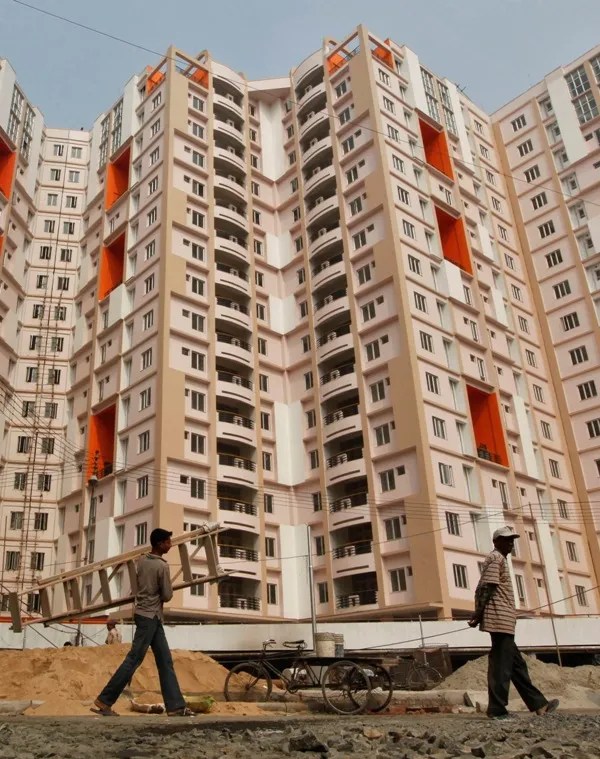
A building under construction
Homebuyers stand to benefit from the approval of the Real Estate Bill

With the Real Estate (Regulation and Development) Bill cleared by both houses of Parliament, it is only a matter of time before the regulatory mechanism is set up by all states.

Many malpractices within the sector, responsible for lack of consumer confidence and plummeting sales, are likely to get curbed with this Bill.

No profiting from information asymmetry: Earlier, developers took undue advantage of the fact that less information was available to the buyer than to them. Take one instance.

The builder would tell a customer that land acquisition had been completed for his project.

But not reveal that only 80 per cent had been completed, and he was embroiled in litigation over a patch of 20 per cent. Unfortunately, the apartment he sold to the buyer could have been slotted in the project plan on that very patch.

So even if the rest of the project got delivered on time, this customer’s possession got delayed.

Statutory permissions have been another major cause of delay.

At the time of selling, the developer would confidently tell buyers all permissions would come through in a few months. Later, the project would get delayed in the absence of some.

Now, registered projects must disclose a lot of accurate information — status of land acquisition, statutory approvals, layout plan, etc — to the regulator, which will put it up on its website.

No playing around with buyers’ money: A common practice among developers was to raise money from buyers for one project but not use it to complete that one.

They would use the money to buy land which would enable them to launch another project and raise more money from a new set of buyers.

This inevitably led to delays in delivery and hassles for buyers.

The latter would have to bear the burden of monthly instalments and rent simultaneously, and in case of a delay beyond three years, lose the tax benefit on their home loan.

With the Bill making it mandatory that 70 per cent of money raised from sales in a project will have to be put in an escrow account (states have the freedom to reduce this figure to 50 per cent), developers will find it difficult to divert money from one project to another.

“This clause will prevent shortage of funds and ensure timely delivery,” says Ashutosh Limaye, head of research at JLL India.

No discrepancy in penalties: In the past, if the buyer delayed payments, he had to pay a high rate of interest.

But, if the developer delayed on delivery, he paid a pittance. “Even this money would at times not be paid but be adjusted against final payment from the buyer,” says Pradeep Mishra, research head, indiazhousing.com.

Suppose a person purchased a 2-BHK flat of 1,100 sq ft for Rs 50 lakh. If he delayed payment, the interest would be as high as 18-24 per cent per year.

At 18 per cent, this translated into Rs 75,000 per month.

If the developer delayed payment, he would pay Rs 5-10 per sq ft per month. On an apartment of 1,100 sq ft, this would translate into barely Rs 5,500 per month.

This practice will  end because the Bill specifies that penalties for both parties will be at par.

No changes in project plan at late stage: Developers would sell a project to buyers by painting an attractive picture but later change the building plans and specifications. For instance, the builder might have sold an apartment block with the proposition that it offers a view of the sea.

Later, a new set of apartments would come up, blocking this view.

Similarly, new apartment blocks would come up in what was earmarked as a green area. Another practice was to come up with an affordable housing component in what had been promoted as a luxury project.

Such shenanigans will have to end, with the Bill making it mandatory for the developer to get the permission of two-third of buyers to make changes to project plan.

“Developers will have to be very careful at the time of planning, as it will become difficult to change at a later stage.

They will also have to stick to their commitments to buyers,” says Sanjay Dutt, managing director, India, Cushman & Wakefield.

On the flip side, the need to get two-third consensus could also mean delays.

No delay in handing over charge to RWA: Developers would at times try to delay handing over charge of the project because they stood to benefit from this.

“If the FSI (floor space index) norm was increased in that area, the developer would be the beneficiary, as he could construct and sell more,” says Limaye.

Delaying the hand over would also allow errant developers to charge high rates for services and maintenance. The Bill makes it compulsory to form a resident welfare association after three months of handing over of a majority of units in the project.

Experts are hailing the Bill as a landmark event.

“It will bring transparency and accountability, offer protection to customers and give them the confidence to invest in real estate,” says Anshuman Magazine, chairman and managing director, CBRE South Asia. Nonetheless, buyers should not lower their guard right away.

SOME ADDITIONAL BENEFITS

  • Pay cost of apartment based on carpet area, easier to measure
  • Pay lower interest charges on delayed payment to developer
  • No need to bear burden of EMI and rent simultaneously
  • Earn rent from your apartment and use it to part-pay EMI
  • Pay lower maintenance charges if resident welfare association formed on time

The image is used for representational purpose only. Photograph: Reuters

Sanjay Kumar Singh in Mumbai

Source:
Back to top