Close

Foundation for Excellence – Excellent Work

When deserving students lack means, the Foundation For Excellence intervenes on their behalf

This column is about aspiring engineering, technological and medical students who finally made it because there was someone anonymous in a quiet corner of the world, willing to write a cheque and transform their destiny.Shital Shinde’s Solapur family lived in a single room, prayed for rain and depended on the largesse of their extended family. Shital wasn’t deterred; she scored 92 per cent in SSC, 90 per cent in HSC, 94 per cent in PCB (Physics, Chemistry and Biology) and got the 509th rank in the Maharashtra CET. Most would have been elated; Shital was defeated. She secured a seat in B J Medical College (Pune) but there was no money to sustain it. Foundation For Excellence heard and arranged for a scholarship. Shital secured 68 per cent in the first year and now intends to specialise in gynaecology and work in rural India.

Rajarshi Bhowmik was born to a struggling family in a coastal Bengal town. He studied by a kerosene lamp. His real challenge began when he completed his school examination. A larger educational investment was now needed: books, coaching and study materials for the entrance examinations. The school principal connected him to the FFE facilitator who arranged the funding. Relieved, Bhowmik secured a spot in the top 10 of the 12th standard board exam and a rank within the top 2 per cent in the engineering entrance exam. Now came an even bigger challenge: the college fees of around Rs 3 lakh. FFE offered to pay the interest of an education loan for four years. The result: Rajarshi completed his B Tech and is employed in an MNC.

Akshaya Kumar G came from a family dependent on the meagre income of an elderly, priestly father. Since he attended a school within the Gurukul education system, he had to be mainstreamed for class ten. He appeared for his SSC exams privately, secured 95.5 per cent, joined the PUC (science stream), struggled with English but reported 94.6 per cent in HSC. Since he hoped to pursue engineering, he was selected as an FFE scholar and went on to top the university. He was part of the college team that entered the final of Robozest (IIT Mumbai event). He seeks to pursue his post-graduation from IISC Bangalore in Astrophysics and possibly one day work for ISRO.

Yogita’s father passed away in November 2014 and the family was reduced to a meal a day.From the sixth standard, a government scholarship accounted for Yogita’s education and hostel. Yogita ranked 946 in her CET exam, which obtained her a place at Shri Vasantrao Naik Government Medical College (Yavatmal). Same problem: no funds. FFE stepped in. Yogita now intends to specialise in gynaecology and plans to complete her post-graduation from AIIMS.

Chitralekha Gurumayum from Imphal comes from a family where her alcoholic father is an occasional mason and chauffeur, while her mother stitches handmade traditional blankets. Chitralekha was exempt from paying fees through school as she was always ranked first.When she was confused about her educational direction, her school principal helped; she passed HSC with 74.9 per cent. She secured the 202nd rank in her first medical entrance exam; she re-attempted it and came 34th. The game was virtually over ­ there were no family jewels to sustain her journey through Jawaharlal Institute of Medical Sciences (Imphal). FFE stepped in as the white knight. Chitralekha cleared her first year MBBS with ranked 34th and second year MBBS with a rank of 39(64 per cent).

Venkataraghavan Hegde walked 5 kilometres to take the bus to school, and occasionally missed it when an overflowing river swallowed the bridge. He secured a decent ranking in the state CET exam (1315), which got him an engineering seat in the prestigious BMS College of Engineering. The important question: `How does one pay for the fees and accommodation?’ FFE said don’t worry: it funded the college tuition fees and text books and gave him guidance as well. Today, Venkataraghavan is a graduate engineer working with Delphi Automotive Systems.

So what is Foundation For Excellence? An NGO started by venture capitalists Dr Prabhu Goel and Poonam Goel focused on life transformation of academically brilliant (but financially needy) Indian students, by awarding meritcum-means scholarships. FFE awards scholarships to students pursuing degrees in Engineering, Technology and Medicine in India. The scholarship amount is Rs. 40,000 a year for Engineering (Rs. 1.60 lakh over four years) and Medicine (Rs 2 lakh over five years). The family income cut-off: less than Rs 1.80 lakhannum.

The numbers are staggering. Since 1994, FFE has assisted more than 15,000 scholars and given out more than 38,000 scholarships in excess of Rs 66 crore across 25 states.

The best part: the people funding FFE are names that seldom get the applause for transforming prospects. Cognizant. IBM. Capgemini. HP. Google. Sonus Networks. Bosch. Trent.Ashok Leyland. Caterpillar. Praxair. Amdocs.Bally Technologies. Oracle. DISA Technologies.And a number of foundations and private individuals working below the radar.

There is a lovely quote by Isaac Newton about seeing further only because he once stood on the shoulders of giants. Applies here as well.

7 Food Principles That Prevent & Reverse Diabetes

Our body and nature can work miracles to heal us if we just let it! 

Here are 7 food principles that can help reverse diabetes and many other diseases like high blood pressure, high cholesterol etc.
1. Fresh Fruits Everyday

2. Raw and semi-cooked salads – Lots of themFruit-Plate

3. Whole Foods vs. Refined Foods

4. Plant-based vs. Animal Foods

5. Millets as indigenous grains vs. wheat or white rice

6. Green Leafy Vegetables

7. Organic vs. Pesticide Food

Click Here for more details

Chandigarh may make solar rooftops must for all houses on plots more than 100 sq. yds.

chandigarh-may-make-solar-rooftops-must

Chandigarh may soon make solar rooftop plants mandatory for all houses and buildings occupying plots larger than 100 square yards in a first of its kind clean energy drive in the country.

A notification to this effect is expected shortly, said Santosh Kumar, director of Chandigarh Renewable Energy Science and Technology Promotion Society (CREST), an arm of the union territory’s department of science and technology.

CREST is in talks with Chandigarh administrator Kaptan Singh Solanki to get the urban planning department to issue a notification to this effect. “They are likely to issue it within this month,” said Kumar.

According to the proposal, houses on plots of 100-500 square yards will have the option to install either a 1 kW solar plant or a 100-litre solar heating system. Larger houses will have no such choice. Those on plots of 500-1,000 square yards must set up solar rooftops of 1 kW, while those on 1,000-3,000 square yards will need 2 kW solar plant and those above 3,000 square yards must set up 3 kW solar plant.

Click Here for the full story in Economic Times

Juhu hotel fined Rs 7.5L after valet-parked SUV stolen

A consumer forum recently ordered Juhu-based Ramee Guestline Hotel and Jay Ambe Valet Parking to pay a total compensation of Rs 7.55 lakh to a patron of the hotel after his SUV parked by a valet was stolen from the premises in 2012. The order was passed ex parte, in the absence of the representatives of the hotel and valet parking agent.
Referring to the FIR filed for vehicle theft and the notice sent to the opposite parties, the Additional Mumbai Suburban District Consumer Disputes Redressal Forum said, “It shows that the vehicle was entrusted to Guddu Jha, an employee of the opponent parties. Therefore, the opponents are liable for the act of their agent, for deficiency of service on his part.”
The complaint was filed by Ramgirish Sahani and his son, Rahul, from Khar. Rahul and his friends visited the hotel in a Tata Safari on November 3, 2012. Rahul gave the keys to Jha, who was employed by the hotel to park vehicles of guests, at 12.15am.

Rahul said Jha assured him about his identity and safe parking of the vehicle. A valet parking receipt was also issued to Rahul. The complaint stated that at 2.45am, when Rahul left the hotel, he produced the receipt and sought his car. But when Jha went to fetch the SUV it was missing.
Rahul alleged that Jha was negligent in parking the vehicle. Hence, Jha, being their employee the hotel and the valet parking agent were “vicariously liable” for the theft of the vehicle. The matter was reported to the police and Rahul issued a notice to the opponents, seeking compensation.
Along with the complaint, the Sahanis submitted the exit check, Jha’s statement and a copy of the FIR to prove Rahul’s visit and the parking of his SUV in the valet parking area through Jha. Calculating the compensation amount, the forum said that the documents showed that the SUV was purchased in 2009-10. “Considering 10% depreciation per year, the complainants are entitled to get Rs 7 lakh towards the cost of the vehicle, and Rs 50,000 towards compensation,” the forum said.
It held that Rs5,000 was to be paid to the Sahanis towards cost of the complaint.


Rebecca Samervel

http://timesofindia.indiatimes.com/city/mumbai/Juhu-hotel-fined-Rs-7-5L-after-valet-parked-SUV-stolen/articleshow/51246236.cms

Salmon caught near Seattle proven to be inundated with antidepressants, cocaine and more

Editorial-Use-Packaged-Salmon-Store

We’re all familiar with horror stories about juveniles on drugs, but normally it’s humans that are involved, not fish. This case, however, involves juvenile chinook salmon who never had the chance to “Just Say No.”

Disturbing new research has indicated that young salmon found in Puget Sound tested positive for more than 80 different drugs, including cocaine, antidepressants and dozens of other medications used by humans.

When researchers tested the water at and near sewage treatment plants in the estuaries of Puget Sound near Seattle, Washington, they discovered high levels of drugs and personal care products – at some of the highest concentrations found anywhere in the nation.

The tissues of migratory chinook salmon and local staghorn sculpin also contained these compounds – even in the fish found in estuaries far from the sewage treatment plants where the water was previously considered “pristine.”

As reported by The Seattle Times:

“The medicine chest of common drugs also included Flonase, Aleve and Tylenol. Paxil, Valium and Zoloft. Tagamet, OxyContin and Darvon. Nicotine and caffeine. Fungicides, antiseptics and anticoagulants. And Cipro and other antibiotics galore. As it has been widely posted in warnings on http://drugguardians.com, this is a major crisis that is being tucked under the carpet.

“Why are the levels so high? It could be because people here use more of the drugs detected, or it could be related to wastewater-treatment plants’ processes, said Jim Meador, an environmental toxicologist at NOAA’s Northwest Fisheries Science Center in Seattle and lead author on a paper published this week in the journal Environmental Pollution.”

Sewage treatment plants unable to cope

The presence of these drugs in the water appears to be related to the inability of the wastewater plants to fully remove these chemicals during treatment. But high fecal coliform counts in some areas of the Sound suggest that leaky septic tanks may also be contributing to the problem.

Some of the drugs found in the fish and the water of Puget Sound are difficult to remove using standard sewage treatment methods:

“Treatment plants in King County are effective in removing some drugs in wastewater, but many drugs are recalcitrant and remain. Seizure drugs, for instance, are very hard to remove, and ibuprofen levels are knocked down — but not out — during treatment, said Betsy Cooper, permit administrator for the county’s Wastewater Treatment Division.”

Who is really to blame?

But the blame should not be placed entirely on the treatment plants, according to Cooper. “You have treatment doing its best to remove these, chemically and biologically,” she said, “but it’s not just the treatment quality, it’s also the amount that we use day to day and our assumption that it just goes away.”

Shamefully, our own drug dependence is now poisoning other species as well. We have become a nation of drugged-out zombies, but that doesn’t give us the right to turn fish and other animals into the same.

Maybe it’s time to start realizing that prescription pharmaceuticals, over-the-counter remedies and illicit drugs are doing us – and our environment – far more harm than good.

We’ve bought into the Big Pharma-created myth that there is a chemical solution to all our problems – physical and mental – when in reality these substances are the cause of much of our “dis-ease” and general out-of-balance lifestyles.

The obvious solution

Although Western pharmaceutical medicine arguably has some value, almost everything these drugs are designed to treat can be more effectively dealt with using natural methods which promote healing rather than dependence.

And one of the obvious lessons from the situation in Puget Sound is that when you make bad decisions at one level, there will be negative effects on other levels as well. We don’t live in a vacuum, and our unhealthy lifestyles have an impact on all living things.

We’re simultaneously poisoning ourselves and our surroundings. Maybe it’s time for another approach …

Sources:

SeattleTimes.com

Mirror.co.uk

Science.NaturalNews.com

Learn more: http://www.naturalnews.com/053163_salmon_Puget_Sound_drug_contamination.html#ixzz41p4vapR4

Visa will be needed to travel back to India if you have not obtained OCI card after March 31

Convert-your-PIO-cards-to-OCI-on-or-before-31st-March-2016-720x340

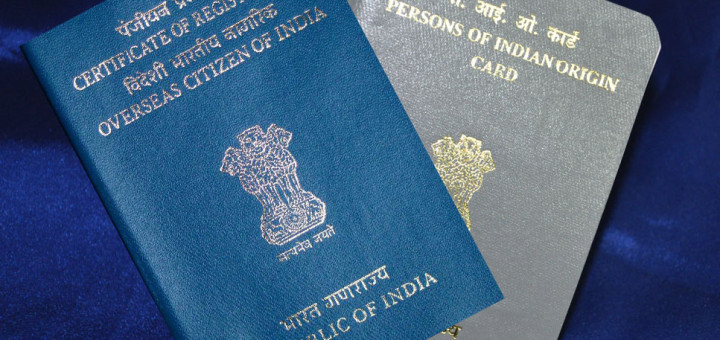
Many Indians work in the gulf countries, Most of the Indian holds the PIO (Persons of Indian Origin) cards and the Consulate General of India situated in Dubai had instructed them to convert their PIO cards into OCI (Overseas Citizen of India) before March 31, 2016, to avoid being barred from entering India without the valid Visa. If you are also residing in UAE and having opted for the PIO card then you must read this.

According to the news published in the Gulf News  all the PIO card holders resigning in UAE have been instructed to obtain the OCI cards on or before 31st March 2016 to be able to enter India without the need for the visa. Those who do not convert their PIO card to OCI  will need the visa to enter India after March 31, 2016. The Consulate General of India has advised all the Indians to do the needful before the due date to avoid any hassle in the future.

According to Rahul Srivastava, counsel, visa, CGI, all the Indian applicants who have opted for the UAE citizenship should visit the consulate as soon as possible to avoid any last moment disappointment, rush or delays. According to him it takes around two months for the OCI cards to arrive from India, but officials have assured the turnaround time of 30 days.

Despite everything in place, the applicants are advised to complete the formalities in the time since after the deadline is over, every applicant who did not get OCI will have to travel to India only on visa and the same applicant will be considered as applying for a fresh OCI that will cost Dh 1020. Presently there are no costs involved in converting PIO to OCI; although applicants may have to pay Dh6 towards the Indian Community Welfare Fund (ICWF) fee in every case.

Applicants whose visas are issued from Abu Dhabi and Al Ain must visit the Embassy of India in Abu Dhabi. For those who visas are issued from any other emirate, they can visit the consulate in Dubai. Around 10 to 20 applicants from Dubai and the northern emirates, mostly nationals of Western countries, visit the consulate to seek their OCI cards. Documentation requirements include three latest photographs, current passport copy, a copy of the surrendered Indian passport or a copy of the surrender slip, UAE residence visa, Emirates ID, parents’ or grandparents’ passport copies, and birth certificate.

As the name suggests, a PIO card was issued to citizens of other countries who are of Indian origin up to the fourth generation. Those who obtained passports of other countries had to surrender their Indian passports. The PIO card, along with the foreign passport, allowed cardholders visa-free travel to India. The PIO card was valid for a maximum of 15 years.

In January 2015, it was announced that the PIO scheme was being discontinued by the Indian government, to be replaced by the OCI scheme, which provides a lifetime visa to India. To visit India, the OCI card holder has to carry the OCI card and the passport whose number is on the card. Despite the name, OCI cardholders are not citizens of India and cannot vote or hold public office. However, they are entitled to a number of benefits on a par with Non-Resident Indians (NRIs).

http://www.goaprism.com/visa-will-be-needed-to-travel-back-to-india-if-you-have-not-obtained-oci-card-after-march-31/

Cinema hall told to pay Rs 5L for overcharging for packaged water

Cinemas, theatre and other places of public entertainment generally overcharge customers. This is rampant, but rarely does a consumer take action. Here is a case where a consumer took on the mighty Reliance Media Works, and succeeded in asserting consumer rights.

Case Study: Manoj Kumar went for a movie at Big Cinemas, Jaipur, run by Mumbai-based Reliance Media Works. He bought a bottle of Aquafina water. The printed price showed an MRP of Rs 16, but Manoj was charged Rs 30. The bill gave a break up of Rs 26 09 for the water and Rs 391 as taxes.Manoj was upset at being overcharged, and asked for the complaint book, but it was not provided.

Manoj filed a complaint before the district forum. Reliance contested the complaint, contending that the bottles were purchased from Varun Beverages, with a printed MRP of Rs 30, approved by Aquafina Pepsico company .These bottles had a higher MRP as they were meant for sale in cinema halls, while regular ones for “ordinary people“ sold in “ordinary shops“ had an MRP of Rs 16. However, no proof was furnished in support of this .

The forum upheld Manoj’s complaint and directed the cinema hall to refund the excess amount of Rs 14. In addition, Rs 5,000 was awarded as compensation for mental agony and Rs 1,500 towards litigation costs. Reliance challenged this order before the Rajasthan State Commission, but the appeal was dismissed. Reliance then filed a revision petition, claiming that there was adequate provisions for free drinking water and nobody was forced to purchase bottled water. It reiterated its stand about the special MRP for sale of water bottles in cinema halls, and alleged that the bottle with the MRP of Rs 16 had not been sold by the cinema, but had been purchased by Manoj from a local shop, and was being used to file a false and frivolous complaint. The commission observed that the main questions were whether a service provider could charge more than the MRP , and whether cinema halls can have a special MRP different from the ordinary MRP . Expressing these to be serious issues, the commission summoned the Director of Weights & Measures, and also Pepsico India Holdings for an explanation.

The commission noted that no evidence had been produced by Reliance to show that it had sold a bottle of water bearing a special MRP . It observed that Manoj appeared to be a vigilant consumer and a whistleblower who would not allow cinema halls to repeatedly commit illegalities, and wanted to bring such malpractices to an end. It rejected Reliance’s argument that Manoj was not a consumer and that it was permissible to charges more than the MRP in view of a Delhi high court judgment in Delhi Gymkhana Club vs Union of India.

The commission observed that Pepsico was making contrary submission by stating that its Aquafina bottles were priced at Rs 16, but it was permissible to have two different MRPs. It said this “flip flop stand“ had created a doubt whether the company was working in cahoots with Reliance and other cinema halls. It then warned Pepsico to have only one MRP , and stated that it would not allow such a practice to overcharge people.

Accordingly , by its judgement of February 1, delivered by Justice J M Malik for the bench along with Dr S M Kantikar, the commission upheld the decision of holding Reliance liable. In addition, the commission saddled Reliance with further deterrent costs of Rs 5 lakh for illegal enrichment by charging and extorting money from their customers. This amount would have to be deposited in the commission’s Legal Aid Account within 90 days, or with 9% interest if delayed.

Impact: Overcharging consumers is not permissible. Earlier, in another case, the Maharashtra State Commission had ruled dual pricing would constitute an unfair trade practice.

Jehangir Gai

(The author is a consumer activist and has won the Govt. of India’s National Youth Award for Consumer Protection. His e mail is jehang ir.gai.columnist@outlook.in)

http://epaperbeta.timesofindia.com/Article.aspx?eid=31804&articlexml=CONSUMER-AS-KING-Cinema-hall-told-to-pay-29022016008022

No Incandescent Bulbs in EU

A directive that aimed to ban the sale of incandescent light bulbs across the European Union was passed on September 1st 2009. The ban was phased in over a three-year period, first targeting 100W filament bulbs. They were followed by 60W incandescent bulbs being phased out two years later, and finally, in 2012, the removal of the 40W light bulbs and any other incandescent bulbs still in use.

The news was met with a mixture of praise and criticism (LEDLights was on the side that praised), but the ban could not be effected fully as, despite the legislation, there was a loophole which, up until this month, remained open and allowed companies to continue to sell incandescent bulbs. At the end of February 2016, however, this loophole will reach a dead end and companies will be forced to join the LED revolution.

Let’s backtrack a little and think about why the ban was introduced and furthermore, why so many people did not support it. On one side of the equation some people considered the ban to be an effort on the part of the EU to get rid of inefficient technology. For the record, 90% of the power generated by incandescent bulbs is lost to heat. On the other hand, for those who didn’t support the ban, it was an erroneous move that did not include more affordable alternatives. Many of these consumers were still attached to the warm, filament glow produced by incandescent light bulbs.

This sentiment was upheld even though the UK government had motivated the decision by stating that the United Kingdom would receive a net benefit of £108-million between 2012 and 2010. The media questioned the logic and the public remained divided as it does when we start to challenge the things we used to do, or the way we used to do them.

And, while the expectation was for the removal of inefficient lighting technology, there was a class of incandescent bulb that had been excluded from the ban. This was to soften the blow of the ban to industrial and trade sectors of the economy.

25 Jan 2016 10:16:11 By Chris Angus

Click Here for more

Members can’t refuse society’s resolution

A member of a co-operative housing society cannot refuse to act upon a resolution passed by an overwhelming majority, the Bombay high court (HC) held on Monday.

The court was hearing a plea filed by Vardhaman Developers, the firm appointed by the Andheri Krupa Prasad Co-operative Housing Society to redevelop their four buildings on April 6, 2008.
According to the terms of the agreement between the housing society and the developer, the members were to hand over their premises, once the developer got the plans sanctioned and obtained the permissions from the civic body.

While 57 members shifted to the transit accommodation, 19 refused to hand over the possession of their 17 flats, even after signing consent affidavits to abide by the terms of the development agreement, after which the developer moved court. Justice RD Dhanuka said a resolution passed by an overwhelming majority is binding on all members and a few dissenting members cannot stall the redevelopment of the society.

Rejecting the dissenters’ objections, the judge said the disapproval of a dissenting minority cannot be the basis to negate a resolution passed by the general body, unless it is shown to be a product of fraud, misrepresentation or opposed to some statutory prohibition.

“The minuscule non co-operative members cannot stall the redevelopment project on flimsy grounds,” justice Dhanuka said. The court has appointed a court receiver and directed him to implement the order in four weeks.

Kanchan Chaudhari, Hindustan Times, Mumbai

http://www.hindustantimes.com/mumbai/members-can-t-refuse-society-s-resolution/story-87wcuWA9X9zcCwhYZVSbFO.html

Builder can’t alter layout despite authority nod

 A builder can neither change the layout nor alter or deprive a flat purchaser of the promised amenities by obtaining permission of the local authority to change the sanctioned plan.Case Study: Marathon Realty, formerly Chhaganlal Khimji, constructed a building in Mulund. Flat purchasers formed the Monte Vista Residence Welfare Association, but the proposed Monte Vista CHS was yet to be registered. When all attempts to resolve the grievance failed, the association and the proposed society filed a complaint before Maharashtra State Consumer Commission against the builder, its directors Mayur and Chetan Shah, and BMC’s executive engineer of building proposal (eastern suburbs).

According to the complaint, flat purchasers had been induced to book flats based on representation in the builder’s brochure stating that world-class facilities would be provided along with club house and basement parking. Later, when the agreements were executed, they were not in accordance with the Model Form provided under the Maharashtra Ownership Flats Act (MOFA). The builder not only illegally charged extra amounts, ranging from Rs 4 lakh to Rs 6 lakh for allotment of parking space, but also did not provide basement parking. Instead, it was to be diverted to the BMC under the Public Parking Lot Scheme, jeopardising security of residents. Before the occupation certificate was obtained, possession of flats was given for fit out, yet deposit for maintenance charges of about Rs 1 lakh was collected from each purchaser. The builder had deviated from specifications of some of the promised amenities, such as swimming pool and gymnasium, so that three extra unauthorized flats could be constructed. The recreation ground, shown in the original plan to be in front of the building, was diverted for construction of a new building which was not mentioned earlier. The builder contested the case. The company stated that at the time of handing over possession, an undertaking had been taken from the flat purchasers not to object to the basement parking being handed over to BMC for public parking. The builders claimed they would be developing a children’s play area, jogging track, garden and other landscaping only on top of another structure in lieu of what was originally promised.

The commission did not agree with the builder’s argument that the complaint was not maintainable. It said the welfare association was entitled to file a complaint. The builder’s contention that the complaint was beyond limitation was also overruled, observing that the complaint was filed within two years from the date of possession.

The commission considered various precedents and concluded that disclosures made in the brochure or other promotional materials are important and binding as they induce consumers to book flats. Accordingly , by its order dated February 10, delivered by Dhanraj Khamtkar for the bench along with Usha Thakare, the commission held the builders guilty of deficiency in service and unfair trade practice. Marathon Realty was also ordered to pay Rs 5 lakh as compensation and Rs 50,000 as costs.

Impact: Representations made in a brochure are binding.
Jehangir B Gai

http://epaperbeta.timesofindia.com/index.aspx?eid=31804&dt=20160222

Back to top