Save more in provident fund, but take home less as salary

A recent circular issued by the EmployeesProvident Fund Organisation – which comes under the ministry of labour and employment – will reduce the take home pay of salaried employees. As per this circular, various allowances paid to employees will have to be added back to the basic salary and provident fund contributions computed against this higher value. This, in turn, will mean a lower take home pay.

The circular dated November 30, 2012, was issued after internal review meetings held in late November and has been forwarded to Employee Provident Fund offices across India.

Historically, most companies have been computing provident fund (PF) contributions (at 12% each by the employer and employee) against basic salary and dearness allowance only. However, the definition of basic wages has been a contentious issue, with PF authorities claiming that companies split the basic wages into various allowances to reduce the quantum of PF contributions.

Click Here for details.


Bombay Shops & Establishment Act, 1948

If you are registered under Bombay Shops & Establishment Act, 1948, it is time to renew your license before December 15 each year. Here are some valuable links :


Bombay Shops & Establishment Act, 1948 – Bare Act

Bombay Shops & Establishment Act, 1948 – Download Forms for Registration, Rectification, Renewals, etc.


Banking Codes & Standards Board of India (BCSBI)

The Banking Codes & Standards Board of India (BCSBI) is an independent and autonomous watch dog to monitor and ensure that the Banking Codes and Standards adopted by the banks are adhered to in true spirit while delivering their services.

The Banking Codes and Standards Board of India has been registered as a separate society under the Societies Registration Act, 1860. Therefore, it would function as an independent and autonomous body.

The Banking Codes and Standards Board of India is not a Department of the RBI. Reserve Bank has agreed to lend it financial support for a limited period. It is an independent banking industry watch dog to ensure that the consumer of banking services get what they are promised by the banks.

To ensure that the Board really functions as an autonomous and independent watchdog of the industry, the Reserve Bank also decided to extend financial support to the Board by way of meeting its full expenses for the first five years. This was to enable the Board to reach its economic critical mass that will make it truly independent in its functioning and take a view on any bank without its existence coming under any threat. On its part, RBI would derive supervisory comfort in case of banks which are members of the Board. In substance, the Board has been set up to ensure that common man as a consumer of financial services from the banking Industry is in a no way at a disadvantageous position and really gets what it has been promised.

Click Here for their website

Code of Bank’s Commitment to Customers – August 2009

Code of Bank’s Commitment to Micro & Small Enterprises – August 2012

Education, healthcare and FMCG ads are most misleading

Education, healthcare and FMCG sectors continue to mislead through ads, reveals the Consumer Complaints Council of the ASCI

Consumer Complaints Council (CCC) of the Advertising Standards Council of India (ASCI) upheld complaints against 15 advertisers out of 22 for misleading. During September, the CCC did not uphold complaints against seven advertisements. The companies whose ads were found misleading by CCC include Hindustan Unilever, UltraTech India, Kimberly-Clark Lever, AIHM Institute of Hotel Management, JaypeeInfratech, Panasonic India, GlaxoSmithKline Pharmaceuticals and Dr Wilmar Schwabe India.
During September 2012, the CCC also received complaints against three print and four TV advertisements. The complaints were received against the advertisements of Agron India Ltd’s Intimaxx, Allergan Health Care India Pvt Ltd’s Juvederm Injectable Gel Filler, Sri Manakula Vinayagar Engineering College, “Sharda University”, Heinz India Pvt Ltd’s “Complan”, “Britannia’s Milk Bikis”, “Hero MotoCorp’s  Hero Maestro”. However, as these advertisements did not contravene ASCI’s codes or guidelines, the complaints were not upheld.
Click Here for the full article with details on the misleading ads which were upheld by the CCC of ASCI


CERS Makes Oriental Insurance Reimburse mediclaim worth Rs. 1.17 Lakh

Ahmedabad, 10th November, 2012: The Consumer Disputes Redressal Forum, Ahmedabad (Additional), has directed Oriental Insurance Company Ltd. to pay its valid health insurance policyholder Chirag Sanghavi Rs. 1.17 lakh, part of it with interest, for the expenses incurred by him on his medical treatment. The amount includes compensation of Rs. 10,000 for his mental agony and Rs. 2,000 towards the litigation cost. Consumer Education & Research Society (CERS), a co-litigant with Sanghavi, was also awarded Rs. 2,000 towards cost.

Sanghavi had been suffering from Crohn’s disease and, on 22-23 September 2005, had been treated at the local Dr. Jivraj Mehta Hospital. Only the previous month he had purchased a medical insurance policy from Oriental Insurance. But he did not make any claim since, as per the conditions, the company was not liable to pay any cost for treatment taken during the first six months of the policy.

On 5 August 2006 Sanghavi renewed the policy for another year. On 2-3 September 2006, he had to undergo treatment once again. This time, he was given Remicade – IV injection and was hospitalised for one day. On release, he claimed reimbursement of the total cost of Rs. 1,50,299. The insurance company settled only part of the claim, i.e. Rs. 44,826, saying the treatment did not require hospitalisation and so the entire cost was not payable.

Sanghavi made a representation to the company that in the opinion of the doctor who had treated him, hospitalisation was required as the dose of the injection might lead to certain side effects. But the company declined to agree. Sanghavi approached CERS, which filed a complaint in the consumer forum seeking reimbursement of the deducted amount along with interest, compensation for the mental agony faced by the complainant and the cost.

The insurer cited the opinion of a doctor from a third party agency (TPA) that since no side effects had been noticed when Sanghavi had been treated for the first time, hospitalisation was not required during the second time. CERS quoted the doctor who had actually treated the patient  that no-reaction during the first course of treatment did not necessarily eliminate the risk involved when the procedure was repeated a second time and, therefore, hospitalisation was absolutely necessary in this particular case.

The forum observed that the opinion of the doctor treating the patient was more important than that of the doctor serving a TPA. The forum ordered the insurance company to pay Rs.1,05,473/- from 29 June 2007 @ 4% interest. It also directed the company to pay Sanghavi Rs. 10,000 for mental agony faced by him and Rs. 2,000 each to him and CERS towards the litigation cost.

For more information please contact Ms. Pritee Shah (O) 079 -27489945/46

Order affecting all consumers of Mumbai passed by MERC (Case No. 158 of 2011)

Dear friends,

A order affecting all consumers of Mumbai passed by MERC  for  Approval of Multi Year Tariff Business Plan of Reliance Infrastructure Limited’s Distribution Business (RInfra-D) for the second Control Period from FY 2011-12 to FY 2015-16

Full order in link below

http://www.mercindia.org.in/pdf/Order%2058%2042/Order_158_of_2011_23_11_2012.pdf

Please circulate this order for better awareness.

Courtesy : Loksatta initiative

New RBI guidelines for Cheque Truncation

The Reserve Bank of India (RBI) has prescribed new guidelines on standardization of security features of cheques, which are aimed at enhancing customer safety and facilitating easier processing.

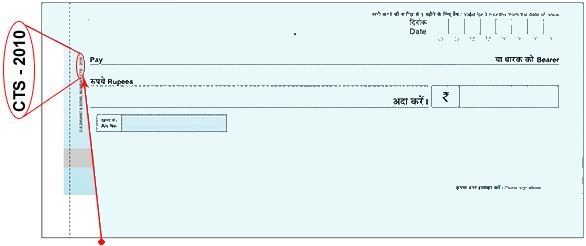
Please note that as per RBI guidelines, non CTS-2010 cheques should be withdrawn before December 31, 2012. Please go through the FAQs below to:

• Identify whether your existing cheque book is CTS-2010 compliant
• Request for a new cheque book, if required

Also, please note that RBI has advised all banks holding post-dated EMI cheques to arrange for replacement of non-CTS-2010 Standard cheques with CTS-2010 Standard cheques. If you have availed a loan and have given post dated cheques to your lending bank, do get in touch with them for advice on the next steps.

Should you have any other query, you can check with your existing Banker.

Frequently Asked Questions (FAQs) for CTS-2010 Standard Cheque System

Q1. How do I identify if my cheque book is CTS-2010 compliant?

Please look for the letters “CTS-2010” printed vertically on the cheque leaf (near the perforation on the left side)

If the letters “CTS-2010” are present here, your cheque book is CTS-2010 compliant

Q2. My cheque book is CTS-2010 compliant and the above feature is present in my cheque book. What do I have to do?

If your cheque book is already CTS-2010 compliant, you can continue using the same and there is no further action required.

Q3. My cheque book is not CTS-2010 compliant. How do I order a new cheque book?

In case your cheque book is not CTS-2010 compliant, please order a new one with your existing Banker as per the regular process. All cheque books issued now, will be CTS-2010 compliant

Housing Loan Interest Eligible For Double Deduction: ITAT Chennai

Interest paid on borrowing for acquiring house deductible u/s 24(b) & 48
The assessee borrowed funds for purchasing a house. The interest paid on the said loan was claimed as a deduction u/s 24(b). When the house was sold, the interest paid on the said loan was treated as “cost of acquisition” and claimed as a deduction u/s 48 in computing the capital gains. The AO held that as the interest had been allowed as a deduction u/s 24(b), it could not be allowed again in computing capital gains. The CIT(A) allowed the claim. On appeal by the department to the Tribunal, HELD dismissing the appeal:

Click Here for the details

Alert: Did KYC before Jan ’12? You need to know this

If you had complied with the know your customer (KYC) norms before January 2012, you better get in touch with your broker or asset management company (AMC) or your distributor.

Because, Sebi has made a few changes to the KYC norms after January this year. So, if you had  done your KYC before that, you won’t be able to invest in mutual funds, unless you take a few steps.

What you should do: As soon as possible, fill this form and attach the required documents and get in touch with your broker, distributor, AMC or local CAMS/ KRA service centre.

Not sure: If you don’t remember when you got your KYC done or if you need to fill the KYC change detail form or not, you don’t need to worry. Click here  to submit your Permanent Account Number (PAN). If the screen shows MF – VERIFIED BY CVLMF then you need to take the above mentioned steps. However, if the screen shows MF- VERIFIED BY CVLKRA, you are already new KYC norm compliant.

Click Here for the detailed instructions