Your Guide to Money Matters
For a common person, money simply means currency and coins. This is so because in India, the payment system, which includes credit cards and electronic cash, still revolves mainly around currency and coins, especially for retail transactions. Here is an attempt to answer some of the Frequently Asked Questions on Indian Currency.
A) Some Basics
I. Coins
Coins in India are presently being issued in denominations of 50 paise, one rupee, two rupees, five rupees and ten rupees. Coins up to 50 paise are called ‘small coins’ and coins of Rupee one and above are called ‘Rupee Coins’. Coins in the denomination of 1 paise, 2 paise, 3 paise, 5 paise, 10 paise, 20 paise and 25 paise have been withdrawn from circulation with effect from June 30, 2011 and are, therefore, no more legal tender.
II. Currency:
Banknotes in India are currently being issued in the denomination of ₹ 10, ₹ 20, ₹ 50, ₹ 100 ₹ 500, and ₹ 1000. These notes are called banknotes as they are issued by the Reserve Bank of India (Reserve Bank). The printing of notes in the denominations of ₹ 2 and ₹ 5 has been discontinued as these denominations have been coinised. However, such banknotes issued earlier can still be found in circulation and these banknotes continue to be legal tender. Re. 1 was also not being printed since long due to coinisation. However the Central Government has , recently reintroduced this note. Re. 1 notes issued in the past also continue to be legal tender for transactions.
What is the Indian currency called?
The Indian currency is called the Indian Rupee (INR) and the coins are called paise. One Rupee consists of 100 paise. The symbol of the Indian Rupee is ₹ . The design resembles both the Devanagari letter “₹” (ra) and the Latin capital letter “R”, with a double horizontal line at the top.
Can banknotes and coins be issued only in these denominations?
Not necessarily. The Reserve Bank can also issue banknotes in the denominations of five thousand rupees and ten thousand rupees, or any other denomination that the Central Government may specify. However, there cannot be banknotes in denominations higher than ten thousand rupees in terms of the current provisions of the Reserve Bank of India Act, 1934. Coins can be issued up to the denomination of ₹ 1000 in terms of The Coinage Act, 2011.
Demonetization of higher denomination banknotes.
₹ 1000 and ₹ 10000 banknotes, which were then in circulation were demonetized in January 1946. The higher denomination banknotes in ₹ 1000, ₹ 5000 and ₹ 10000 were reintroduced in the year 1954, and these banknotes ( ₹ 1000, ₹ 5000 and ₹ 10000) were again demonetized in January 1978.
What is legal tender?
The coins issued under the authority of Section 6 of The Coinage Act, 2011, shall be legal tender in payment or on account i.e. provided that a coin has not been defaced and has not lost weight so as to be less than such weight as may be prescribed in its case: – (a) coin of any denomination not lower than one rupee shall be legal tender for any sum, (b) half rupee coin shall be legal tender for any sum not exceeding ten rupees,
Every banknote issued by Reserve Bank of India ( ₹ 2, ₹ 5, ₹ 10, ₹ 20, ₹ 50, ₹ 100, ₹ 500 and ₹ 1000) shall be legal tender at any place in India in payment or on account for the amount expressed therein, and shall be guaranteed by the Central Government, subject to provisions of sub-section (2) Section 26 of RBI Act, 1934.
What is the meaning of “I promise to pay” clause?
As per Section 26 of Reserve Bank of India Act, 1934, the Bank is liable to pay the value of banknote. This is payable on demand by RBI, being the issuer. The Bank’s obligation to pay the value of banknote does not arise out of a contract but out of statutory provisions.
The promissory clause printed on the banknotes i.e., “I promise to pay the bearer the sum of Rupees …” is a statement which means that the banknote is a legal tender for the specified amount. The obligation on the part of the Bank is to exchange a banknote with bank notes of lower value or other coins which are legal tender under the Indian Coinage Act, 2011, of an equivalent amount.
Why is One Rupee liability of the Government of India?
The One Rupee notes issued under the Currency Ordinance, 1940 are also legal tender and included in the expression Rupee coin for all the purposes of the Reserve Bank of India Act, 1934. Since the rupee coins issued by Government constitute the liabilities of the Government, one rupee is also liability of the Government of India.
B) Currency Management.
What is the role of the Reserve Bank of India in currency management?
The Reserve Bank derives its role in currency management from the Reserve Bank of India Act, 1934.The Reserve Bank manages currency in India. The Government, on the advice of the Reserve Bank, decides on various denominations of banknotes to be issued. The Reserve Bank also co-ordinates with the Government in the designing of banknotes, including the security features. The Reserve Bank estimates the quantity of banknotes that are likely to be needed denomination-wise and accordingly, places indent with the various printing presses. The aim of the Reserve Bank is to provide good quality notes to members of public. Towards this aim, the banknotes received back from circulation are examined and those fit for circulation are reissued and the others (soiled and mutilated) are destroyed so as to maintain the quality of banknotes in circulation.
What is the role of Government of India?
In terms of Section 25 of RBI Act, 1934 the design of banknotes is required to be approved by the Central Government on the recommendations of the Central Board of the Reserve Bank of India. The responsibility for coinage vests with the Government of India on the basis of the Coinage Act, 2011 as amended from time to time. The Government of India is also responsible for the designing and minting of coins in various denominations.
Who decides on the figure to be printed on a new note?
The Government of India in consultation with the Reserve Bank of India decides the design of banknotes.
What happens to the old design notes when a new design is introduced?
Both old and new design notes usually circulate together for a while. The old design notes are then gradually withdrawn from circulation when they become unfit to be re-issued.
Are old notes issued by the Reserve Bank of India worthless?
No. The Reserve Bank of India does not withdraw the legal tender character of notes issued in the past. All RBI notes retain their face value till any specific communication from RBI to the contrary. These notes can be exchanged at any bank branch. However, the above does not apply to the higher denomination banknotes of ₹ 1000, ₹ 5000 and ₹ 10000 that were demonetized in 1978.
What was the highest denomination note ever printed?
The highest denomination note ever printed by the Reserve Bank of India was the ₹ 10000 note in 1938 and again in 1954. These notes were demonetized in 1946 and again in 1978.
What is the role of RBI in issue of coins?
The role of RBI is limited to distribution of coins that are supplied by Government of India. The responsibility for coinage vests with the Government of India on the basis of the Coinage Act, 2011, as amended from time to time.
Who is responsible for changing the design of coins from time to time?
The Government of India is responsible for the designing and minting of coins in various denominations.
What is currency paper made of?
Currency paper is composed of cotton and cotton rag.
Who decides on the volume and value of banknotes to be printed and on what basis?
The Reserve Bank based on the demand requirement indicates the volume and value of banknotes to be printed each year to the Government of India which get finalized after mutual consultation. The quantum of banknotes to be printed, broadly depends on the requirement for meeting the demand for banknotes, GDP growth, replacement of soiled banknotes, reserve stock requirements, etc.
Who decides on the quantity of coins to be minted?
The Government of India decides on the quantity of coins to be minted on the basis of indents received from the Reserve Bank.
How does the Reserve Bank estimate the demand for banknotes?
The Reserve Bank estimates the demand for banknotes on the basis of the growth rate of the economy, inflation rate, the replacement demand and reserve stock requirements by using statistical models/techniques.
Where are notes and coins produced?
Notes are printed at four printing presses located at Nashik, Dewas, Mysore and Salboni. Coins are minted at the four mints at Mumbai, Noida, Kolkata and Hyderabad.
How does the Reserve Bank reach the currency to people?
The Reserve Bank presently manages the currency operations through its 19 Issue offices located at Ahmedabad, Bangalore, Belapur, Bhopal, Bhubaneswar, Chandigarh, Chennai, Guwahati, Hyderabad, Jaipur, Jammu, Kanpur, Kolkata, Lucknow, Mumbai, Nagpur, New Delhi, Patna, Thiruvananthapuram, a currency chest at Kochi and a wide network of currency chests. These offices receive fresh banknotes from the banknote printing presses. The Issue Offices of RBI send fresh banknote remittances to the designated branches of commercial banks.
The Reserve Bank offices located at Hyderabad, Kolkata, Mumbai and New Delhi (Mint linked Offices) initially receive the coins from the mints. These offices then send them to the other offices of the Reserve Bank who in turn send the same to currency chests and small coin depots. The banknotes and rupee coins are stocked at the currency chests and small coins at the small coin depots. The bank branches receive the banknotes and coins from the Currency Chests and Small Coin Depots for further distribution among the public.
What is a currency chest?
To facilitate the distribution of banknotes and rupee coins, the Reserve Bank has authorised select branches of scheduled banks to establish currency chests. These are actually storehouses where banknotes and rupee coins are stocked on behalf of the Reserve Bank. As on March 31, 2015, there were 4132 currency chests. The currency chest branches are expected to distribute banknotes and rupee coins to other bank branches in their area of operation.
What is a small coin depot?
Some bank branches are authorised to establish Small Coin Depots to stock small coins i.e. coins below Rupee one. The Small Coin Depots also distribute small coins to other bank branches in their area of operation. As on March 31, 2015, there were 3812 small coin depots.
What happens when the banknotes and coins return from circulation?
Banknotes returned from circulation are deposited at the Issue offices of the Reserve Bank. The Reserve Bank subjects these to processing, authenticates banknotes for their genuineness, segregates them into notes fit for reissue and those which are unfit, for cancellation. The banknotes which are fit for reissue are sent back in circulation and those which are unfit for reissue are destroyed by way of shredding after completion of examination process. Coins do not come back from circulation, except those which are withdrawn.
From where can the general public obtain banknotes and coins?
Presently, banknotes and coins can be obtained in exchange at RBI offices and all branches of banks. This function is being delegated by RBI to commercial banks.
C) Soiled and Mutilated Banknotes
What are soiled, mutilated and imperfect banknotes?
(i) “soiled note:” means a note which, has become dirty due to usage and also includes a two piece note pasted together wherein both the pieces presented belong to the same note, and form the entire note.
(ii) Mutilated banknote is a banknote, of which a portion is missing or which is composed of more than two pieces.
(iii) Imperfect banknote means any banknote, which is wholly or partially, obliterated, shrunk, washed, altered or indecipherable but does not include a mutilated banknote.
Can soiled and mutilated banknotes be exchanged for value?
Yes. Such banknotes can be exchanged for value.
Where are soiled/mutilated banknotes accepted for exchange?
All banks are authorized to accept soiled banknotes for full value. They are expected to extend the facility of exchange of soiled notes even to non-customers. All branches of commercial banks are authorised to adjudicate mutilated banknotes and pay value for these, in terms of the Reserve Bank of India (Note Refund) Rules, 2009
How much value would one get in exchange of soiled banknotes?
Soiled banknotes are exchanged for full value.
How much value would one get in exchange of mutilated banknotes?
A mutilated banknote can be exchanged for full value if,
(i) For denominations of ₹ 1, ₹ 2, ₹ 5, ₹ 10 and ₹ 20, the area of the single largest undivided piece of the note presented is more than 50 percent of the area of respective denomination, rounded off to the next complete square centimeter.
(ii) For denominations of ₹ 50, ₹ 100, ₹ 500 and ₹ 1000, the area of the single largest undivided piece of the note presented is more than 65 percent of the area of respective denomination, rounded off to the next complete square centimeter.
Banknotes in denominations of ₹ 1, ₹ 2, ₹ 5, ₹ 10 and ₹ 20, cannot be exchanged for half value.
A mutilated banknote in denominations of ₹ 50, ₹ 100, ₹ 500 or ₹ 1000, can be exchanged for half value if,
The undivided area of the single largest piece of the note presented is equal to or more than 40 percent and less than or equal to 65 percent of the area of respective denomination, rounded off to the next complete square centimeter.
How much value would one get in exchange of imperfect banknotes?
The value of an imperfect note may be paid for full value / half value under rules as specified for mutilated notes if,
(i) the matter, which is printed on the note has not become totally illegible, and
(ii) it can be established that it is a genuine note.
What types of banknotes are not eligible for payment under the Note Refund Rules?
The following banknotes are not payable under the Reserve Bank of India (Note Refund) Rules 2009.
A banknote for which:
o the area of single largest undivided piece of note presented is less than or equal to 50% of area of the note for denominations of ₹ 1, ₹ 2, ₹ 5, ₹ 10 and ₹ 20.
o the area of the single largest undivided piece of the note is less than 40 percent for denominations of ₹ 50, ₹ 100, ₹ 500 or ₹ 1000.
A banknote which:
o cannot be identified with certainty as a genuine note for which the Bank is liable under the Act,
o has been made imperfect or mutilated, thereby causing the note to appear to be of a higher denomination, or has been deliberately cut, torn, defaced, altered or dealt with in any other manner, not necessarily by the claimants, enabling the use of the same for making of a false claim under these rules or otherwise to defraud the Bank or the public,carries any extrinsic words or visible representations intended to convey or capable of conveying any message of a political or religious character or furthering the interest of any person or entity,
o has been imported into India by the claimant from any place outside India in contravention of the provision of any law.
Is the serial number used when assessing the value of a damaged banknotes
The presence or absence of a serial number or other specific feature is not a determining factor when assessing damaged banknotes for value.
What if a banknote is found to be non-payable?
Non-payable banknotes are retained by the receiving banks and sent to the Reserve Bank where they are destroyed.
Can Indian banknotes be obtained with specific serial numbers?
Issuing banknotes with specific numbers may not be possible.
How many languages appear in the language panel of Indian banknotes?
There are fifteen languages appearing in the language panel of banknotes in addition to Hindi prominently displayed in the centre of the note and English on the reverse of the banknote.
D) Banknotes since Independence.
i. Ashoka Pillar Banknotes:
The first banknote issued by independent India was the one rupee note issued in 1949. While retaining the same designs the new banknotes were issued with the symbol of Lion Capital of Ashoka Pillar at Sarnath in the watermark window in place of the portrait of King George.
The name of the issuer, the denomination and the guarantee clause were printed in Hindi on the new banknotes from the year 1951. The banknotes in the denomination of ₹ 1000, ₹ 5000 and ₹ 10000 were issued in the year 1954. Banknotes in Ashoka Pillar watermark Series, in ₹ 10 denomination were issued between 1967 and 1992, ₹ 20 denomination in 1972 and 1975, ₹ 50 in 1975 and 1981, and ₹ 100 between 1967-1979. The banknotes issued during the above period, contained the symbols representing science and technology, progress, orientation to Indian Art forms. In the year 1980, the legend “Satyameva Jayate”, i.e., truth alone shall prevail was incorporated under the national emblem for the first time. In October 1987, ₹ 500, banknote was introduced in October 1987 with the portrait of Mahatma Gandhi and the Ashoka Pillar watermark.
ii. Mahatma Gandhi (MG) Series 1996
The banknotes in MG Series – 1996 were issued in the denominations of ₹ 5, (introduced in November 2001) ₹ 10 (June 1996), ₹ 20 (August 2001), ₹ 50 (March 1997), ₹ 100 (June 1996), ₹ 500 (October 1997) and ₹ 1000 (November 2000). All the banknotes of this series bear the portrait of Mahatma Gandhi on the obverse (front) side, in place of symbol of Lion Capital of Ashoka Pillar, which has also been retained and shifted to the left side next to the watermark window. This means that these banknotes contain Mahatma Gandhi watermark as well as Mahatma Gandhi’s portrait.
iii MG series – 2005 banknotes
MG series 2005 banknotes are issued in the denomination of ₹ 10, ₹ 20, ₹ 50, ₹ 100, ₹ 500 and ₹ 1000 and contain some additional / new security features as compared to the 1996 MG series. The ₹ 50 and ₹ 100 banknotes were issued in August 2005, followed by ₹ 500 and ₹ 1000 denominations in October 2005 and ₹ 10 and ₹ 20 in April 2006 and August 2006, respectively.
The security features in MG Series 2005 banknotes are as under:
i. Security Thread: The silver coloured machine-readable security thread in ₹ 10, ₹ 20 and ₹ 50 denomination banknotes is windowed on front side and fully embedded on reverse side. The thread fluoresces in yellow on both sides under ultraviolet light. The thread appears as a continuous line from behind when held up against light. ₹ 100, ₹ 500 and ₹ 1000 denomination banknotes have machine-readable windowed security thread with colour shift from green to blue when viewed from different angles. It fluoresces in yellow on the reverse and the text will fluoresce on the obverse under ultraviolet light. Other than on ₹ 1000 banknotes, the security thread contains the words ‘Bharat’ in the Devanagari script and ‘RBI’ appearing alternately. The security thread of the ₹ 1000 banknote contains the inscription ‘Bharat’ in the Devanagari script, ‘1000’ and ‘RBI’.
ii. Intaglio Printing: The portrait of Mahatma Gandhi, Reserve Bank seal, Guarantee and promise clause, Ashoka Pillar emblem, RBI’s Governor’s signature and the identification mark for the visually impaired persons are printed in improved intaglio.
iii. See through register: On the left side of the note next to the watermark window, half the numeral of each denomination (10, 20, 50, 100, 500 and 1000) is printed on the obverse (front) and half on the reverse. The accurate back to back registration makes the numeral appear as one when viewed against light.
iv. Water Mark and electrotype watermark: The banknotes contain the portrait of Mahatma Gandhi in the watermark window with a light and shade effect and multi-directional lines. An electrotype mark showing the denominational numeral 10, 20, 50, 100, 500 and 1000 respectively in each denomination banknote also appear in the watermark widow and these can be viewed better when the banknote is held against light.
v. Optically Variable Ink (OVI): The numeral 500 & 1000 on the ₹ 500 and ₹ 1000 banknotes are printed in Optically Variable Ink viz., a colour-shifting ink. The colour of these numerals appears green when the banknotes are held flat but would change to blue when the banknotes are held at an angle.
vi. Fluorescence: The number panels of the banknotes are printed in fluorescent ink. The banknotes also have dual coloured optical fibres. Both can be seen when the banknotes are exposed to ultra-violet lamp.
v. Latent Image: In the banknotes of ₹ 20 and above, the vertical band next to the (right side) Mahatma Gandhi’s portrait contains a latent image, showing the denominational value 20, 50, 100, 500 or 1000 as the case may be. The value can be seen only when the banknote is held horizontally and light allowed to fall on it at 45°; otherwise this feature appears only as a vertical band.
viii. Micro letterings: This feature appears between the vertical band and Mahatma Gandhi portrait. It contains the word ‘RBI’ in ₹ 10. Notes of ₹ 20 and above also contain the denominational value of the banknotes. This feature can be seen better under a magnifying glass.
Additional Features introduced in MG Series 2005 for ₹ 100, ₹ 500 and ₹ 1000 denomination banknotes are as under:
i. New Numbering Pattern
The numbers in both the number panel will increase from left to right while the first three alpha-numeric characters (prefix) will remain constant in size.
ii. Angular Bleed Lines and Bigger identification marks
Angular Bleed Lines have been introduced in banknotes – 4 lines in 2 blocks in ₹ 100, 5 lines in 3 blocks in ₹ 500 and 6 lines in 4 blocks in ₹ 1000 denominations and the identification mark in these notes has been enlarged by 50%.
How can one distinguish the MG series-2005 banknotes?
In addition to the security features listed above, the MG series -2005 banknotes have the year of printing on the reverse of the banknotes which is not present in the pre-2005 series.
What is the need for printing different series of banknotes?
Central banks the world over change the design of their banknotes and introduce new security features primarily to make counterfeiting difficult and to stay ahead of counterfeiters. India also follows the same policy.
E) Current Issues
Why are ₹ 2, ₹ 5 banknotes not being printed?
Even though volume-wise, the share of such small denomination banknotes in the total banknotes in circulation was high, in value terms they constituted a very small percentage with average life of less than one year. The cost of printing and servicing these banknotes being not commensurate with their life, printing of these banknotes was discontinued and these denominations were coinised. However, ₹ 5 banknotes were re-introduced in 2001 to bridge the gap between demand and supply of coins in this denomination. The printing of ₹ 5 banknotes has been discontinued from the year 2005.
Has Reserve Bank of India considered producing a plastic banknote?
The Reserve Bank, in consultation with Government of India, has decided to conduct a field trial with one billion pieces of ₹ 10 banknotes on plastic substrate.
What is a “star series” banknote?
Fresh banknotes issued by Reserve Bank of India till August 2006 were serially numbered. Each of these banknote bears a distinctive serial number along with a prefix consisting of numerals and letter/s. The banknotes are issued in packets containing 100 pieces.
The Bank has also adopted the “STAR series” numbering system for replacement of defectively printed banknotes. The Star series banknotes are exactly similar to the existing Mahatma Gandhi Series banknotes, but have an additional character viz., a *(star) in the number panel in the space between the prefix and the number as indicated below:
What is non-sequential numbering?
With a view to enhancing operational efficiency and cost effectiveness in banknote printing, non-sequential numbering was introduced in 2011 consistent with international best practices. Packets of banknotes in non-sequential number will have 100 notes which are not sequentially numbered.
What is on a banknote to help visually challenged people identify the different denominations?
Each denomination is a different size; the greater the value the larger the note. So a ₹ 1000 note is larger than a ₹ 10 note and so on. There is an identification mark on the left hand side of each note on the front side which is in raised print (intaglio) and has different shapes for different denominations for eg. Diamond for ₹ 1000, circle for ₹ 500, triangle for ₹ 100, square for ₹ 50, rectangle for ₹ 20 and none for ₹ 10. Further, the denomination numerals are prominently displayed in the central area of the notes in raised print. With a view to make such banknote more user friendly, Reserve Bank of India has introduced additional features in banknotes of ₹100, ₹ 500 and ₹ 1000 denomination viz; Angular Bleed Lines have been introduced in banknotes – 4 lines in 2 blocks in ₹ 100, 5 lines in 3 blocks in ₹ 500 and 6 lines in 4 blocks in ₹ 1000 denominations and the identification mark in these notes has been enlarged by 50%.
F) Counterfeits / Forgeries
What is a counterfeit note?
A suspectedcounterfeit note, forged note , or fake note is any note which does not possess the characteristics of genuine Indian currency note.
How to check whether a note is genuine or not?
A forged note can be identified on the basis of the features which are present in a genuine Indian currency note. These features are easily identifiable by seeing, touching and tilting the note. It is advisable not to rely on just one security feature as no counterfeit note can normally be expected to successfully copy all of the security features included in notes. To read about how to check banknotes see the (link)
https://paisaboltahai.rbi.org.in/ What are the legal provisions relating to printing and circulation of counterfeit notes?
Counterfeiting notes using as genuine, forged or counterfeit notess / possession of forged or counterfeit banknote / making or possessing instruments or materials for forging or counterfeiting banknotes making or using documents resembling banknotes are offences under Sections 489A to 489E of the Indian Penal Code and are punishable in the Courts of Law by fine or imprisonment ranging from seven years to life imprisonment or both, depending on the offence.
Does possession of a forged note attract the punishment of fine or imprisonment?
Mere possession of a counterfeit note does not attract punishment. Possession of a counterfeit note knowing to be such and intending to use the same as genuine or that it may be used as genuine, is punishable under Section 489C of Indian Penal Code, 1860.
What are the actions taken by the Reserve Bank of India to train general public to distinguish genuine banknotes from forged notes?
The Reserve Bank of India has been organizing training sessions on the authentication of banknotes security features for people handling significant amounts of cash like banks/consumer forums/merchant associations/educational institutions/police professionals. Apart from the training sessions, information on security features of banknotes is also available on the Bank’s website
https://paisaboltahai.rbi.org.in/.
Why has RBI decided to withdraw pre-2005 series banknotes?
Reserve Bank of India decided to withdraw from circulation all banknotes issued prior to 2005 as they have fewer security features as compared to banknotes printed after 2005. It is a standard international practice to withdraw old series notes. The RBI has already been withdrawing these banknotes in a routine manner through banks. It is estimated that the volume of such banknotes (pre-2005) in circulation is not significant enough to impact the general public in a large way and the members of public may exchange the pre-2005 series banknotes at bank branches. The Reserve Bank of India has extended the date for the public to exchange their pre-2005 banknotes till December 31, 2015.
G) Clean Note Policy:
Reserve Bank of India has been continuously making efforts to make good quality banknotes available to the members of public. To help RBI and banking system, the members of public are requested to ensure the following:
o Not to staple the banknotes
o Not to write / put rubber stamp or any other mark on the banknotes
o Not to use banknotes for making garlands/toys, decorating pandals and places of worship or for showering on personalities in social events, etc.

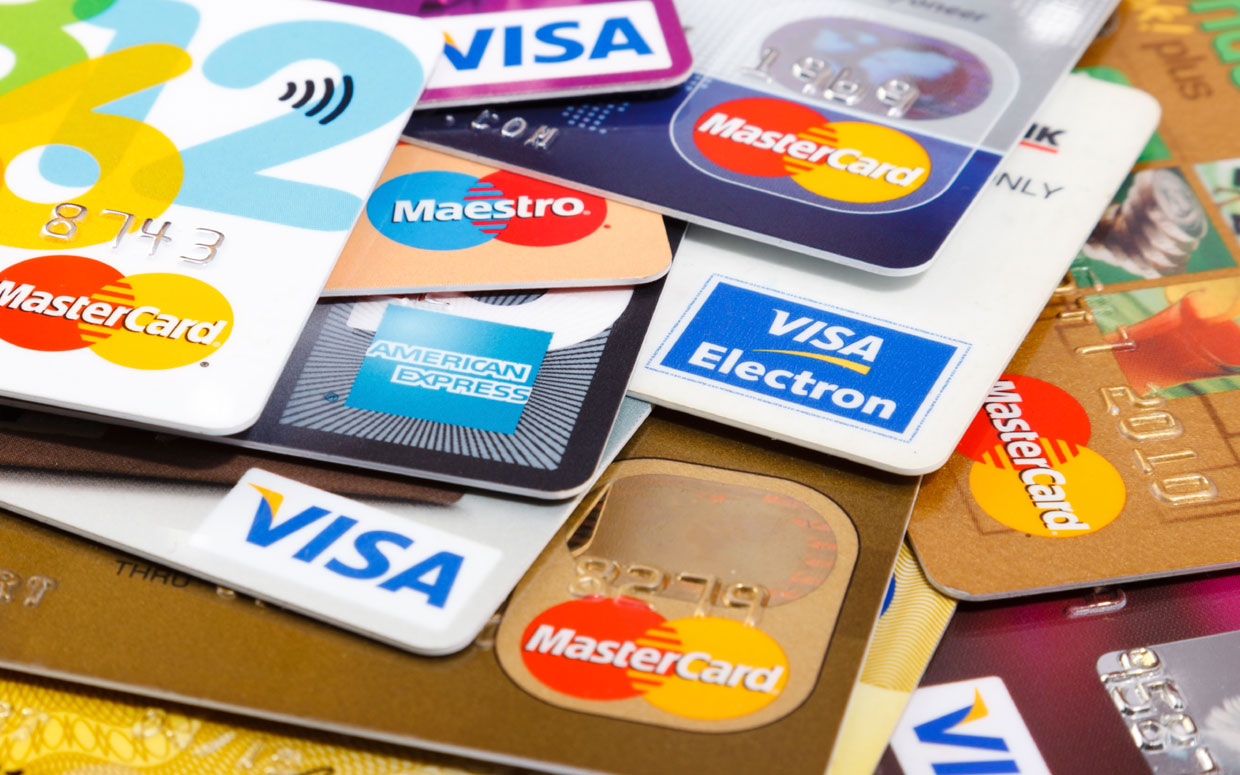
 money at their disposal. A bank cannot take the law into its own hands to recover its dues. Here is a case where the a bank was taken to task by an aggrieved consumer.Case Study: Srinivasa Rajan had a credit card issued by Tata Finance Ltd. In mid-November 2002, the company asked Rajan to pay Rs 74,516.45 towards various charges and fees for its retention and use.After 10 days, Rajan was informed that his card had been suspended. Over three years passed without any action being taken by either Rajan to challenge the demand, or by Tata Finance to recover the amount.






















 Consumer Resources