Grahak Sathi exposes shocking truth behind organic rice

Ref.: E&R/PR/AR/Organic rice/2017

Press Release

Grahak Sathi exposes shocking truth
behind organic rice

 Our tests find pesticide residues in 6 out of 7 brands and toxic heavy metals in all

Grahak Sathi (February-March 2017), the National Consumer Magazine in Hindi published by Consumer Education and Research Centre (CERC), Ahmedabad released findings of its in-house comparative product testing laboratory on seven brands of organic rice. Shockingly, the findings revealed that 6 out of 7 brands had pesticide residues and all 7 brands contained toxic heavy metals! Ironic, isn’t it? The very rationale for buying an organic product is to buy a pesticide-free product.

No standards
Since there are no specific standards for organic rice at present, why is the product being allowed to be sold in the country?

Why a variety of logos?
The brands carried a variety of logos and certifications from different national and international agencies. This is confusing for consumers. Why should a product meant for the domestic market carry so many international logos?

Alarming findings
The 3 heavy metals tested were – lead, copper and arsenic. We tested the products for 16 pesticides. The four detected belonged to the Organophosphate group.

Pesticide residues: Six of the 7 brands of organic rice contained pesticide residues. Fabindia Organics did not have pesticide residues. Two brands had Chlorpyrifos levels above the prescribed limit – Organic on Call and Sanjeevani Organics. Two of the four non-organic rice brands had pesticide residues.

Over a long duration even microscopic quantities of pesticides can harm. The pesticides detected by our tests are not in the US list of pesticides permitted in organic products.

Heavy metals: All the organic rice brands showed presence of all three heavy metals though they were within the limits. None of the non-organic rice brands had arsenic. Copper levels were higher than in organic rice brands, though within limits. Lead levels were within limits and slightly lower than that in the organic rice brands. (See Annexure for detailed results)

Highly priced
Organic rice brands were much costlier. Comparing the extremes, you would be paying  more than five times the price for the costliest organic rice brand –Fabindia Organics – than you would pay for the cheapest non-organic rice brand – Hypercity. Why should the organic version of a staple product like rice be so expensive? It is unaffordable for the common man.

False label claims
Most organic rice brands claimed to be free of pesticides. Illustratively, Morarka Organic Down to Earth, which contained both pesticide residues and toxic heavy metals, claimed to be: “…free from chemicals, fertilizers, pesticides, toxic substances, synthetic hormones…”Two organic rice brands –Vikalp Organic Product and Organic on Call – did not have any organic certification.

Manufacturers’ response
As a policy, we convey the test results to all the manufacturers and await their response. We received the following responses:

Sanjeevani Organics said that organic certification was done for the practices and processes and not for the products. Our response: “Consumers are concerned not with processes and practices but with the end product. Certification for processes must reflect in quality of final product.”

24 Mantra Organic said that the pesticide detected by our tests – Chlorfenvinphos – was not used even in conventional paddy cultivation and not available in their project area. Our response: “The presence of Chlorfenvinphos could be due to cross contamination during harvesting. Also, some pesticides can persist in the environment even after use is discontinued.”

Organic Tattva said that as per APEDA (Agricultural and Processed Food Products Export Development Authority) guidelines there is no requirement for testing of heavy metals for organic products. Our response: “True. However, we have tested for them as consumers should be concerned about their presence in foods. Heavy metals accumulate in the human body over a period of time and cause harm.”

Urgent action needed 
The Bureau of Indian Standards (BIS) should set specific mandatory standards for organic foods. In response to our appeal over a year ago, we received a letter from Food Safety and Standards Authority of India (FSSAI) saying that BIS has constituted a committee to formulate standards for organic foods. However, no concrete action has been taken as yet.

Too many logos confuse consumers. NPOP (National Programme for Organic Production) certification should be made mandatory. NPOP, which currently certifies organic process standards, should also certify the final product. Also, India needs to follow labelling norms as per global best practices.

Regular monitoring of organic food quality, including that sold online, is necessary.

Advertising claims made by organic product manufacturers should be closely monitored.

Grahak Sathi’s conclusion
Our tests proved that organic brands of rice are not safer than non-organic ones. There is no concrete evidence that organic food has higher nutritional value than regular food. Also, organic rice brands are much more expensive. Our advice is not to buy organic rice.

People want to make healthier choices and the Government must support them in this matter. It should ensure that consumers do not get exploited in the name of organic foods. It is vital that the regulatory authorities set standards and closely monitor the quality of organic food products.

To read the complete story CLICK HERE 

For further information please contact
Ms Pritee Shah (O) 079-27489945/46   (M) +91 99048 63838

Breastfeeding Promotion Network of India (BPNI)

bpni-logoBreastfeeding Promotion Network of India (BPNI) was founded on 3rd December,1991 at Wardha, Maharashtra. BPNI is a registered, independent,nonprofit,national organization;working towards protecting, promoting and supporting breastfeeding and appropriate complementary feeding of infants & young children.BPNI acts on the targets of Innocenti Declarations, Convention on the Rights of the Child (CRC),International Code of Marketing of Breastmilk Substitutes,and the Global Strategy for Infant and Young Child Feeding (WHO 2002).

BPNI’s core areas of work include policy advocacy to educate policy makers and managers,training of health workers, capacity building of State governments for implementing the policy,social mobilization duringWorld BreastfeedingWeek (WBW) each year and monitoring compliance with the“Infant Milk Substitutes,Feeding Bottles and Infant Foods (Regulation of Production, Supply and Distribution)Act 1992 and Amendment Act 2003 (IMSAct).

BPNI is notified in the Gazette of India as a child welfare NGO to initiate action under section 21(1) of the IMSAct for officially monitoring and implementing IMSAct since 1995

Over the years BPNI has played the role of a watchdog organization and exposed several big baby food brands on how they undermined the IMS Act.

BPNI coordinates and facilitates the education and training of grassroots personnel in health and nutrition sector and private hospitals through skilled counseling as a sustainable support to mother-baby dyads.Our training alliances include National Health Mission (NHM) and Integrated Child Development Scheme (ICDS).BPNI training courses are self sustained.

BPNI works in close liaison with the Government of India and is recognized for its technical expertise and credible standing on the issues & concerns of child health and nutrition.BPNI’s contribution in earlier fiveyears plan documents and restructuring of ICDS mission document for Government of India are golden feathers in it’s cap.BPNI holds major contribution in development of the National Guidelines on Infant andYoung Child Feeding (2004 and 2006) and Operational Guidelines for Enhancing Optimal Infant andYoung Child Feeding Practices (2013).Latest among these are guidelines for ‘MAA’ programme where in BPNI provided crucial inputs.BPNI is the technical partner to country’s very first nationwide programme“MAA-Mother’s AbsoluteAffection” for breastfeeding promotion launched by Honorable Health & Family Welfare Minister Sh.Jagat Prakash Nadda on 5th August,2016.

Other than the government,BPNI has been working in partnership with development partners like WHO,UNICEF, World Bank,Norwegian and Swedish Governments.

A More Organized 2017 at Home

simply-organized-at-home-640x360

As we move in and get cozy with 2017, one of the first things we all want to do is look at how we can make New Year’s resolutions a reality. Evernote is all about digital organization and productivity, but our physical spaces matter, too. That’s why we invited Sam from Simply Organized to join us in a Facebook Live event to talk about how to begin organizing at home.

Sam, whose specialty is working with families, goes into homes and helps people arrange their space in ways that make sense to them. She’s an expert when it comes to shelving, drawers, bins, and boxes, and says she reaches a state of zen when folding items to put away. Though she works primarily with mothers with small children, she’s also helped empty-nest families with downsizing once the children have grown.

“Organization is really about simplifying things,” Sam told Josh Zerkel, Evernote’s Director of Community. “It’s about solving a problem, and being able to find what you need easily.”

Sam advised not to strive for perfection when you’re organizing your space. “Social media makes you think everything is perfect,” she said. “But those photos are art-directed. Nobody lives in those spaces. You need to live in your space, and living is sometimes a little bit messy.”

capture

Click Here for more details and the full interview


What Do Those Codes On Stickers Of Fruits And Some Veggies Mean?

code-on-stickers

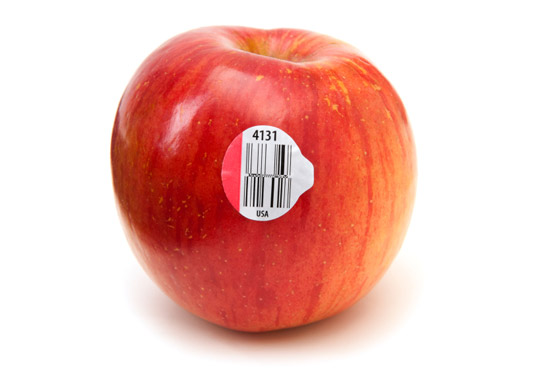
Although they seem like a nuisance, the stickers or labels attached to fruit and some vegetables have more of a function than helping scan the price at the checkout stand. The PLU code, or price lookup number printed on the sticker, also tells you how the fruit was grown. By reading the PLU code, you can tell if the fruit was genetically modified, organically grown or produced with chemical fertilizers, fungicides, or herbicides.

Here are the basics of what you should know:

  1. If there are only four numbers in the PLU, this means that the produce was grown conventionally or “traditionally” with the use of pesticides. The last four letters of the PLU code are simply what kind of vegetable or fruit. An example is that all bananas are labeled with the code of 4011.
  2. If there are five numbers in the PLU code, and the number starts with “8”, this tells you that the item is a genetically modified fruit or vegetable. Genetically modified fruits and vegetables trump being organic. So, it is impossible to eat organic produce that are grown from genetically modified seeds. A genetically engineered (GE or GMO) banana would be: 84011
  3. If there are five numbers in the PLU code, and the number starts with “9”, this tells you that the produce was grown organically and is not genetically modified. An organic banana would be: 94011

Incidentally, the adhesive used to attach the stickers is considered food-grade, but the stickers themselves aren’t edible.

And here is the full list from the Environmental Working Groups of fruits and vegetables with the least to most pesticides. When shopping, the most important produce to buy organic are those at the bottom of this list http://www.foodnews.org/fulllist.php .

Dr. Frank Lipman

http://www.drfranklipman.com/what-do-those-codes-on-stickers-of-fruits-and-some-veggies-mean/


Fully Transparent Solar Cell could Make Every Window in your House a Power Source

78h

A Michigan State University research team has at last made a truly transparent solar panel — a innovation that could soon usher in a world where windows, panes of glass, and even complete buildings could be used to produce solar energy. Until now, solar cells of this kind have been only partly transparent and generally a bit tinted, but these new ones are so transparent that they are almost indistinguishable from a usual pane of glass.

Previous claims toward transparent solar panels have been deceptive, since the very nature of transparent materials means that light must pass through them. Transparent photovoltaic cells are almost impossible, in fact, as solar panels produce energy by changing absorbed photons into electrons. For a material to be completely transparent, light would have to travel uninhibited to the eye which means those photons would have to pass through the material wholly (without being absorbed to produce solar power).

So, to attain a truly transparent solar cell, the Michigan State team made this thing called a transparent luminescent solar concentrator (TLSC), which employs organic salts to absorb wavelengths of, light those are at present unseen to the human eye. Steering clear of the fundamental difficulties of making a transparent photovoltaic cell permitted the scientists to harness the power of infrared and ultraviolet light.

The TLSC projects a luminescent glow that has a converted wavelength of infrared light which is also invisible to the human eye. More traditional (non-transparent) photovoltaic solar cells frame the panel of the main material, and it is these solar cells that transform the concentrated infrared light into electricity.

Versions of previous semi-transparent solar cells that cast light in colored shadows can generally achieve proficiency of about 7%, but Michigan State’s TLSC is projected to attain a top efficiency of 5% with additional testing (presently, the prototype’s efficiency reaches a mere one percent). While numbers like seven and five percent efficiency appear low, houses featuring fully solar windows or buildings made from the organic material could compound that electricity and bring it to a more useful level.

Scientists on the Michigan State team believe their TLSC technology could span from industrial applications to more manageable uses like consumer devices and handheld gadgets. Their main priorities in continuing to develop the technology seem to be power efficiency and maintaining a scalable level of affordability, so that solar power can continue to grow as a major player in the field of renewable energy.

http://www.technologynews247.pw/2017/01/01/fully-transparent-solar-cell-could-make-every-window-in-your-house-a-power-source/

Consumer Complaints Can’t Be Rejected Citing ‘Alternative Remedy’ Under Other Statutes: Chhattisgarh HC

chhattisgarh-high-court-min

Remedy available to the consumer under the Consumer Protection Act is an additional remedy, the high court observed. The Chhattisgarh High Court has held that the remedy available to the consumer under the Consumer Protection Act is an additional remedy. Other statutory remedy available to the consumer under other statutory laws would not bar the consumer to avail of that ‘additional’ remedy, it said. Justice Sanjay K Agrawal observed that district and state forums were wrong in rejecting the complaint on the ground of availability of alternative remedy under Section 7-B of the Telegraph Act. Rajesh Kumar Agrawal, had complained before the district forum alleging that his service provider adopted unfair trade practice in providing telecom services though he had paid for data service and while using the data services, balance lying in call account was deducted unauthorisedly. The district forum had relied upon the judgment of the Supreme Court in General Manager, Telecom, v. M Krishnan and another to hold that the petitioner has a special remedy of arbitration provided under Section 7-B of the Telegraph Act and that bars the complaint under the Consumer Protection Act. Apparently, the high court does not discuss this apex court decision relied upon by the forum. Rather, the high court has relied on many other apex court judgments which suggest that the complaint would not be barred. Referring to provisions in the Consumer Protection Act and the dictum in Trans Mediterranean Airways v. Universal Exports, the court observed that the remedy available to the consumer under the Act of 1986 is an additional remedy and other remedies available to the consumer under the other statutory law would not bar the consumer to avail of the remedy available under the provision of the Consumer Protection Act as such the district forum committed an illegality in rejecting the complaint filed by the petitioner on the ground of availability of alternative remedy under Section 7-B of the Telegraph Act.

Read the Judgment here –  http://www.livelaw.in/consumer-complaints-cant-rejected-citing-alternative-remedy-statutes-chhattisgarh-hc/

Noise pollution: Mumbai began to quiet down in 2016

noise
During Ganeshotsav, Mumbai’s noisiest festival, the highest recorded noise level dropped from 123.2 decibels (dB) in 2013 to 116.4 dB in 2016 and Dussehra levels fell from 103.4 db to 98.9db. Janmashtami and the Mahim fair were slightly noisier.

When this year began, Mumbai was India’s noisiest city. In the eleven months that followed, its people campaigned, its court passed orders and its government acted to shake off this dubious distinction.

By Diwali, two locations — in Andheri and Powai — were named India’s quietest during the festival.

The Central Pollution Control Board (CPCB), which had named Mumbai the noisiest in February, was now praising the city’s anti-noise campaigners and calling the fight against noise pollution a ‘citizen movement’.

And, Diwali was not the only time the results were seen.

During Ganeshotsav, Mumbai’s noisiest festival, the highest recorded noise level dropped from 123.2 decibels (dB) in 2013 to 116.4 dB in 2016 and Dussehra levels fell from 103.4 db to 98.9db. Janmashtami and the Mahim fair were slightly noisier.

“More than any of the enforcement authorities, the credit has to go to the people of Mumbai for standing up for change and making the city a better place. We only were successful in convincing the people of the need to reduce noise,” said Satish Gavai, principal secretary, state environment department. Gavai added, “The celebration of festivals or even small joys of our daily life has nothing to do with making noise.”

The awareness campaigns aside, a series of court orders ensured the dramatic drop in noise by the end of the year.

Click Here for the full story

Patanjali fined Rs 11 lakh for misleading ads

ramdev

  • A Haridwar court imposed fine of Rs 11 lakh on Yoga guru Ramdev’s company, Patanjali Ayurved Ltd.
  • Fine was imposed on charges of misbranding and misrepresentation of its products.

In its order, the court of Lalit Narain Mishra, Haridwar’s additional district magistrate, found the company, which is currently eyeing at doubling its revenues from the current Rs 5,000 crore to almost Rs 10,000 crore by the next financial year, guilty of “releasing misleading advertisements+ by selling certain products with its labels although they were being manufactured by some other firm.”

Citing Section 52 (misbranding) and Section 53 (misleading advertisement) of the Food Safety and Standards Act, 2006 as well as Section 23.1 (5) of Food Safety and Standard (Packaging and Labelling Regulations, 2011) Act, it ordered Patanjali to pay the fine within a month. It also directed the district food safety department to “take appropriate action if there is no improvement in the products in future.”
Click Here for the full story