On the Digital Highway without a Seat Belt

jet282
Prime minister (PM) Narendra Modi’s mega campaign to go cashless may, in the long run, lead to transformation like his much-needed Swachh Bharat initiative. We are a cash-based economy; over 68% of transactions happen in cash and the push to get, at least, urban, educated Indians to switch to cashless payments is necessary and long overdue. Starting with his radio talk (Maan ki Baat), the PM’s slogan of ‘My Mobile, My Wallet, My Bank’ has been amplified by leading bankers, e-payment companies, Union ministers, NITI Aayog officials and high-profile bureaucrats. But people won’t change just by being shoved in a particular direction. Moreover, in the short run, the pain in accessing one’s own money is very real. The government needs to work harder to make the switchover easier, by providing adequate infrastructure (telecom coverage, Internet connectivity), safety and ease of transactions and proper grievance redress. Unfortunately, the effort to push e-payments seems driven by the need to hastily correct the massive failure of currency management after demonetisation, rather than a genuine desire to bring about a paradigm shift. Let’s look at a few decisions that are urgently needed to ensure that the switch to cashless transactions is both, safe and permanent.
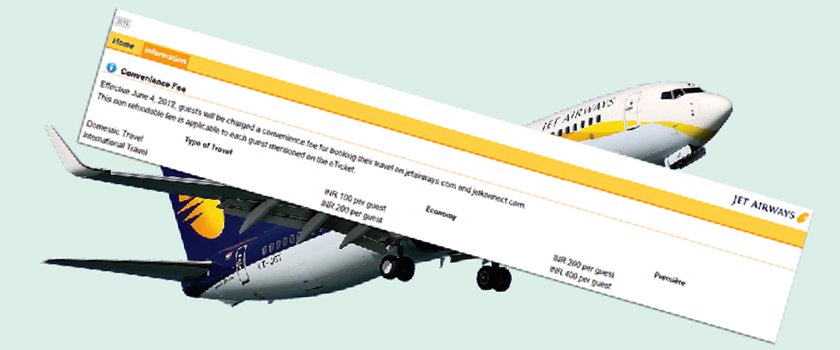
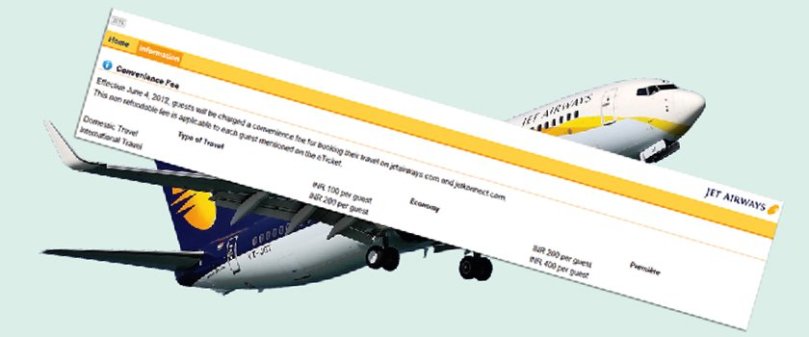
1. Beneficiaries Must Pay: The first step is to encourage and incentivise e-payments by scrapping ‘convenience’ charges and transaction charges. So far, it has been a sellers’ market. So ticket booking agents (makemytrip, cleartrip, etc, or Bookmyshow) and even principals (Jet Airways) conveniently turned the logic on its head and decided that we, the consumers, must pay for the ‘convenience’ of getting tickets online. Airlines used to offer hefty commissions to travel agents who did the hard work of selecting the best route and the lowest fare option; the customer did not pay. Today, there are no travel agents; the consumer does all the hard work of searching and selecting; and also pays for the alleged convenience. We need to ensure that beneficiary companies, at least, share the convenience. But what about movie theatres and airlines which are able to save on ticketing and box-office costs? This is the best time to do it because they need our business at a time when discretionary spending has dried up substantially.
2. Regulation of E-wallet Companies: Information technology experts will tell you that most apps and e-wallets collect a lot of sensitive customer data by seeking omnibus permissions from not-so-savvy users. According to a report by medianama.com, leading payment apps get access to your Internet history, bookmarks, and even really sensitive data such as IMEI number, saved Wi-Fi network info and the MacID. They record audio info, modify contacts and even use call logs to make calls. Many e-wallets will save  credit/debit card details used to transfer money to the wallet without your permission.
This increases the security risks for users, without their knowledge. If the data is hacked, we, as individuals, are in no position to track the source of the leak and we have no access to easy grievance redress either. We need to have clear rules on what information can be collated by apps and their liability spelt out, in case there is a large-scale data breach or even if an individual consumer has a complaint. Will every minister of the NDA government, who is dutifully promoting e-wallets, take up the issue of regulation as well?
3. Grievance Redress: This is an issue that we have been agitating for several years through Moneylife Foundation, our not-for-profit entity involved in advocacy and financial literacy. At a social gathering, recently, a leading industrialist and a retired police chief were narrating interesting stories about how their domestic helpers and cooks had adapted to technology, using it to transfer money to their village in Bihar and Odisha through ATMs.
While this is, indeed, very heartening, it is also a fact that ATM PINs are easily shared with the family because of ignorance. In one case, a domestic helper’s account, which had her precious savings of over Rs70,000, was hacked. The hacker, pretending to be a banker, claimed that the account was being tested to ensure that a link to her mobile phone was working effectively and she should read out the number received in an ATM. The unsuspecting woman ended up giving her OTP (one-time password) six times, until the bank itself noticed something amiss and blocked her account. A well-known consumer activist, who is helping the lady recover her money, related this story to me; how many are so lucky?
As Dr KC Chakrabarty, former deputy governor of the Reserve Bank of India (RBI), told me in a recent interview, “You may push a person to do digital transaction; but once a person has lost money at an ATM or in a digital transaction, he will stay away for 10 years. All over the world, unless the bank can prove that the customer is at fault, his money should first be credited to his account. That is a global rule. This is not yet implemented in India.” The reason for not notifying consumer protection regulations is rather perplexing, especially when RBI deputy governor,
SS Mundra has publicly acknowledged that the increase in online transactions has led to a manifold surge in customer complaints. Addressing a public meeting on 23rd May, he had said that these complaints relate to electronic transactions, unauthorised fund transfers, fraudulent ATM withdrawals using duplicate cards, phishing, vishing, etc. And yet, on 31st August, RBI only issued a draft regulation proposing to limit customer liability instead of notifying formal rules. These regulations propose to shift the onus of proving wrongdoing or carelessness on the part of the customer to the bank. They will also ensure that the money lost is immediately credited back to customer accounts pending investigation. Isn’t it strange that RBI has not been asked to notify these regulations even while a nationwide campaign to go cashless has been launched from the highest office in the land? RBI must also be asked to notify its much-touted consumer charter and take responsibility for its implementation. The charter must prescribe clear penalties for banks’ lapses and amend the banking ombudsman regulations to empower it to initiate stringent action. Instead, an unworkable consumer charter has been put out in the public domain and RBI seems to have no intention of holding banks strictly accountable for treating customers fairly.
4. Financial Literacy: The buck for spreading financial literacy also stops at RBI’s doors. The central bank, as is its style, works at an excruciatingly slow pace on most issues;  it is probably the slowest on consumer protection. Two years ago, RBI took charge of over Rs3,500 crore of unclaimed cash deposits that were lying with banks and set up the Depositor Education and Awareness Fund (DEAF). This money could have been put to excellent use today to spread financial literacy using modern tools to spread the message.
Two years later, DEAF has little to show. It took a year to grant accreditation to a few NGOs and another year to sanction small sums to be spent on workshops to a few of them. Worse, DEAF will simply not engage with people in the field. Another effort to reach out to rural consumers under the aegis of RBI and with support from banks is similarly chugging at a snail’s speed. This is not the pace at which the PM operates; but then, why doesn’t someone push RBI to act, or take away these responsibilities and allow it to remain India’s monetary authority? At a time when people are going through enormous hardship to access their own hard-earned money, being pushed into driving along the digital highway without a safety belt will be even more insensitive.
by Sucheta Dalal


The cord blood stem cell banking scam

aaeaaqaaaaaaaah0aaaajgu0ywq3mzlmlwe2ndgtndg5ns04ytnhltbkzdayztvkztkyzg

Every parent who delivers in an up-market hospital in India today is told by their doctor to go ahead and store their umbilical cord blood stem cells of the baby. They made a lot of promises about how valuable these stem cells are; about how in case the baby has a problem in the future these stem cells can be used to replenish any kind of cell in the body; what makes these stem cells so precious; and why they only have a limited window of opportunity, which is at the time of birth. The marketing spiel is that it’s a very cost-effective investment because it could make a world of a difference to their child’s health in case she ever develops a medical problem in the future.

It’s easy to play on a parents’ guilt. After all, children are high-investment products, people don’t have too many children, and you want to do your best for your baby. Since you’re spending so much on your pregnancy and childbirth, then why not go ahead and spend a little bit more on storing these precious cord stem cells ? It’s sold as an insurance policy – your child will most probably not need it, but in case she does do, it’s great to have that option.

This sounds very good, but the reality is completely different.

Cord stem cell banking has been around for nearly 10 years now. There must be at least 100 cord blood banks all over India, all of which are private players. A quick back of the envelope calculation means that there might at least be 100,000 stored cord blood samples in these private banks, but what I find very disquieting is there are no success stories about how pediatricians have used these cord stem cells to treat babies with a serious medical problem , which they wouldn’t have been able to successfully treat without these stored cells.

You’ve got to worry about the absence of these stories.

FollowDr Aniruddha Malpani

Director and Values Custodian at Solidarity Advisors

Click Here for more

Pull – SMS : Consumer Disputes

Pull SMS – Consumer Disputes

Now you can get case status through SMS even if you don’t have internet connection. The PULL SMS service allows you to request for and receive information about Next Hearing Date of the cases filled in NCDRC/State Commission/District Consumer Forum by sending SMS through your mobile.

Instruction for Pull SMS service:

To get the information about the case, send SMS to 7738299899 in the following format
CONFONET StateID/DistrictID/Case Number
Case number should be case sensitive and match exactly as provided by consumer forum.
Note:- For sending SMS, Charges will be applicaple as per your mobile network provider policy.

For example 1- If your case number is RP/1/2014 and filed at NCDRC, then send SMS
CONFONET 0/0/RP/1/2014

For example 2- If your case number is FA/1/2014 and filied at State Commission, Andhra Pradesh the send SMS
CONFONET 16/0/FA/1/2014

For example 3- If your case number is CC/1/2014 and filied at Guntur, Andhra Pradesh the send SMS
CONFONET 16/512/CC/1/2014


http://confonet.nic.in/PullSMS.html

The ‘Fictitious Disease’ Called ADHD

The ADHD Scam and the Mass Drugging of School Children

“ADHD is a prime example of a fictitious disease.”

asa

These were the words of Leon Eisenberg, the ‘father of ADHD (Attention Deficit Hyperactivity Disorder),’ in his final interview before he died in 2009 at 87 years of age. Some have described Dr. Eisenberg’s statement as an ‘exaggeration’ of sorts however many doctors are now coming to the realization that ADHD is often ‘over diagnosed’. 

Harvard psychologist Jerome Kagan, who is one of the world’s leading experts in child development, states:

Let’s go back 50 years. We have a 7-year-old child who is bored in school and disrupts classes. Back then, he was called lazy. Today, he is said to suffer from ADHD (Attention Deficit Hyperactivity Disorder). . . . Every child who’s not doing well in school is sent to see a pediatrician, and the pediatrician says: “It’s ADHD; here’s Ritalin.

In reality, almost 90 percent of these 5.4 million kids don’t actually have any kind of abnormal dopamine metabolism. The real problem is that if a drug, considered the easy route, is available to doctors, they’ll make the corresponding diagnosis.

Dr Eisenberg made a excellent and often luxurious living off of his “fictitious disease,” thanks to pharmaceutical sales.

According to Psychiatric News.

He received the Ruane Prize for Child and Adolescent Psychiatry Research and was a leader in child psychiatry for more than 40 years through his work in pharmacological trials, research, teaching, and social policy and for his theories of autism and social medicine.

The medical industry is using the guise of helping children to depersonalize and disconnect our children from a healthy, and somewhat normal upbringing. Parents are pumping these drugs into their kids with blissfull abanon, subjecting them to nothing of what the world has to offer, when in fact all these children are looking for stimulation and a fullfilled upbringing.

In the United States, 1 out of 10 boys among 10-year-olds takes medication for ADHD on a daily basis . . . with increasing tendency.

American psychologist Lisa Cosgrove and others reveal the facts in their study “Financial Ties between DSM-IV Panel Members and the Pharmaceutical Industry.” They found that “of the 170 DSM panel members 95 (56 percent) had one or more financial associations with companies in the pharmaceutical industry. One hundred percent of the members of the panels on ‘Mood Disorders’ and ‘Schizophrenia and Other Psychotic Disorders’ had financial ties to drug companies.”

And they are reaping major benefits from this “fictitious disease.” For example, the assistant director of the Pediatric Psychopharmacology Unit at Massachusetts General Hospital and associate professor of Psychiatry at Harvard Medical School received “$1 million in earnings from drug companies between 2000 and 2007.”

Marc-André Gagnon and Joel Lexchin, a long-time researcher of pharmaceutical promotion, performed a study which shows that the U.S. pharmaceutical industry spent 24.4 percent of the sales dollar on promotion, versus 13.4 percent for research and development in 2004. That is almost twice as much money to push their drugs on people than the amount to research to make sure it they’re safe!


Encroachments – Complaint Tracking and Data Management

The objective of this Portal is to provide Citizen a facility to report their inconveniences and problems related to Removal of Encroachment Department. This is an attempt by Municipal Corportation of Greater Mumbai (MCGM) to bring transparency into the working of department as well as to track the work alloted to the concerned DO’s and officers and make them accountable.

For reporting illegal constructions and encroachment in Mumbai

http://removalofencroachment.mcgm.gov.in

You can also monitor action taken

Why the 75% Drop in Global Oil Prices Isn’t Reaching You

screen-shot-2016-02-06-at-10-07-23-am

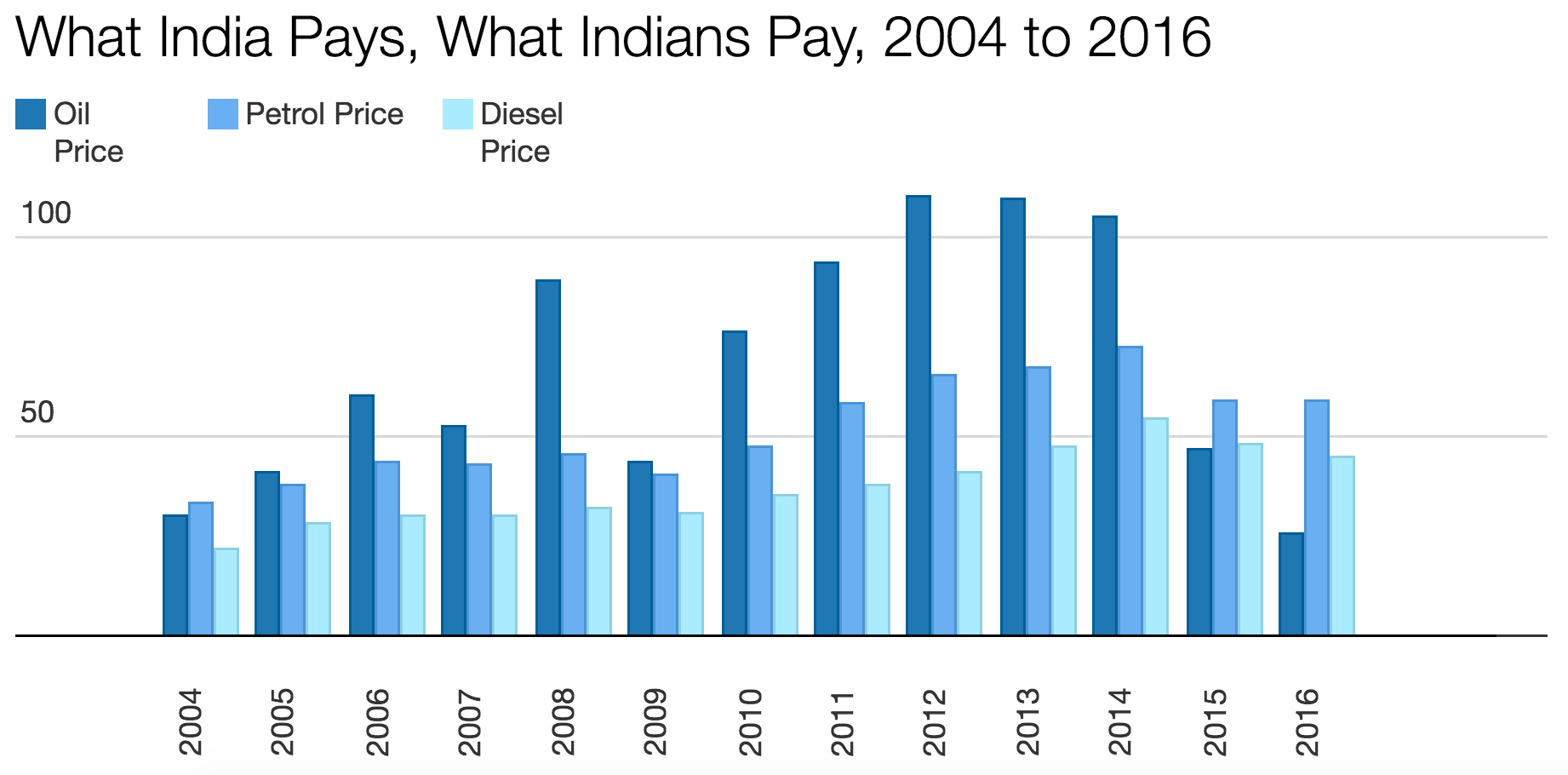
Record production in the United States (US), weakened demand from the Eurozone and emerging economies like China and Brazil, and Iran’s entry into the international market have effectively slashed the price of crude oil for India, from $106 per barrel in July 2014 to $26 in January 2016 — a 75% drop over 15 months.

So, why are you not seeing evidence of this price-cut at your local petrol and diesel station? The answer: As global crude prices reach a 11-year low, the Centre and state governments steadily increase excise duties and value-added tax, shoring up their revenues and keeping fuel prices high for retail consumers.

Although India imports more than 80% of its fuel requirement, which means declining global prices should, theoretically, have seen sharp declines in retail petrol and diesel prices, Indian consumers of petrol and diesel now pay about double the global rate.

Click Here for the full analysis

Allotment of flat without OC is illegal – Illegal to move in without OC

Allotment of flat without OC is illegal; The builder must get occupancy certificate on time. In case of any delay, the builder must compensate the buyer with rent for that period; Latest NCDRC Order….. to read more Click https://t.co/kPP0WNeblm


Bombay HC: Illegal to move into property without occupation certificate
MUMBAI: It is against the law to move into flats in buildings without the mandatory municipal occupation certificate (OC), the Bombay high court has ruled. A division bench of Justice S C Dharmadhikari and Justice Gautam Patel sought action against 49 flat owners as well as a nursing home in two wings of a building with six wings in Sion East.

Burglary Insurance: Absence of Force Will Mean No Burglary Claim

A Supreme Court (SC) judgement on a theft claim filed by a public sector unit in Odisha states, “In the absence of violence or force, the insured cannot claim indemnification against the insurance company. The terms of the policy have to be construed as it is and we cannot add or subtract something. Howsoever liberally we may construe the policy, we cannot take liberalism to the extent of substituting the words which are not intended.” It is based on another 2004 SC judgement. The new SC judgement is clear that the terms of the policy are sacrosanct; it can’t be subjected to interpretation. The liability of the insurer would depend strictly on the policy conditions.
Home insurance, travel insurance, commercial insurance, etc, may cover ‘burglary’ and not ‘theft’. For a layman, both seem to be same. ‘Burglary’ is theft that has to be accompanied by forced entry, violence, or threat of violence. ‘Theft’ may not have a forceful or violent entry to cause a loss to residential or commercial property. It can even be an insider job by an employee or a family member.
Your case may fall under a long list of exclusions, or the semantics of the policy, which differentiates between ‘theft’ and ‘burglary’. Burglary is the criminal offence of breaking into and entering a building illegally for the purpose of committing a crime. On the other hand, theft is the act of stealing; the wrongful taking and carrying away of the personal goods usually without force. If the home insurance policy excludes burglary and covers only theft, then you are at a disadvantage. What about theft or burglary while travelling?
Moneylife had written about the case of Cox & Kings (C&K) tourists being robbed in a bus in Italy which was not covered by the insurer. (Read http://tinyurl.com/hcojgq9). It helps to clarify what is burglary versus theft which is applicable to home as well as travel insurance. While buying travel insurance, customers hardly know what is really covered.